





A Cascade of Failures
Over a disruptive period in mid-November, a series of technological failures rippled across the United States, impacting everything from air travel to banking. The trouble began with a significant Microsoft 365 outage that affected email and communication
for businesses and governments globally. This was followed by a rare nationwide ground stop by the Federal Aviation Administration (FAA), creating widespread flight delays. The wave of disruptions continued, hitting major banks like Chase, tech giant Apple, and even the National Security Agency's (NSA) internal classified network. Though officials stated the events were not connected, the rapid succession of failures affecting millions of Americans brought the stability of the nation's digital backbone into sharp focus.
The Official Warning
In response to the outages, top US officials publicly addressed the growing concerns. Nick Andersen, the acting director of the Cybersecurity and Infrastructure Security Agency (CISA), described the period as 'highly disruptive'. He emphasized that these events illustrate the need to engineer resilience into critical systems, regardless of whether the disruption is caused by a technical glitch, a bad software patch, or a malicious cyberattack. Echoing this sentiment, Director of National Intelligence Jay Clayton cautioned that Americans should brace for more 'glitches, gaps, and interruptions' as the country undergoes a major cycle of upgrading its aging digital infrastructure. These official statements served as a public acknowledgment of a systemic vulnerability that experts have been warning about for years.
What is 'Infrastructure Resilience'?
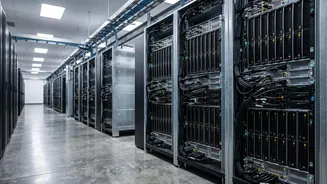
At its core, infrastructure resilience is the ability of essential systems—like power grids, communication networks, and financial services—to withstand and rapidly recover from disruptions. The recent outages revealed how interconnected and fragile these systems can be. Much of our daily life, from remote work and online shopping to hospital operations and public safety, depends on a handful of cloud service providers. When one of these central hubs fails, the consequences can cascade, causing far-reaching economic and social disruption. The CISA statement highlights a shift in thinking: it’s not just about preventing every possible failure, but about ensuring that when failures inevitably happen, their impact is contained and services can be restored quickly.
Why Our Digital World Is Breaking
While it's tempting to suspect a coordinated cyberattack, officials have found no evidence linking the recent incidents. Instead, they point to more mundane, yet equally concerning, causes. Many of the outages were attributed to internal technical problems, such as software bugs, configuration errors, or issues during routine maintenance. Director of National Intelligence Jay Clayton noted that much of the country's digital infrastructure was built decades ago and is in the middle of a massive, and sometimes messy, upgrade cycle. Furthermore, market dynamics play a significant role. Critics argue that the consolidation of cloud computing into the hands of a few dominant companies creates single points of failure, making the entire system brittle. This concentration of power means a single mistake at one company can have a global impact.
Building a Stronger Digital Foundation
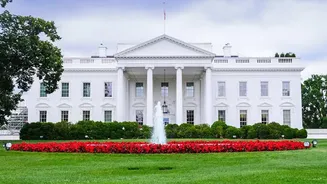
The official response points toward a strategy focused on robust planning and public-private partnerships. CISA has been advocating for organizations to identify their most critical systems, understand the risks, and have clear, actionable plans for when things go wrong. The White House's 'America First Resilience Strategy' also emphasizes securing supply chains and modernizing technology to ensure no adversary or disaster can hold the nation's core interests hostage. Beyond government initiatives, experts and advocacy groups are calling for stronger antitrust enforcement to reduce over-reliance on a few tech giants and for requirements that promote interoperability, allowing services to more easily switch between providers. The goal is to move from a fragile, centralized system to a more diverse and resilient digital ecosystem.