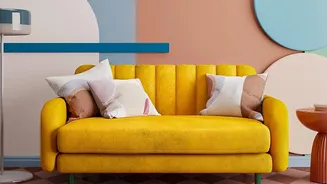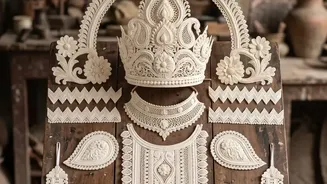



In an age of globalised design, a beautiful shift is happening in urban Indian homes. We are looking past mass-produced minimalism and turning inwards, finding soul and story in crafts that have been nurtured for centuries in rural India.
A Return to Authenticity
The modern Indian
home is becoming a canvas for personal expression, moving away from cookie-cutter designs to spaces that feel unique and authentic. Homeowners are increasingly seeking decor that tells a story, something with history and a human touch. This has sparked a renaissance for traditional handicrafts, which offer a powerful antidote to the impersonal nature of factory-made goods. By incorporating these pieces, a living room transforms from a mere collection of furniture into a curated gallery of cultural heritage, where every object has a narrative and adds a layer of warmth and meaning.
Terracotta: The Earthy Foundation
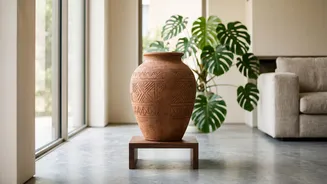
Terracotta, literally 'baked earth', is one of the most ancient and versatile materials finding a new lease of life in city homes. Traditionally used for pots and roof tiles, its applications have expanded dramatically. Designers are now using terracotta to create contemporary light fixtures, intricate 'jaali' or latticed screens for partitions, and minimalist wall art that adds texture and an earthy warmth. Its natural, porous quality helps regulate indoor temperatures, making it a sustainable and climate-smart choice for the Indian context. A cluster of terracotta planters or a single statement vase can ground a modern space, connecting it to the earth.
Textiles: Weaving Stories on Walls and Sofas
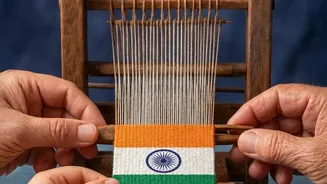
Indian handloom and printed textiles are moving from wardrobes to living room walls and furniture. Crafts like Kalamkari from Andhra Pradesh, with its intricate hand-painted mythological and natural motifs, are a prime example. Once used for temple hangings, these detailed narratives are now framed as statement art pieces. On a smaller scale, Kalamkari, Ikat, and Bandhani fabrics are used for vibrant cushion covers, table runners, and upholstery, injecting colour and pattern into neutral-toned modern sofas and chairs. This adaptation not only preserves the weaving and printing traditions but also makes them functional and accessible for everyday life.
Bidriware: Metal's Dark and Silver Lining
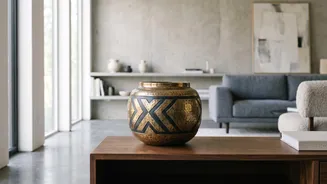
Originating from Bidar in Karnataka, Bidriware is a stunning metalcraft known for its striking contrast of silver inlay against a dark, blackened zinc and copper alloy. Traditionally used for hookahs and royal vessels, the craft has adapted to modern tastes by appearing in new forms. Today, you can find Bidriware coasters, decorative plates, jewellery boxes, and sleek office accessories like pen stands and card holders. These pieces retain the intricate floral and geometric motifs of Persian and Indian origin but are designed with a contemporary utility. A single Bidriware vase or a set of coasters can add a touch of understated, sophisticated elegance to a modern coffee table, bridging a 600-year-old tradition with contemporary style.
The Artisan-Designer Bridge
This revival is not accidental; it is the result of a conscious and crucial collaboration between rural artisans and urban designers. Designers are working directly with craft clusters across the country, helping to adapt traditional forms for a modern market while respecting the integrity of the original technique. This partnership provides artisans with fair wages and a sustainable livelihood, ensuring that ancient skills are passed on to the next generation. For the consumer, it means access to beautifully crafted, ethically produced items that carry a legacy. This synergy ensures that the soul of the craft is not lost in translation, but rather, finds a new and relevant voice in the modern Indian living room.