






First, Let's Demystify 'MDR'
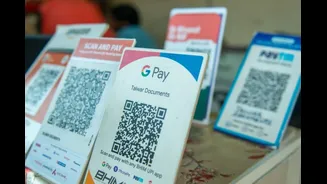
MDR stands for Merchant Discount Rate. It's not a consumer tax but a fee that merchants pay to their payment service providers for processing digital transactions. Think of it as an operational cost for a business to be able to accept payments digitally,
similar to how they pay for electricity or rent. This fee covers the costs incurred by banks, payment gateways, and other players in the ecosystem who ensure your transaction is processed securely and instantly. The recent announcement by the National Payments Corporation of India (NPCI) introduced an MDR on certain types of UPI transactions for the first time, sparking debate.
Are Your UPI Payments Now Chargeable?
The short and simple answer is no. For consumers, UPI remains free. The government and NPCI have been very clear: customers will not face any charges for making UPI payments. The new MDR framework specifically excludes the vast majority of transactions. All person-to-person (P2P) transfers, like sending money to friends or family, are completely free, regardless of the amount. Furthermore, all payments you make to merchants (P2M) up to ₹2,000 are also exempt from this charge. According to official statements, these smaller transactions make up about 96% of all merchant payments on UPI, meaning the ecosystem remains largely free for most everyday use.
So, Who Actually Pays This Fee?
The MDR is paid by merchants, not customers. Specifically, it applies only to merchant transactions over ₹2,000. When an eligible transaction occurs, the merchant's bank pays the fee, which is then distributed among the various entities that facilitated the payment. The standard MDR has been set at 0.4% for many general merchant categories for transactions above the ₹2,000 threshold. For example, on a purchase of ₹3,000, the merchant would incur an MDR of ₹12. The government has also advised banks to ensure merchants do not pass this cost on to consumers by inflating prices.
A Closer Look at the Affected Transactions
The new charge primarily targets transactions made via Prepaid Payment Instruments (PPIs), such as digital wallets. When a customer pays a merchant over ₹2,000 using funds from a wallet, an interchange fee (a component of MDR) is levied. This fee is meant to create a revenue stream for wallet issuers and banks, which until now, bore the costs of these transactions without compensation. However, even within this, there are nuances. Essential services have different rules. For sectors like railways, fuel, insurance, and utility bills, a flat fee of ₹5 is applied for transactions over ₹2,000, instead of a percentage. This is designed to keep costs predictable for critical services. Capital market transactions, like investing in mutual funds via UPI, attract a much lower rate of 0.02%.
Why Was This Charge Introduced?
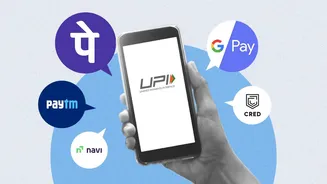
The introduction of a selective MDR is aimed at ensuring the long-term financial sustainability of the digital payments ecosystem. While the zero-fee structure was crucial for driving UPI's incredible adoption, the companies running the infrastructure—banks, wallet providers, and payment processors—incur real costs for every transaction they handle. These costs include technology, security, and customer support. By introducing a revenue model for high-value merchant transactions, the NPCI hopes to incentivise these companies to continue investing in and innovating on the UPI platform, which ultimately benefits all users by ensuring the service remains robust, secure, and reliable.