








The Engine of Growth: A Powerful Partnership
At the heart of this explosive growth is a strategic collaboration between Swiggy and the Indian Railway Catering and Tourism Corporation (IRCTC). Launched to offer passengers an alternative to traditional pantry cars and station vendors, the service
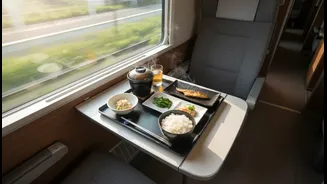
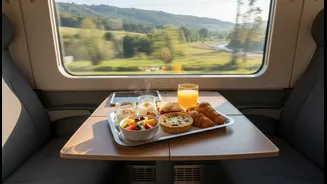
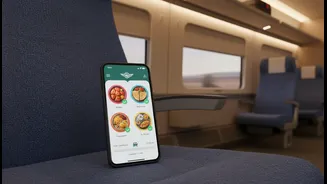
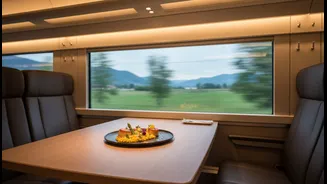
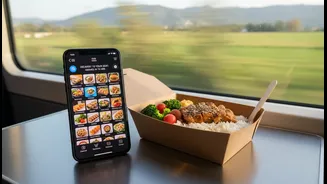
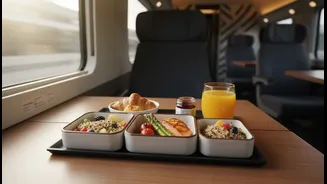
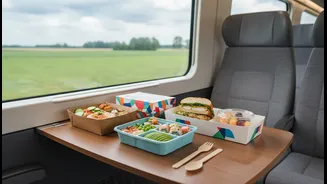
allows travellers to order meals from a wide array of restaurants and have them delivered directly to their seats. By simply entering their PNR number into the app, passengers can access menus from eateries at upcoming stations, place an order, and track its delivery. Recent data for the April-June 2026 quarter shows a massive surge, largely driven by summer holiday travel, with the service now available in over 180 cities.
Why Passengers Are Getting On Board
The success isn't just about convenience; it’s about solving long-standing passenger problems. For decades, train travellers faced a tough choice: the often-criticised quality and hygiene of pantry car food or the gamble of buying from platform vendors. This new e-catering model shatters that monopoly. It offers variety, quality assurance through FSSAI-approved restaurant partners, and reliability. Passengers can now choose from trusted brands like McDonald's and Domino's to local favourites, enjoying everything from Chicken Biryani to Masala Dosa. In fact, during the summer, over 4 lakh rotis were ordered, highlighting a preference for familiar, simple meals.
Beyond Metros: A Digital Revolution in Tier-IV Towns
Perhaps the most significant part of this story is where the growth is coming from. While metro cities are a predictable market, the service is seeing phenomenal adoption in smaller towns. Demand in emerging towns grew by 253% year-on-year, significantly outpacing larger urban centres. In Guna, Madhya Pradesh, for instance, two out of every three passengers ordering train food this summer were using a food delivery app for the very first time. This indicates that the service is not just serving existing digital customers but is a powerful tool for digital onboarding, introducing a new wave of users to the e-commerce ecosystem.
The Complex Logistics of a Moving Target
Delivering food to a moving train is a logistical masterpiece that requires precise coordination. The system syncs with live railway data to track a train's real-time location, adjusting for delays. A delivery partner must navigate a crowded platform and locate the correct coach and seat within a brief station halt. To make this smoother, Swiggy introduced a 'Scan Your Ticket' feature, which auto-detects the PNR and travel details. The success of this complex operation is also changing user behaviour. Multi-station orders—where a passenger orders meals for several stops on a long journey—have surged by over 300%, with these users spending nearly 2.2 times more. The Bhopal-Nagpur route has even emerged as a popular 'two-stop eating trail.'
The Bigger Picture for Indian Travel
Swiggy's success is a key indicator of a much broader trend. It reflects the deep integration of digital services into every aspect of Indian life, transforming even the most traditional experiences like train travel. This model, also being pursued by competitors like Zomato and other IRCTC partners like Zoop, is reshaping the railway ecosystem. It creates a new revenue stream for restaurants located near railway stations and pushes the modernisation of IRCTC's own services. For passengers, it signals a permanent upgrade in travel experience, where choice and quality are no longer a luxury but an expectation.