






A Legacy Woven by Women
Akwete craft originates from the Igbo people in the town of Akwete in Abia State, Nigeria. For generations, this intricate weaving tradition has been the domain of women. The skill is passed down from mother to daughter, creating a powerful matrilineal
legacy of artistry and economic independence. Legend often points to a pioneering weaver named Dada Nwakwata in the 19th century, who is credited with revolutionizing the craft. She was said to be so innovative that she could replicate any design she saw, laying the groundwork for the complex patterns that define Akwete today. Weaving evolved from a part-time activity into a full-time occupation for many women, establishing the town as a major centre for textile production.
The Art of the Loom
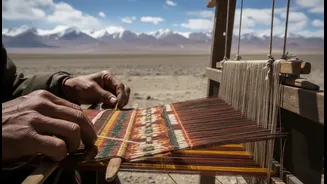
Akwete is traditionally woven on a large vertical loom, a key feature that distinguishes it from other West African textiles that are often woven in narrow strips and sewn together. This allows weavers to create wide, seamless panels of fabric, often up to 50 inches across. The process begins with a continuous warp thread, which creates a solid background. Weavers then use a supplementary weft technique, meticulously manipulating threads by hand to create the complex motifs that appear to float on the fabric's surface. While early materials included local fibres like raffia and sisal-hemp, weavers today primarily use imported cotton, silk, and shiny rayon threads, which allow for a broader spectrum of vibrant colours and textures. A single piece can take days to complete, depending on its size and the complexity of its design.
Patterns That Tell a Story
The beauty of Akwete cloth lies not just in its colours but in its language of symbols. Weavers are said to know over a hundred motifs, each with a specific name and meaning, often drawing inspiration from folklore, nature, and historical events. One of the most prestigious and historically significant motifs is the 'ikaki', or tortoise. In Igbo fables, the tortoise is a symbol of wisdom and cunning, and this pattern was once reserved exclusively for royalty. To wear it without being of royal blood could lead to severe punishment. Another important design is the 'ebe' motif, which was used as a protective talisman for pregnant women and warriors. These symbols are more than just decoration; they are a form of communication, embedding philosophy and social status into the very threads of the cloth.
From Tradition to Modern Trend
Once reserved for ceremonial wrappers and displays of wealth, Akwete is experiencing a powerful resurgence in contemporary fashion. A new generation of Nigerian and international designers is embracing the fabric, transforming it into structured jackets, elegant dresses, and stylish accessories. Designer Emmy Kasbit, for example, has gained international recognition for his innovative use of Akwete, with his designs worn by figures like British Prime Minister Theresa May and acclaimed author Chimamanda Ngozi Adichie. This modern revival is helping to preserve the craft by creating new markets and showing the versatility of this heritage textile. It is a celebration of cultural identity, proving that traditional craftsmanship has an important place in the global fashion landscape.