

A Storm for the Ages
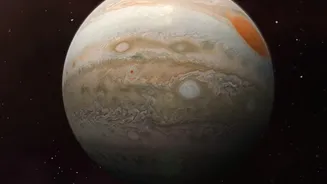
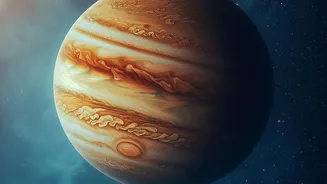
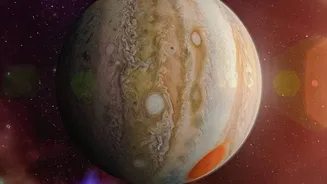
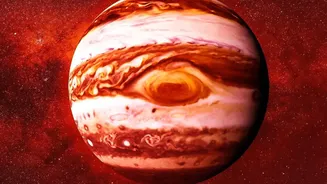
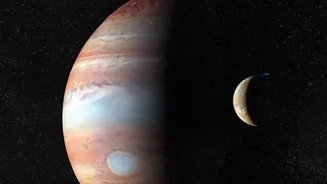
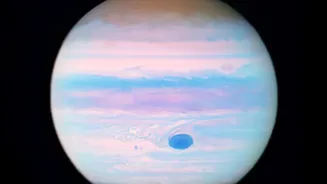
Jupiter's Great Red Spot is the most recognizable feature in our solar system, a colossal anticyclonic storm that has been continuously observed since at least 1830. For context, this single storm is about 1.3 times the width of Earth. Winds inside this massive
vortex can reach speeds of several hundred kilometres per hour. For generations, astronomers have studied it from afar, charting its course and wondering about its origins and longevity. Unlike storms on Earth that lose energy over land, Jupiter's lack of a solid surface allows storms like the Great Red Spot to persist for incredibly long periods. This giant has long been considered a stable, if violent, feature of the gas giant's southern hemisphere.
Inside the Cyclone: Cosmic Tornados
The headline's "cosmic tornados" are what scientists technically refer to as smaller vortices or eddies. These are essentially smaller storms that interact with the main vortex of the Great Red Spot. Some of these are anticyclones, which are areas of high pressure that rotate in the opposite direction of cyclones. On Jupiter, these vortices can be massive in their own right, spanning hundreds of miles. For years, scientists have hypothesized that these smaller eddies feed into the Great Red Spot, transferring energy and momentum that helps sustain the colossal storm over centuries. Think of it like smaller whirlpools being drawn into a much larger one, influencing its overall behaviour.
A Sharper View From Above
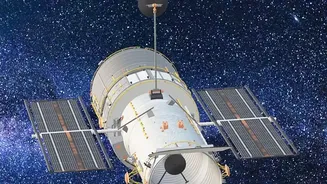
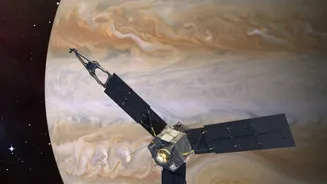
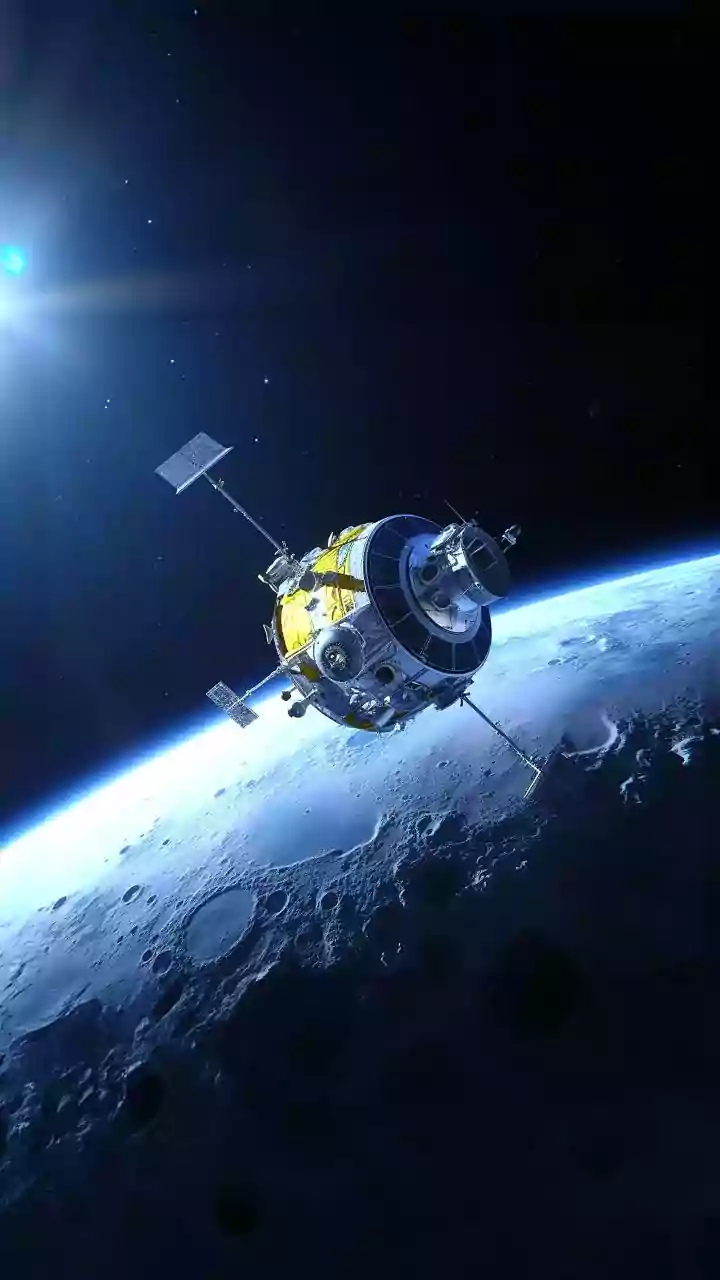
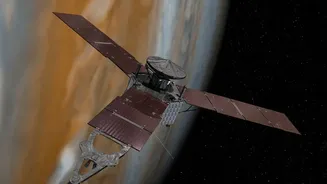
The fresh perspectives come courtesy of advanced instruments, primarily from NASA's Juno spacecraft and the James Webb Space Telescope. Juno, which has been orbiting Jupiter since 2016, is equipped with the JunoCam, a visible-light camera that can capture images with resolutions as fine as 7 kilometres per pixel as it flies just thousands of kilometres above the cloud tops. This provides a level of detail far beyond what was possible with previous missions like Voyager or even the Hubble Space Telescope. More recently, the James Webb Space Telescope used its powerful infrared spectrograph to probe the atmosphere above the Great Red Spot, uncovering complex structures that were previously invisible and thought to be uneventful.
The Shrinking Phenomenon
One of the most significant discoveries from long-term observation is that the Great Red Spot itself is shrinking. What was once wide enough to fit three Earths side-by-side in the late 1800s had shrunk to about 1.3 times Earth's diameter by 2017. Recent observations confirm this trend continues, with the storm becoming more circular. The headline, however, refers to the smaller vortices within the spot. High-resolution images from missions like Juno have shown these smaller storms getting consumed or 'flaking' off the main storm. One leading theory suggests the overall shrinking of the Great Red Spot might be because it is being 'starved'—interacting with fewer of these smaller storms that are thought to provide it with energy. So, while the smaller tornados are a constant feature, their rate of interaction and absorption appears to be changing, altering the dynamics of the larger storm.
Why This Matters for Jupiter and Beyond
Studying these changes provides crucial insights into the atmospheric dynamics of gas giants. The interactions within the Great Red Spot are a real-world laboratory for understanding fluid dynamics on a massive scale. Scientists believe that understanding how these giant storms on Jupiter evolve can help us better understand the physics of weather systems on our own planet, such as heat domes and hurricanes. Furthermore, the data from Juno and Webb challenges previous assumptions about Jupiter's atmosphere, showing it to be far more complex and active than once believed. Each new image and data point helps refine models of planetary formation and atmospheric science, not just for Jupiter, but for the giant exoplanets we are now discovering around other stars.