

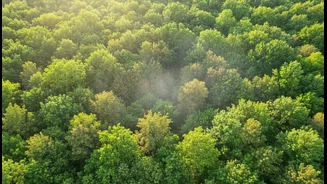




The Greening of India
Recent studies, particularly from the Indian Institute of Tropical Meteorology (IITM) in Pune, are forecasting a surprising trend: India is set to become progressively greener through 2100. Using the latest generation of climate models, known as CMIP6,
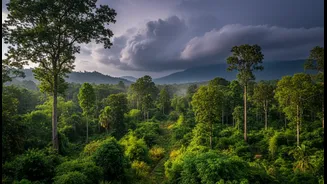
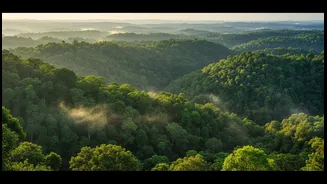
researchers project that vegetation, including forests and croplands, will expand and absorb significantly more carbon dioxide. One study found that Gross Primary Production (GPP)—a measure of how much CO2 plants absorb—is projected to nearly double by the end of the century compared to 2014 levels. This greening trend is not uniform, with the most significant gains expected in the Indo-Gangetic Plain, Northeast India, and the Western Ghats. This phenomenon is driven by two main factors: increased atmospheric carbon dioxide, which acts as a fertiliser for plants, and a projected increase in rainfall over many parts of the country.
More Than Just CO2 Fertilisation
While the idea of carbon dioxide boosting plant growth (known as the CO2 fertilisation effect) is not new, the latest models provide a more refined understanding. Researchers have found that the stronger greening projected in the new CMIP6 models is linked more to revised, higher rainfall predictions than to changes in how plants respond to CO2. This is a crucial distinction. It highlights that water availability, especially in a monsoon-dependent country like India, is a primary driver of vegetation health and productivity. The models separate long-term greening trends from short-term fluctuations, noting that while higher rainfall boosts growth, extreme heat and drought conditions in any given year can still suppress it, particularly in semi-arid regions.
A Double-Edged Sword
This forecast of a greener India might sound like unequivocally good news, but scientists are quick to add crucial caveats. An increase in vegetation and carbon uptake does not automatically cancel out the negative impacts of climate change. Researchers warn that this greening should not be mistaken for overall ecosystem health. Rising temperatures, even if accompanied by more rain, can still lead to heat stress, harm biodiversity, and increase the risk of wildfires and other disturbances. Essentially, while the landscape may appear lusher, the underlying ecosystem could be more fragile. More plant growth does not always translate into long-term carbon storage, as plants and soil also release carbon back into the atmosphere, a process that can accelerate under heat stress.
Why Balanced Models Matter for India
For years, climate models have worked to predict the devastating effects of warming. By more accurately incorporating the complex role of vegetation, these new forecasts offer a more balanced interpretation. Dynamic Global Vegetation Models (DGVMs) are crucial tools that simulate how ecosystems respond to climate shifts, from photosynthesis at the leaf level to continent-wide changes in forests and grasslands. For India, this improved modelling is vital for policy and planning. Understanding where and how vegetation will change helps in accurately estimating the country's future carbon sink capacity, which is critical for meeting climate targets. It also informs regional adaptation strategies for agriculture and water management, highlighting areas that might become more productive and those that will remain vulnerable to drought and heatwaves.