


The Sweet Shift Away From Sugar
The trend is rooted in a growing awareness around wellness and a desire for natural, unprocessed foods. Home bakers, increasingly conscious of what goes into their creations, are scrutinizing labels and questioning the role of refined white sugar. Stripped
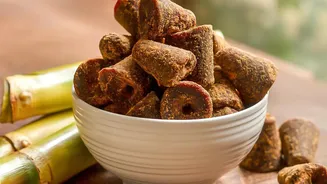
of its natural nutrients during intensive chemical processing, white sugar offers little more than empty calories and a sharp spike in blood sugar. In contrast, palm jaggery, known traditionally as 'Karupatti' in South India, is gaining popularity as a wholesome alternative. This shift isn't just about health; it's a return to ingredients that are deeply embedded in Indian culinary heritage, celebrated for both their flavour and function.
Nutritional Edge: Jaggery vs. Sugar
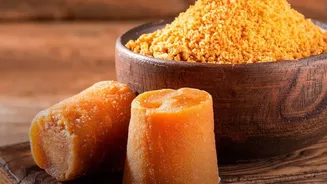
The primary appeal of palm jaggery lies in what it retains. Unlike white sugar, which is pure sucrose, palm jaggery is unrefined. It's made by simply boiling the sap of palm trees, a process that preserves a wealth of minerals. Palm jaggery is a source of essential minerals like iron, potassium, magnesium, and zinc. Proponents also point to its lower glycemic index (GI), which measures how quickly a food raises blood sugar levels. Palm jaggery typically has a GI of around 35-45, while white sugar's is higher, around 65. This means it releases energy more slowly, helping to avoid the sudden sugar 'crash' associated with refined sweets.
A New Dimension of Flavour
Swapping to palm jaggery isn't just a nutritional upgrade; it's a flavour revelation. While white sugar provides a one-dimensional sweetness, palm jaggery introduces a complex and rich profile. It has deep, earthy notes of caramel, toffee, and a hint of smokiness that can transform a simple bake into something truly special. This unique taste pairs beautifully with whole grains like wheat and ragi, spices like cinnamon and ginger, and rich ingredients like chocolate. It adds a moistness to cakes and a satisfying chewiness to cookies, elevating the final product beyond mere sweetness and adding character and depth.
A Baker's Guide to Palm Jaggery
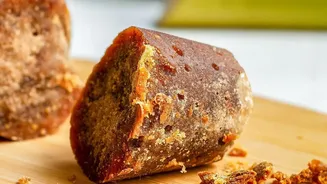
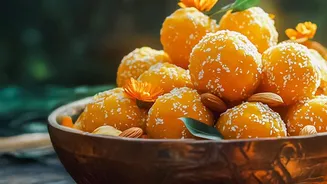
Thinking of making the switch? Baking with palm jaggery is straightforward, but there are a few things to keep in mind. It can typically be substituted in a 1:1 ratio for sugar, but since it has a stronger, more distinct flavour, you might want to start with slightly less and adjust to your taste. Palm jaggery is available in solid blocks or a more convenient powdered form. If using a block, you'll need to grate it or melt it in a little water to form a syrup before adding it to your batter. This syrup method ensures it dissolves evenly. Because of its moisture content, it helps keep cakes and muffins tender. It works wonderfully in everything from classic loaf cakes and cookies to traditional Indian sweets like halwa and payasam.
Reading the 'Organic' Label
The term 'organic' in the context of palm jaggery generally refers to its traditional and chemical-free production process. True palm jaggery is made without chemical agents, bleaching, or preservatives, ensuring the final product is as natural as possible. When shopping, look for jaggery with a dark, rich colour, which indicates it is unrefined. The market for clean-label, packaged jaggery has grown, making it easier for consumers to find high-quality options that guarantee purity. By choosing a reputable organic brand, you ensure you're getting the full nutritional and flavour benefits of this incredible sweetener.