






The Ultimate Eject Button
At its heart, the Gaganyaan program is not just about sending humans to space, but about bringing them back safely. Central to this promise is the Crew Escape System (CES). Think of it as the most sophisticated ejector seat ever built. If a critical failure
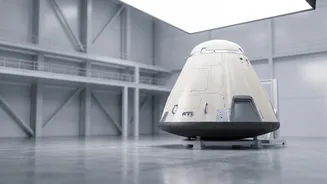
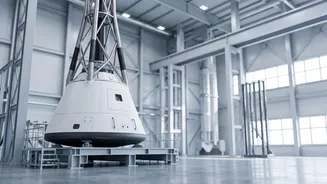
occurs on the launchpad or during the rocket's ascent through the atmosphere, the CES is designed to activate in an instant. Using a set of powerful, quick-acting solid-fuel motors, it will physically pull the crew module—the capsule carrying the astronauts—away from the malfunctioning rocket, moving it to a safe distance before it deploys parachutes for a splashdown in the sea. This system is non-negotiable for human spaceflight; astronaut safety is the paramount concern, and the CES is the ultimate insurance policy.
A Gauntlet of High-Stakes Tests
Before astronauts can strap in, ISRO must prove the escape system works flawlessly under the most stressful conditions imaginable. This involves a series of progressively complex trials. The first major test, the Pad Abort Test (PAT), was successfully conducted in 2018, demonstrating the system's ability to pull the crew module away from the launchpad in an emergency. The next phase involves Test Vehicle (TV) missions, which simulate failures during flight. The first of these, TV-D1, was successfully completed in late 2023, testing an in-flight abort scenario at an altitude of about 17 km. Upcoming tests, like the planned TV-D2 mission, will continue to validate the system's performance at different altitudes and speeds, pushing the hardware to its limits to ensure it is robust and reliable. These tests use a specially designed, single-stage liquid rocket to carry a boilerplate (unpressurised but dimensionally similar) crew module to a specific point in the sky and trigger the abort sequence.
Why These Tests Matter Now
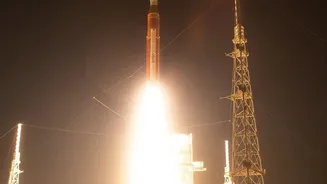
The abort system tests are a critical bottleneck in the Gaganyaan timeline. Every successful demonstration builds confidence and clears the path for the next phase. Following these abort trials, ISRO has planned a series of uncrewed orbital missions. These flights will use the full, human-rated LVM3 rocket—the same one that will carry the astronauts—to send an uncrewed capsule into orbit and bring it back to Earth. One of these missions will even feature 'Vyommitra', a humanoid robot developed by ISRO, to test cabin conditions and system performance. Only after these uncrewed flights demonstrate end-to-end mission success will ISRO proceed with the first crewed launch, which is anticipated around 2027. Therefore, the success of the ongoing abort tests is the essential next step that keeps the entire program on track.
The Bigger Picture for India
The significance of the Gaganyaan program extends far beyond the technical achievement. Successfully developing and validating a Crew Escape System places India in an elite group of nations—after the United States, Russia, and China—with the proven capability to ensure astronaut safety during launch. This is a powerful statement of the country's growing technological prowess and self-reliance in the space domain. The mission is a national prestige project, announced in 2018, aimed at demonstrating indigenous capability for human spaceflight. A successful Gaganyaan mission will not only inspire a new generation but also pave the way for more ambitious future projects, such as establishing an Indian space station (Bharatiya Antariksha Station) by 2035 and eventually sending an Indian to the Moon.