
An Icon in Decline
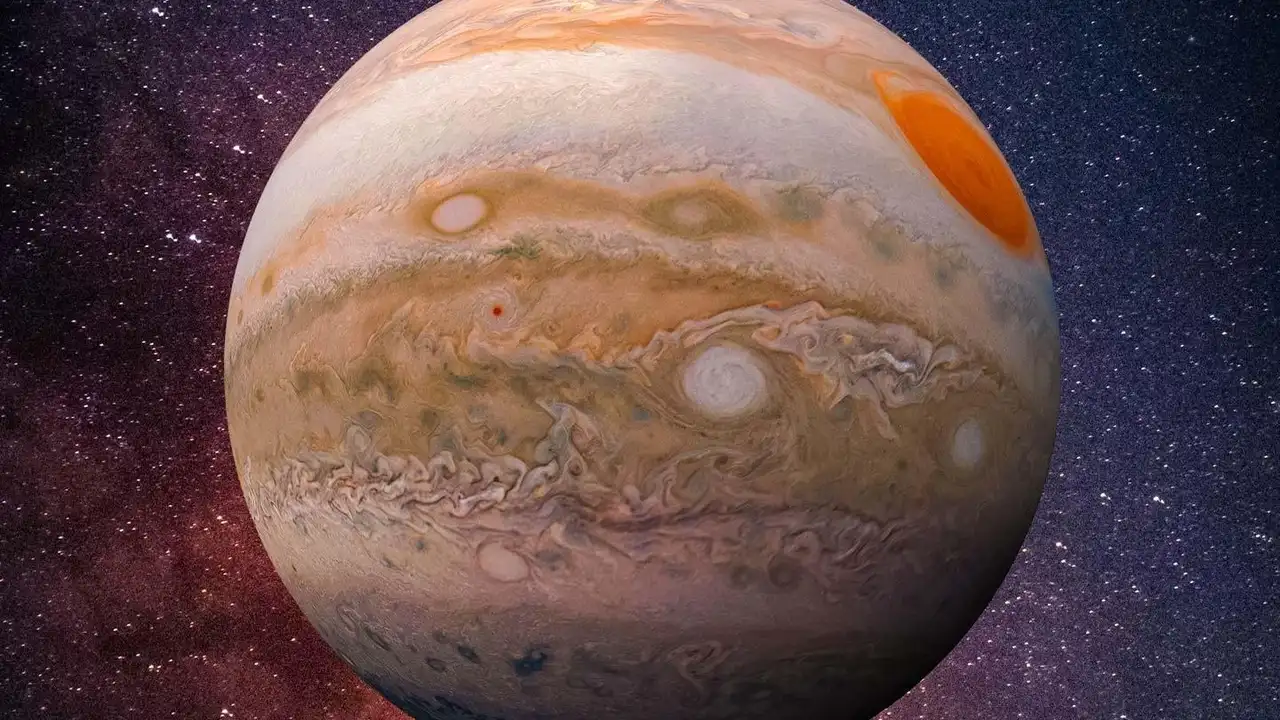
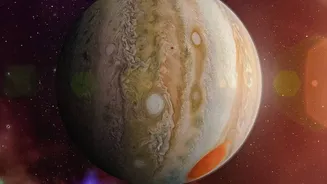
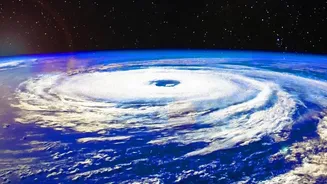
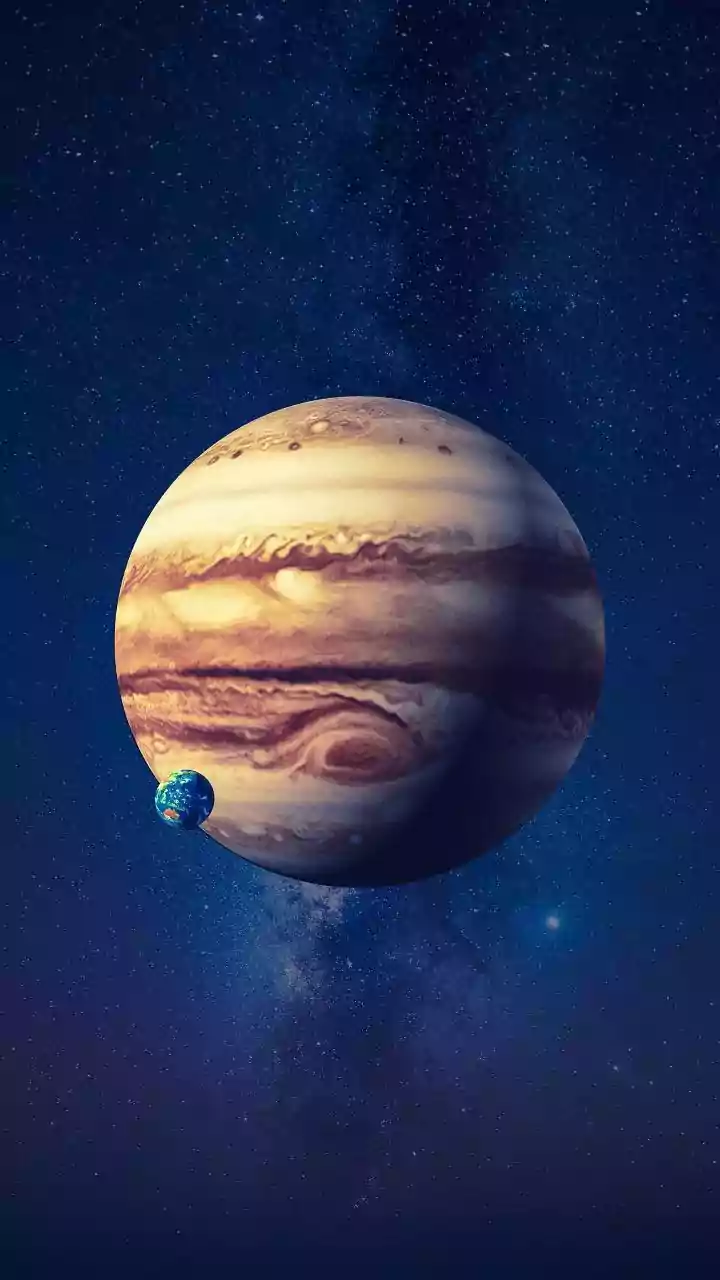
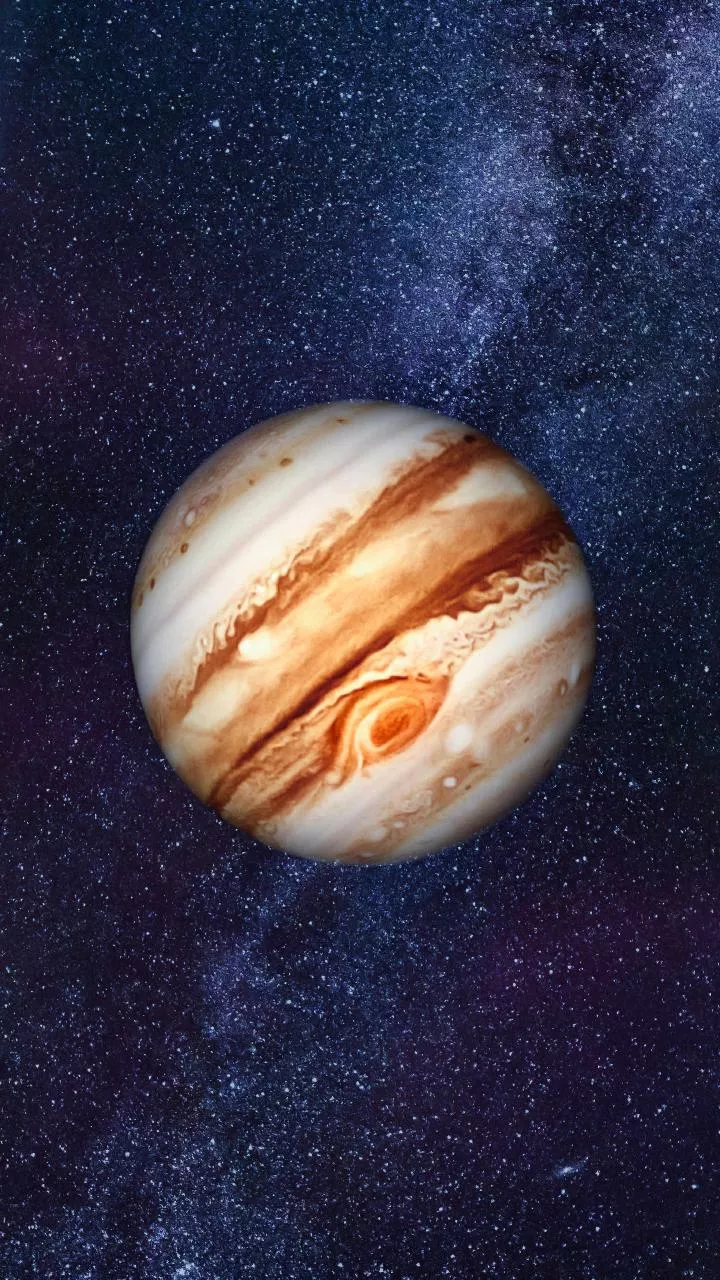
The Great Red Spot is a monstrous anticyclone, a high-pressure system spinning counterclockwise in Jupiter’s southern hemisphere, with winds far more powerful than any hurricane on Earth. Astronomers have been observing it for at least 150 years, and
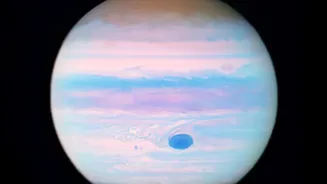
historical records from the late 1800s suggest it was once a vast oval over 40,000 kilometres wide, large enough to swallow three Earths. But for the last century, it’s been steadily downsizing. By the time NASA's Voyager spacecraft flew by in 1979, it was down to 23,335 kilometres across. Recent observations from the Hubble Space Telescope show it's now a more circular storm, measuring roughly 16,500 kilometres in diameter—bigger than Earth, but a shadow of its former self.
Faster Winds in a Smaller Storm
Logic might suggest that a shrinking storm is a weakening one, but the reality is far more interesting. Analysis of over a decade of Hubble observations, from 2009 to 2020, delivered a surprise: the wind speeds in the storm’s outer lane are actually accelerating. Researchers found that the wind speed in this high-speed ring increased by up to 8 percent in that period, with speeds now exceeding 640 kilometres per hour. In contrast, the winds closer to the storm's center are moving much more slowly. This discovery, which scientists noted could only be made with Hubble's long-term, high-resolution monitoring, adds a crucial layer to the mystery. The change is subtle, amounting to less than 2.5 kilometres per hour per year, but the trend is clear: the storm is getting smaller, but its outer edge is spinning faster.
A 'Diet of Storms'
So, what’s causing these contradictory changes? A leading theory is that the Great Red Spot’s size and energy are tied to its interactions with smaller storms on Jupiter. Like a larger whirlpool consuming smaller eddies, the Great Red Spot is known to feed on smaller vortices that get drawn into its orbit. Some scientists now believe that a change in this 'diet' of smaller storms could be responsible for its shrinking. Computer simulations have shown that by adjusting the number and size of smaller storms absorbed by the Great Red Spot, its overall size can be modulated. A less frequent supply of these atmospheric snacks could be slowly starving the giant storm, causing it to contract. It's also been observed 'flaking' pieces of itself off, a phenomenon that has raised questions about whether it is disintegrating.
Taller, Not Weaker?
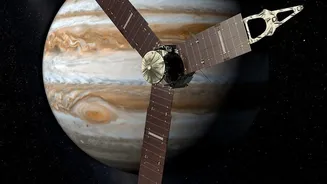
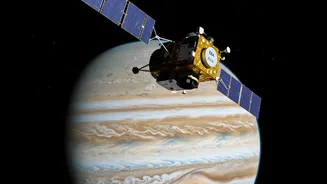
The changes aren't just in width and wind speed; the storm is also changing in its vertical structure. As the spot has shrunk horizontally, some research suggests it appears to be growing taller. Data from NASA's Juno spacecraft, which has peered deep below Jupiter’s cloud tops, revealed the storm has a much greater depth than previously expected, extending far into the planet's atmosphere. This paints a picture of a storm that, as it becomes more compact, is reorganizing its energy, possibly stretching vertically. This three-dimensional view is critical, as what happens deep below the visible clouds is key to understanding the storm's power source and ultimate fate.
The Future of the Spot
Does this mean the Great Red Spot is destined to disappear? Some predictions suggest it could vanish within a few decades, while others argue it may persist for centuries longer. The truth is, we don't know for sure. The complex interplay of its accelerating outer winds, its shrinking diameter, and its potential vertical growth creates a puzzle that scientists are still assembling. What's clear is that the solar system's most famous storm is not a static feature but a dynamic, evolving weather system. Its ongoing transformation provides a unique, real-time laboratory for understanding the physics of planetary atmospheres.