
The Taste of Tradition
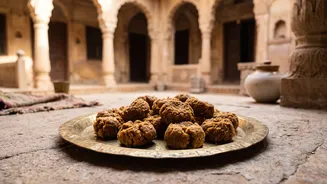
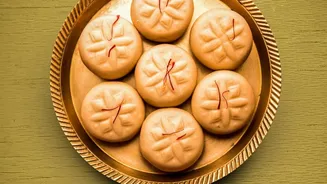
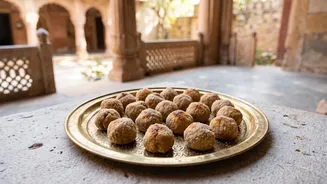
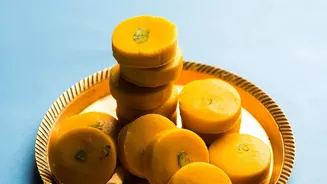
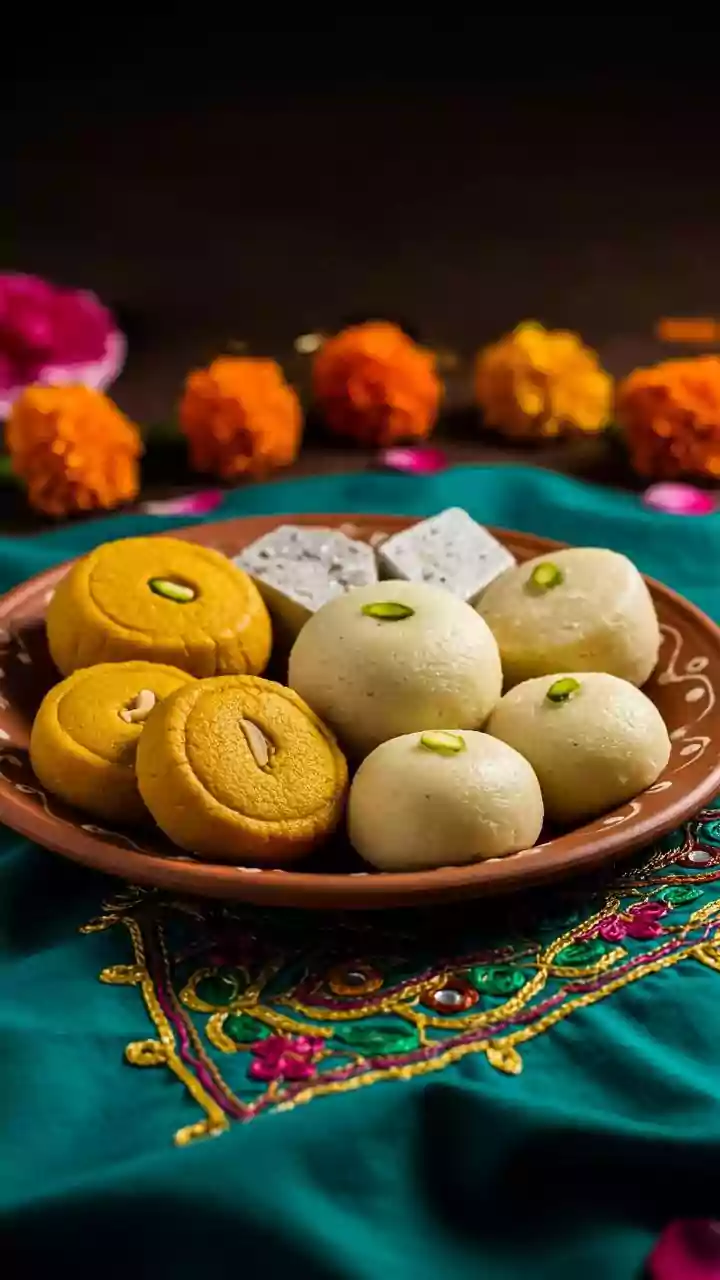
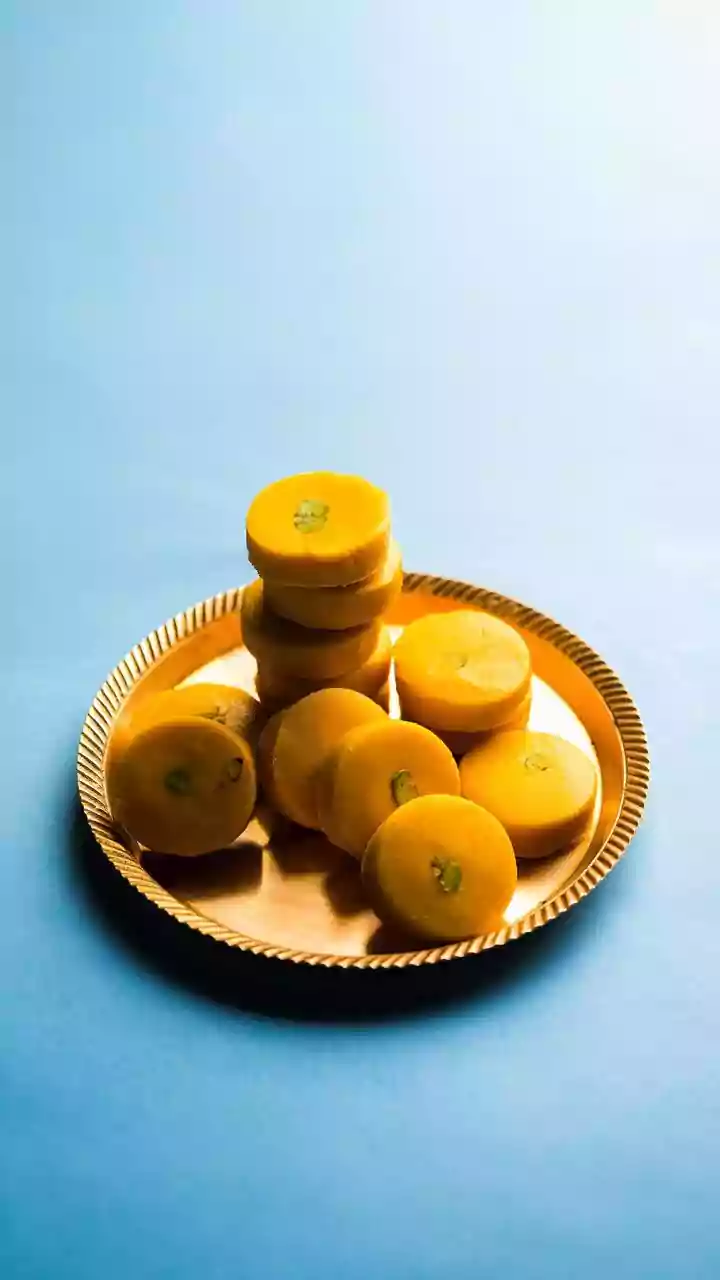
Before we delve into its history, let's talk about the taste. An authentic Mathura Peda is unlike its paler, softer cousins found elsewhere. It has a distinctly robust, caramelised flavour, a result of slow-roasting milk solids, or khoya. The texture
is uniquely grainy, not perfectly smooth, and it melts in your mouth, leaving a rich, milky aftertaste. Often coated in a light dusting of 'bura' sugar, this sweet is a sensory experience that speaks of patience and tradition. This unique character is deeply tied to its spiritual home, Mathura, the sacred birthplace of Lord Krishna.
A Sweet Offering for a God
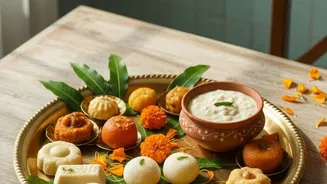
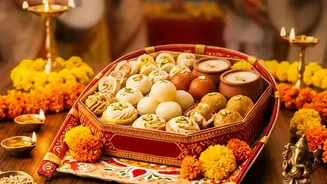
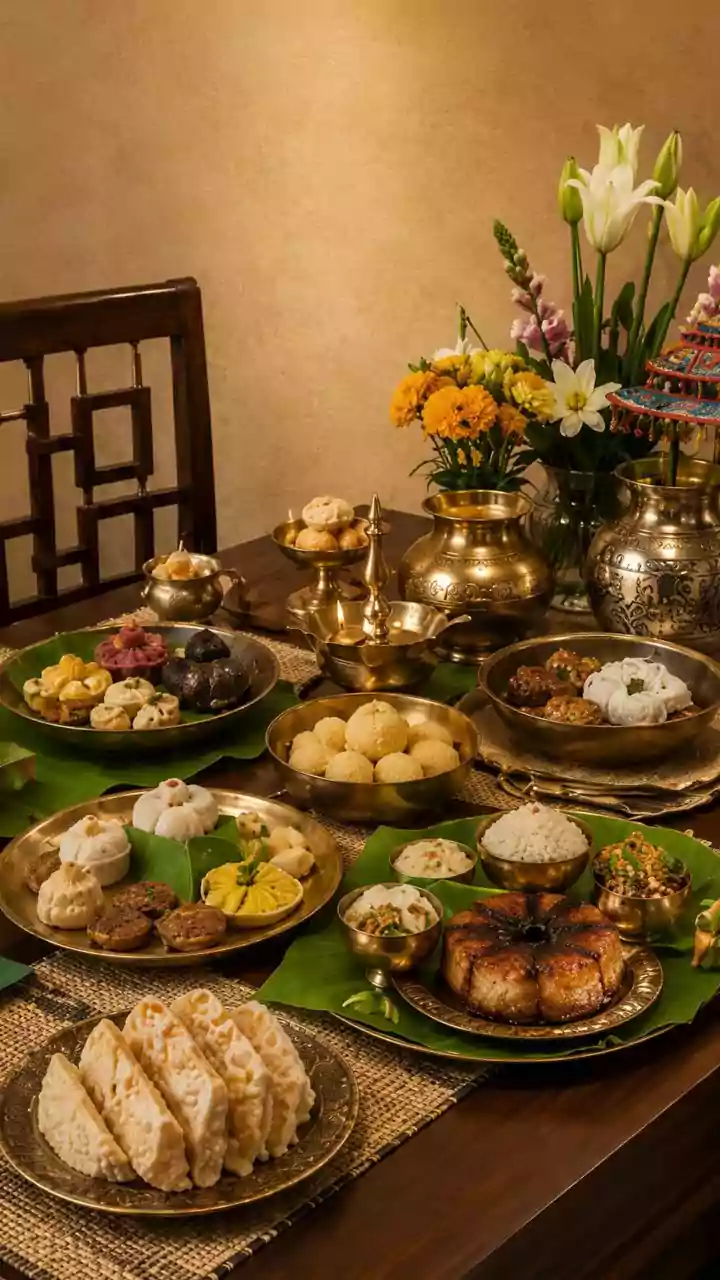
The story of the Mathura Peda is inseparable from Lord Krishna. The entire Braj region, encompassing Mathura and Vrindavan, has a rich dairy heritage, celebrated in countless stories of Krishna's childhood love for milk and butter. It was only natural for milk-based sweets to become central to the local cuisine. Peda became a primary offering, or 'prasad', in the temples of Mathura. Every year, the festival of Janmashtami, Krishna's birthday, is considered incomplete without it. For millions of devotees, a trip to Mathura is not complete without taking home a box of these blessed sweets to share as a divine gift. This deep-rooted religious significance elevated the peda from a mere confection to a symbol of faith and cultural identity.
The Soul of the Peda: Khoya
At the heart of the Mathura Peda is khoya, or mawa. But not just any khoya will do. The traditional process is a labour of love, involving simmering full-fat milk, preferably from the local region, in a large, heavy-bottomed pan for hours. The milk is stirred continuously until most of the moisture evaporates, leaving behind concentrated milk solids. What makes the Mathura Peda distinct is the next step: the 'bhun-na' or roasting. The khoya is patiently roasted on a low flame until it turns a beautiful golden-brown. This slow caramelisation of the milk sugars is what gives the peda its signature colour, its nutty aroma, and a significantly longer shelf life than other milk-based sweets.
The Secret of Sugar: Bura, Not Powder
The second key to the peda's unique texture is the type of sugar used. Many sweets use finely ground sugar, but traditional halwais in Mathura use 'bura' or 'tagar'. Bura is not simply powdered sugar; it is made by boiling a sugar syrup to a specific point of crystallisation and then letting it cool into a fine, sandy, porous powder. This special sugar has a less intense sweetness and a unique texture that prevents the peda from becoming sticky when mixed with the warm, roasted khoya. It contributes to the characteristic 'danedar' or grainy mouthfeel that connoisseurs cherish.
Protecting a Culinary Legacy
The fame of Mathura Peda is so widespread that the name itself acts as a brand. However, this popularity has also led to widespread adulteration, with inferior quality pedas often being sold to unsuspecting tourists. To protect its authenticity and cultural heritage, there has been a significant push to secure a Geographical Indication (GI) tag for the Mathura Peda. An application was filed by the local Mithai Association to ensure that only pedas made in the region following the traditional methods can carry the prestigious name. While the GI tag is still in process as of late 2026, the move signifies the immense cultural and economic importance of this sweet to the city of Mathura.