






Rain as Nature’s Air Purifier
Rain plays a crucial role in cleaning the atmosphere in a process called wet deposition, or simply, washout. As raindrops fall, they collide with and capture airborne pollutants like dust, pollen, and harmful particulate matter (PM2.5 and PM10). These
captured particles are then brought down to the ground, effectively scrubbing them from the air we breathe. The intensity of the rain matters; a heavy downpour is significantly more effective at this than a light drizzle. In fact, for many Indian cities, the monsoon season brings a welcome, albeit temporary, relief from high pollution levels precisely because of this natural cleansing effect.
The Dangers of a Dry Spell
When rainfall decreases, this natural air-purifying service is lost. Without regular washout, pollutants emitted from traffic, industry, and construction simply remain suspended in the atmosphere for longer periods. Particulate matter, especially the finer PM2.5 particles that can penetrate deep into the lungs, accumulates day after day. Stagnant weather patterns, which often accompany dry periods or droughts, make the problem worse. Without wind or rain to disperse them, pollutants get trapped in the lower atmosphere, leading to prolonged episodes of poor air quality.
Not All Pollutants React the Same
The relationship isn't as simple as 'no rain, more pollution' for every substance. While particulate matter levels reliably rise during dry spells, other pollutants behave differently. For instance, rain is effective at washing out sulfur dioxide (SO2) and nitrogen oxides (NOx), but not so much for ground-level ozone (O3) or carbon monoxide (CO). In fact, the sunny, clear-sky conditions that often accompany a lack of rain can actually accelerate the chemical reactions that form ozone, a key component of smog. So, a drought could lead to higher levels of both particulate matter and ozone, a dangerous combination for public health.
The Rise of Dust and Haze
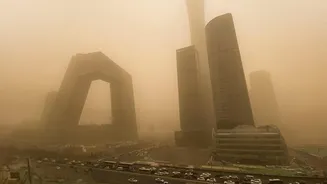
Falling rainfall has secondary effects that also degrade air quality. Prolonged dry conditions lead to drier soil. This makes it easier for wind to pick up loose topsoil and create dust storms, significantly increasing the concentration of larger particulate matter (PM10) in the air. In regions already prone to desertification or with extensive construction, this can become a major health hazard. Furthermore, periods of drought are strongly linked with an increased risk of wildfires. The smoke from these fires can travel hundreds of kilometres, blanketing cities in a thick, hazardous haze and causing sharp spikes in PM2.5 levels.
A Vicious Cycle in a Changing Climate
The connection between rainfall and pollution can also become a feedback loop. High concentrations of aerosols (tiny pollution particles) in the atmosphere can themselves influence weather patterns. By affecting how clouds form, pollution can potentially suppress rainfall, leading to even drier conditions. Some studies suggest that air pollution can weaken the South Asian monsoon, reducing rainfall intensity. As climate change alters traditional weather patterns and makes droughts more frequent and severe, this interplay between falling rainfall and rising pollution becomes an even greater challenge for urban India, demanding more robust and urgent action on emission controls.