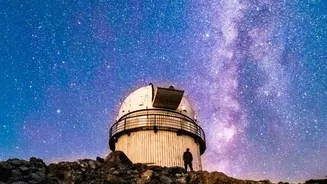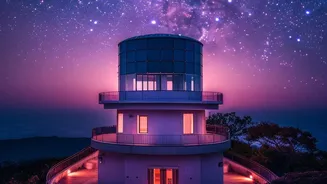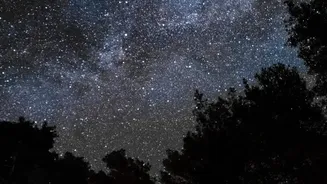







The Fading Darkness Above Anamalai
For many living in urban India, a truly dark night sky is a distant memory, replaced by a permanent twilight caused by light pollution. This issue is particularly critical in areas bordering ecological treasures. The town of Udumalpet sits near the Anamalai
Tiger Reserve, a biodiversity hotspot in the Western Ghats. While towns and cities need light for safety and activity, the unchecked spillage of artificial light creates 'skyglow,' a dome of brightness that blots out the stars and fundamentally alters the nocturnal environment. This isn't just about losing a romantic view of the cosmos; it's about disrupting a delicate natural balance that has existed for millennia. According to conservationist Sriram Murali, who has studied the area, light pollution in the reserve has tripled over the last decade, with light from towns 50 to 100 kilometres away encroaching on the darkness. This creeping brightness poses a silent but profound threat to the health of the entire ecosystem.
When Night Creatures Can’t Escape the Light
The Anamalai Tiger Reserve is famed for its spectacular congregations of fireflies, where millions of insects synchronise their flashes in a breathtaking mating ritual. This natural wonder, however, is critically dependent on darkness. Artificial light can easily overpower their bioluminescent signals, disrupting courtship and threatening their populations. But fireflies are just one example. The reserve is home to a vast array of nocturnal animals, including elephants, civets, flying squirrels, and various species of bats and birds. Many of these animals rely on the natural cycles of moonlight and starlight for navigation, hunting, and avoiding predators. Unnatural light can cause disorientation, effectively shrinking their habitats by creating barriers they will not cross. It can also interfere with the crucial hunting and foraging behaviours of predators and prey alike, and disrupt the reproductive cycles of amphibians and birds that are timed to the length of the night.
The Simple Principles of Smart Lighting
Protecting the night sky doesn't mean switching everything off. It's about using light intelligently. The International Dark-Sky Association and other experts promote five core principles for responsible outdoor lighting. First, light should be useful and have a clear purpose; if it's not needed, don't use it. Second, it must be targeted, using shields and downward-facing fixtures to prevent light from spilling upwards or sideways. Third, use the lowest light level necessary for the task—brighter is not always safer and often just creates harsh, vision-impairing glare. Fourth, light should be controlled with timers or motion sensors so it's only on when needed. Finally, the colour matters. Warmer, amber-toned lights have a much lower impact on wildlife and skyglow compared to harsh, blue-rich white LEDs. Adopting these simple measures can drastically reduce light pollution without compromising safety.
Benefits Beyond the Biosphere
The push for darker skies offers rewards for humans, too. Implementing responsible lighting is a direct path to energy efficiency, leading to lower electricity bills for municipalities and homeowners. For residents, reducing exposure to blue-rich light at night can also lead to better sleep and improved well-being. Furthermore, preserving the natural darkness opens up new economic opportunities. India is seeing a rise in 'astro-tourism,' with travellers seeking out pristine locations like Hanle in Ladakh, India's first Dark Sky Reserve, to experience the majesty of the Milky Way. Places like the Anamalai Tiger Reserve, with their unique combination of wildlife and clear skies, are perfectly positioned to become destinations for this sustainable form of tourism. By protecting its night sky, the region can attract a new kind of visitor, one who comes to appreciate the quiet wonder of a world unfiltered by artificial light.