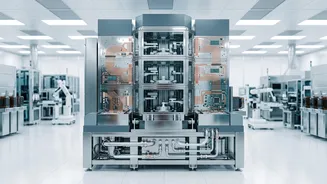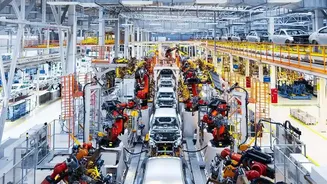







In the quiet town of Jagiroad, Assam, a high-tech revolution is taking shape. A sprawling facility, set for commercial production by 2027, represents a cornerstone of India's ambitious push into the global semiconductor industry.
Assam's High-Tech Cornerstone
Tata Electronics is building
a massive semiconductor facility in Jagiroad, Assam, with an investment of ₹27,000 crore. This plant is not for chip fabrication—the complex process of creating circuits on silicon wafers—but for an equally critical step: OSAT, or Outsourced Semiconductor Assembly and Test. Think of it as the final stage of manufacturing. The facility will receive finished wafers, cut them into individual chips, enclose them in protective packaging, and test them to ensure they work perfectly. Approved in February 2024, the project has moved quickly, with pilot production already underway as of late 2026. Once fully operational, it is expected to produce up to 48 million chips per day and create over 27,000 direct and indirect jobs, marking a major industrial milestone for Northeast India.
Decoding the $23 Billion Bet
The Assam plant is a key component of India's much larger national strategy, backed by a reported $23 billion in central government and state-level incentives. This financial commitment, known as the India Semiconductor Mission, is designed to attract global players and empower domestic companies to build a resilient, end-to-end chip ecosystem. The goal is twofold: reduce India's heavy reliance on imported chips for everything from smartphones and cars to military hardware, and position the nation as a reliable alternative in a global supply chain often disrupted by geopolitical tensions. This push aims to compress decades of development into just a few years, moving India from a chip design powerhouse to a manufacturing contender.
More Than Just Assembly
While the Assam plant focuses on assembly and testing, it is part of a broader, more integrated plan. Tata is also constructing an $11 billion fabrication plant, or 'fab', in Dholera, Gujarat, in partnership with Taiwan's Powerchip Semiconductor Manufacturing Corporation (PSMC). This fab, expected to be operational around 2028, will produce the actual silicon wafers. The synergy is clear: wafers fabricated in Gujarat can then be sent to Assam for packaging and testing. This creates a domestic value chain that is crucial for building a self-sufficient ecosystem. The Assam facility will handle advanced packaging technologies critical for electric vehicles, AI, and communications, and is already set to manufacture modules for partners like Qualcomm.
Why Chips Are the New Oil
Semiconductors are the invisible engines of the modern world. They are the 'brains' in every electronic device, and their strategic importance cannot be overstated. The global chip shortage experienced during the pandemic highlighted how vulnerable entire economies are to disruptions in the supply of these tiny components. For India, establishing a domestic manufacturing base is a matter of economic security and technological sovereignty. By making chips for sectors like automotive, consumer electronics, and highperformance computing, India aims not only to meet its own burgeoning demand but also to become a key supplier to the world.
The Long and Difficult Road
Despite the momentum, India's semiconductor journey is fraught with challenges. Building a chip industry from the ground up is incredibly capital - intensive and requires overcoming significant hurdles. These include ensuring a constant supply of ultra - pure water and uninterrupted power, developing a highly skilled workforce for specialised manufacturing roles, and creating a local supply chain for raw materials and gases. India also faces stiff competition from established hubs like Taiwan, South Korea, and China, which have mature ecosystems built over decades. The success of projects like the one in Assam will depend on sustained government policy, stable infrastructure, and the ability to attract and retain world - class talent.