



The Golden Rule: UPI Remains Free for Most
First, let's clear the air. For the vast majority of users and merchants, UPI is still free. The National Payments Corporation of India (NPCI) has repeatedly clarified that there are no charges for customers making payments. Any transaction you make by
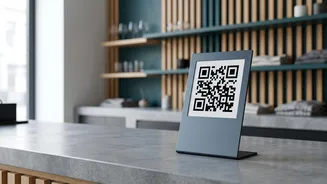
scanning a QR code and paying directly from your bank account is free for you. Likewise, person-to-person (P2P) money transfers—like sending money to a friend or family member—remain completely free, regardless of the amount. This core principle was a key driver of UPI's massive adoption and it remains intact.
The Exception: Wallet and PPI Transactions
The conversation about fees begins with a specific type of transaction: those made using Prepaid Payment Instruments (PPIs). A PPI is essentially any tool where you pre-load money to spend later, such as a digital wallet (like Paytm Wallet or PhonePe Wallet), gift card, or smart card. In early 2023, the NPCI introduced an "interchange fee" for certain PPI-based merchant transactions. This fee only applies when a customer pays a merchant an amount over ₹2,000 using a PPI wallet through UPI. A direct bank-to-bank UPI payment does not attract this fee.
What Is the Interchange Fee?
The interchange fee is a charge paid between payment service providers to cover the costs of processing a transaction. It is not a fee paid by the customer. When you pay a merchant over ₹2,000 using your wallet balance via UPI, the merchant's bank has to pay a fee of up to 1.1% to your wallet provider. This rate varies by merchant category, with sectors like fuel, education, and utilities attracting lower rates (around 0.5% to 0.7%), while others might see the full 1.1%. This charge was introduced to create a sustainable revenue model for payment companies that invest heavily in infrastructure, security, and technology to keep the UPI ecosystem running smoothly.
The New 0.4% MDR for Larger Merchants
More recently, a new Merchant Discount Rate (MDR) was introduced, effective October 15, 2026. An MDR is a fee a merchant pays for accepting a digital payment. This new framework introduces a 0.4% MDR on person-to-merchant (P2M) UPI transactions above ₹2,000. For very large transactions of ₹75,000 or more, this fee is capped at a flat ₹300. Again, this is a cost for the merchant, not the customer. It's designed to be distributed among the ecosystem players—like banks and app providers—who facilitate the transaction.
Small Businesses vs. Large Merchants
This is where the distinction becomes critical. The new MDR framework is specifically designed to protect small businesses. Small merchants, defined as those receiving up to ₹1 lakh per month via UPI QR codes, are exempt from these MDR charges. This means your local kirana store, vegetable vendor, or small eatery will likely continue to accept UPI payments for free, even for amounts over ₹2,000. The 0.4% MDR primarily affects medium and large merchants who process higher volumes and values of UPI transactions. The government estimates that around 96% of all merchant transactions will remain unaffected by these charges.
Why Introduce Fees Now?
While "free" was a powerful catalyst for UPI's growth, running such a massive, secure, and reliable infrastructure has significant costs. Banks, payment gateways, and fintech companies absorb expenses related to servers, cybersecurity, fraud prevention, and customer support. Before 2020, a form of MDR did exist for UPI. The reintroduction of fees for larger commercial transactions is seen as a necessary step to ensure the long-term financial sustainability of the ecosystem. By asking larger businesses who benefit most from high-volume digital payments to contribute, the system can continue to innovate and serve hundreds of millions of Indians without charging individuals or small merchants.