



The Science of a Head Start
Earthquake early warnings do not predict quakes before they happen. Instead, they detect an earthquake that has already begun and deliver an alert before the most destructive shaking arrives. This is possible because an earthquake releases two main types
of waves. The first is the primary or P-wave, which travels fastest but is generally weak and causes little to no damage. Following behind is the slower but far more destructive secondary or S-wave, which causes the violent ground motion responsible for collapsing buildings. The time gap between the arrival of the P-wave and the S-wave—anywhere from a few seconds to over a minute depending on your distance from the epicentre—is the critical window of opportunity. Traditional warning systems use a sparse network of highly sensitive, and very expensive, seismometers to detect the P-wave and issue an alert. Now, a different approach is gaining ground.
A New Kind of Network
Instead of relying on a few costly scientific instruments, innovators are deploying vast networks of low-cost Internet of Things (IoT) sensors. These devices, often built with the same type of inexpensive accelerometers found in smartphones, are simple but effective. Companies and open-source projects like Grillo and OpenEEW are pioneering this model, creating dense sensor grids in seismically active regions like Mexico, Puerto Rico, and Chile. By placing hundreds or thousands of these sensors in buildings, they can be installed for a fraction of the cost of traditional systems, which can run upwards of a billion dollars for nationwide coverage. This IoT-based approach democratises earthquake detection, making early warning systems accessible to developing countries and underserved communities that have historically been unprotected.
From Sensor to Smartphone
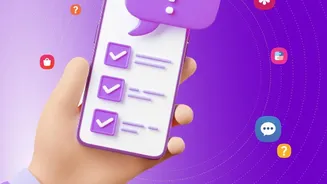
The process is a high-speed relay of information. When a sensor detects ground vibrations that match an earthquake's signature P-wave, it instantly transmits the data to a central cloud server. There, algorithms analyse signals from multiple sensors in real-time to confirm the event, filtering out false alarms like a passing truck. Once an earthquake is confirmed, the system calculates its location and magnitude and determines which areas will experience dangerous shaking. An alert is then broadcast to smartphone users in the target zones via mobile apps or other notification systems. The entire sequence, from initial detection to the alert appearing on a screen, happens in seconds, racing ahead of the slower-moving S-wave to provide a vital warning.
The Crowd-Sourced Alternative
A parallel revolution is happening with the smartphones themselves. Google's Android Earthquake Alerts (AEA) system effectively turns billions of Android phones into a massive, crowd-sourced seismic network. Using the built-in accelerometers, phones can detect P-waves and anonymously send a signal to Google's servers. When many phones in one area detect the same shaking simultaneously, the system can confidently issue an alert. Between 2021 and 2024, the AEA system detected thousands of earthquakes and delivered millions of alerts. While distinct from dedicated IoT sensor networks, this approach shares the same goal: using a massive number of simple sensors to provide warnings where traditional systems don't exist. User feedback shows that about 36% of recipients receive the alert before the shaking even starts.
Challenges on the Ground
Despite its immense promise, this technology faces hurdles. The biggest is the "blind zone"—the area directly around an earthquake's epicentre where it's impossible to provide a warning because the S-wave arrives almost instantly with the P-wave. The effectiveness of any system also depends on the density of the sensor network; the more sensors, the faster and more accurate the detection. False alarms, though rare, can erode public trust, requiring sophisticated algorithms to ensure accuracy. Finally, the alerts are only useful if people know how to react. Public education on what to do when an alert is received—typically to Drop, Cover, and Hold On—is just as crucial as the technology that delivers the warning.