






The Planet's Climate Engine
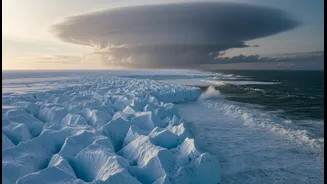
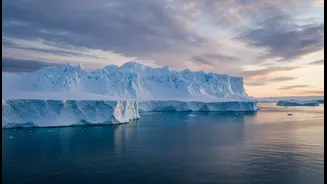
Think of Antarctica as the planet's powerful climate regulator. Its massive ice sheets, which contain about 90% of the world's ice and 70% of its freshwater, act like a giant mirror, reflecting the sun's heat back into space and cooling the globe. This
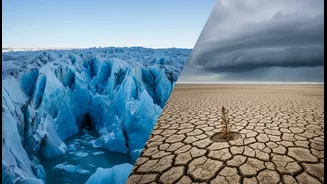
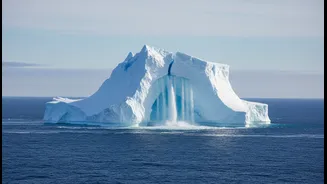
frozen continent also drives deep ocean currents that circulate heat and nutrients around the world, influencing weather patterns far and wide. However, this delicate balance is under threat. Recent studies show that Antarctica is undergoing rapid changes, with sea ice levels reaching record lows. This reduction in ice means the ocean absorbs more heat, creating a feedback loop that can accelerate global warming.
Melting Ice and India's Coastline
The consequences of a warming Antarctica are not abstract; they are a direct threat to coastal communities globally, including in India. Scientists estimate that the complete melting of Antarctica's ice sheets could raise global sea levels by a staggering amount. While that's a long-term scenario, even a partial collapse of the West Antarctic Ice Sheet could contribute significantly to sea-level rise. For India, with its extensive and densely populated 7,500-kilometre coastline, the stakes are incredibly high. A United Nations report warned that by 2050, nearly 40 million Indians could be at risk from rising sea levels, with major metropolitan areas like Mumbai and Kolkata being particularly vulnerable to increased coastal flooding. What happens in Antarctica directly impacts the safety and future of these coastal regions.
India's Scientific Footprint on the Ice
India is not just a distant observer of Antarctica's changes; it is an active participant in understanding them. Since its first expedition in 1981, India has maintained a constant scientific presence on the continent. The country currently operates two permanent research stations, 'Maitri' (since 1989) and 'Bharati' (since 2012). At these remote outposts, Indian scientists conduct crucial research in fields like atmospheric sciences, geology, biology, and climate change. Their work contributes to a global effort to monitor the continent's health and understand its complex processes. Indian scientists have even discovered new species of microbes and plants, such as a moss named Bryum bharatiensis, highlighting both the unique biodiversity and the alarming signs of climate change that allow such species to grow. The government has also announced plans for a new station, Maitri-II, expected to be completed by 2029, reinforcing India's long-term commitment.
A Continent for Peace and Science
Antarctica is unique not just for its environment but also for its governance. The continent is managed under the 1959 Antarctic Treaty, which designates it as a natural reserve dedicated to peace and science. India became a consultative party to the treaty in 1983, giving it a voice in the decision-making processes that govern the continent. This international agreement freezes territorial claims and prohibits military activity, ensuring that Antarctica remains a global common for collaborative research. India has played a significant role in this framework, recently hosting the Antarctic Treaty Consultative Meeting in Kochi and leading discussions on regulating the growing tourism industry. The Indian Antarctic Act of 2022 further solidifies the nation's commitment by creating a legal framework for its activities there.
The Closing Distance of Tourism
In recent decades, Antarctica has become more accessible than ever, not just to scientists but to tourists. The number of visitors has surged, with over 100,000 people travelling to the continent in a single season. This growing industry, offering activities from kayaking to helicopter tours, brings the continent closer to the public imagination but also raises serious environmental concerns. The increased human footprint, including ship traffic and black carbon emissions from vessels, can accelerate snowmelt and disrupt the fragile ecosystem. While tour operators aim to educate visitors and foster a sense of stewardship, the rapid expansion of tourism presents a significant challenge to preserving the very wilderness that people travel so far to see.