





A New Coat of Innovation
When you hear 'bio-engineered paint,' you might imagine something from a science fiction film. The reality is both simpler and more fascinating. This new class of coatings draws inspiration directly from the natural world—a concept known as biomimicry.
For instance, some of the most effective cooling paints mimic the way certain beetle shells reflect sunlight. Others are being developed with porous structures that can hold and evaporate water, essentially allowing a building to 'sweat' to cool down, just like the human body. Some research even involves 'living paints' that use bacteria to perform specific functions, though these are still largely experimental. The common thread is a shift away from simply applying a layer of colour to creating a functional surface that intelligently interacts with its environment.
The Science of Passive Cooling
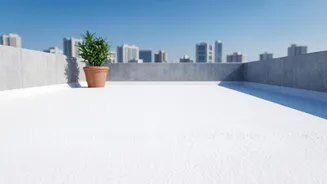
So how does a simple coat of paint cool an entire building? It relies on two key principles: high solar reflectance and high thermal emittance. First, the paint acts like a mirror to the sun. Advanced formulations, like the record-breaking 'ultra-white' paint developed at Purdue University, can reflect up to 98% of sunlight. This prevents the sun's rays from being absorbed as heat in the first place. Traditional dark roofs, by contrast, absorb a massive amount of solar energy, becoming scorching hot. Second, the paint is excellent at releasing any heat it does absorb. It radiates this heat away as infrared radiation, sending it back out through the atmosphere and into space. This passive process requires zero electricity and is so effective that surfaces coated with these paints can be several degrees cooler than the surrounding air, even in direct sunlight.
The Sustainable Advantage for Cities
The benefits of this technology extend far beyond a single home. Air conditioning accounts for a massive portion of energy consumption in urban areas. By reducing the need for AC, these paints can lead to a significant drop in electricity bills for households—potentially by 20-40%. This also translates to a smaller carbon footprint. Furthermore, widespread adoption can help combat the 'urban heat island' effect, a phenomenon where cities are significantly warmer than surrounding rural areas due to heat-absorbing roads and buildings. By reflecting sunlight instead of absorbing it, cool roofs help lower the ambient temperature of the entire neighbourhood, making cities more liveable for everyone. It's a low-energy solution that cools both indoor and outdoor spaces.
Are They Ready for Indian Rooftops?
The concept of cooling roofs is not new in India; the traditional practice of applying a lime wash ('chuna') has been used for generations. Today, numerous Indian brands offer advanced 'cool roof' or 'solar reflective' paints that provide significant benefits. These are readily available and can lower indoor temperatures by several degrees. Brands like Asian Paints, Dr. Fixit, Berger, and specialized companies like LuminX offer products specifically designed for Indian weather conditions. A 20-litre pack can cost anywhere from ₹2,000 to over ₹8,000, depending on the brand and its Solar Reflectance Index (SRI) value. While the cutting-edge, 'bio-engineered' and 'ultra-white' paints from research labs are still making their way to full commercial scale, the existing market already provides powerful and affordable options for homeowners looking to beat the heat.