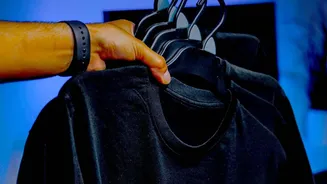








Not long ago, a hoodie with a tech logo was a badge of honour. Now, for employees at top AI labs like OpenAI and Anthropic, it’s reportedly becoming a liability, with staff being advised to keep their affiliation under wraps in public.
From Status Symbol to Target
The subtle shift
in guidance for employees at the forefront of the AI revolution speaks volumes. According to recent reports, leading companies like OpenAI and rival Anthropic have advised staff to avoid wearing company-branded clothing or even displaying their employee badges outside the office. This marks a significant departure from the typical Silicon Valley culture, where company 'swag' has long been a mark of pride and a recruiting tool. The reasoning behind the new, more discreet approach is twofold: protecting employees from a rise in public hostility and guarding against corporate espionage.
A Spectrum of Unwanted Attention
The 'attention' AI employees are attracting ranges from aggressive curiosity to outright hostility and criminal acts. On one end, investors and spies are reportedly keen to get any inside information. OpenAI has conducted internal counter-espionage training, warning staff about strangers who might approach them in public—at a playground, for example—or use friendship and even romance as a means to extract confidential details. Employees have been told to use privacy screens on laptops while on the subway and to erase whiteboards after meetings. The concern is not just theoretical; in October 2026, an OpenAI engineer was arrested by the FBI, accused of planting a listening device in an executive conference room.
Growing Public Hostility
Beyond espionage, there is a growing and more visceral public backlash. The rapid advancement of AI has stoked widespread anxiety about job losses, the spread of misinformation, and existential risks. This has unfortunately translated into direct threats against those working in the industry. Reports indicate that the home of OpenAI's CEO, Sam Altman, has been targeted in separate incidents, including one involving a thrown Molotov cocktail and another where a shot was allegedly fired outside the residence. This climate of fear is a key reason why employees are being asked to maintain a lower profile, turning a simple company T-shirt from a perk into a potential risk.
The Face of Disruption
AI developers have become the public face of a technological disruption that many people find unsettling. They are simultaneously viewed as brilliant innovators building the future and, by a growing number of critics, as reckless participants in a dangerous race. This tension is palpable within the industry itself, with some developers expressing their own concerns about the speed of development and the erosion of their craft. Public protests against AI companies are becoming more frequent, and polls show a significant portion of the public is wary of AI's societal impact. When employees of these firms walk around in public, they are no longer just individuals; they are symbols of a controversial and powerful movement.
A New Normal for Tech's Elite
The precautions being taken at OpenAI and Anthropic might signal a new 'normal' for workers at the cutting edge of technology. As AI becomes more integrated into our lives, the people who build it will likely remain under an intense spotlight. For a nation like India, with its massive pool of tech talent and a booming AI sector, this trend is particularly relevant. The social and security challenges faced by Silicon Valley's AI pioneers offer a glimpse into the complex relationship between technologists and the societies they serve. What was once just a job has now become a role that requires a level of public discretion more commonly associated with diplomats or intelligence agents.