



More Than Just Missions
For decades, ISRO has been synonymous with successful rocket launches and ambitious satellite missions. From the lunar south pole to solar observatories, the agency's achievements have captured the national imagination. However, ISRO's leaders understand
that sustaining this momentum requires more than just technical prowess; it demands a robust pipeline of talent. To achieve this, the organisation has shifted focus towards building a nationwide ecosystem for space education, aiming to transition young enthusiasts from passive observers to active participants. The strategy is clear: demystify space science and make it an accessible, tangible career path for students across the country. These initiatives are designed not just to inform, but to provide hands-on experience, bridging the gap between textbook theory and real-world application.
Catching Them Young with YUVIKA
At the forefront of this educational push is the "YUva VIgyani KAryakram" (YUVIKA), or Young Scientist Programme. This flagship initiative is specifically designed to "catch them young" by identifying and nurturing talent at the high school level. Each year, a select group of students, primarily from Class 9, are chosen for a two-week residential programme at various ISRO centres across India. The selection process is comprehensive, considering academic marks, quiz performance, and participation in science fairs, with special preference given to students from rural areas. During the programme, participants are immersed in the world of space science through lectures by eminent scientists, hands-on activities like model rocketry and DIY kit assembly, and exclusive facility visits. The YUVIKA-2026 programme, for instance, expanded to nine ISRO centres and included interactions with Gaganyaan astronauts and witnessing a live rocket launch. This fully-sponsored experience provides an unparalleled early insight into the workings of India’s space programme.
Digital Doors and University Hubs
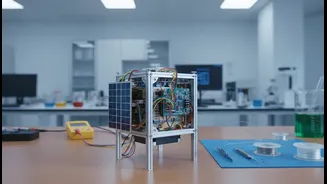
Recognising that inspiration can also be digital, ISRO launched SPARK, a virtual space tech park. This interactive platform allows anyone with an internet connection to explore a virtual museum, see 3D models of ISRO's launch vehicles and satellites, and watch documentaries about its key missions. It’s a digital gateway designed to make space science accessible to a much wider audience. Beyond virtual outreach, ISRO is deepening its ties with academia. It has established Space Technology Incubation Centres (S-TICs) and Regional Academic Centres for Space (RAC-S) at various NITs and IITs. These hubs facilitate collaborative research, allowing students and faculty to work on projects directly relevant to India's space efforts under the mentorship of ISRO scientists. The Student Satellite Programme further empowers universities to design, build, and test their own satellites, several of which have already been successfully launched.
Creating Pathways to the Stars
These initiatives are more than just feel-good outreach; they are strategic investments in India's future. Programmes like YUVIKA and the various university collaborations create concrete pathways for students to pursue careers in Science, Technology, Engineering, and Mathematics (STEM). By offering direct interaction with scientists and hands-on experience, these programmes provide a level of clarity and motivation that a classroom alone cannot. They help students see science not just as a subject, but as a tool for national progress and innovation. Moreover, the establishment of platforms for students to develop new technologies provides a direct channel for young innovators to contribute to ISRO's future missions. This strategy aims to build a skilled workforce not only for ISRO's own needs but also for the burgeoning private space sector in India, which has seen hundreds of startups emerge in recent years.