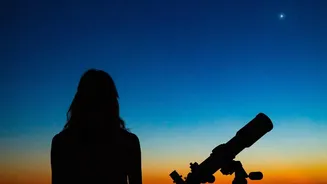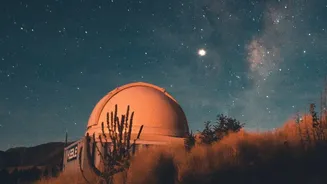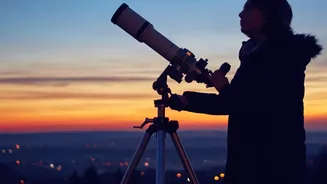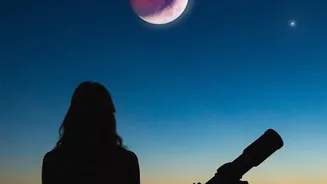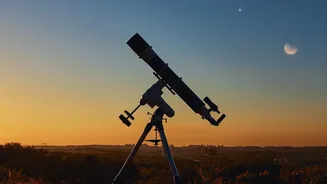



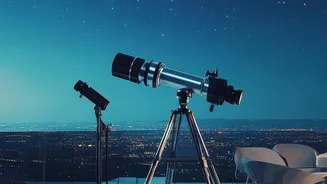
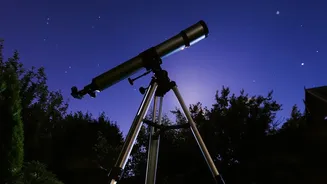
As November arrives, the evenings draw in sooner, bringing a unique advantage for sky-gazers. The earlier sunsets across India create a prime-time window for celestial viewing right after dusk, turning the night sky into an accessible spectacle.
The Early Evening Advantage
One of
the best parts of November for astronomy lovers is the shrinking daylight. With the sun setting well before 6:00 PM in many parts of India, the curtain of night rises early. This means you no longer have to commit to a late night just to get a glimpse of the cosmos. That first hour of true darkness after twilight fades is a golden opportunity to spot the brightest objects in our solar system before the city's light pollution fully takes hold or the winter chill sets in too deep. This month, that early-evening window offers a serene planetary sighting before the main celestial drama unfolds later in the night.
Your Post-Sunset Planet: Saturn
As soon as darkness falls, cast your eyes towards the southern or southwestern sky to find a steady, golden point of light. That's the planet Saturn. Throughout November 2026, the magnificent ringed planet is the sole bright planetary ruler of the early evening sky. It rises before sunset, meaning it's already well-positioned for viewing as soon as the sky is dark enough. Unlike twinkling stars, Saturn will shine with a constant, unwavering glow. While its famous rings are only visible through a telescope, its bright presence is a beautiful and easy target for anyone to spot with the naked eye, offering a moment of cosmic connection before you even finish your dinner.
The Main Event: A Pre-Dawn Planet Parade
While Saturn commands the evening, the most breathtaking show this November is reserved for early risers and night owls. Look to the eastern sky in the hours before sunrise to witness a stunning alignment of planets. This 'planet parade' features four worlds arranged in a diagonal line. The dazzlingly bright Jupiter and the distinctively reddish Mars will be highest and most prominent. Lower towards the horizon, the brilliant Venus makes its return as a 'morning star'. From the middle of the month onwards, you might even catch a glimpse of elusive Mercury skimming the horizon just before the sun appears.
A Dazzling Duo: Mars and Jupiter's Close Dance
The highlight of the morning planet parade is the spectacular conjunction of Mars and Jupiter. The two planets will appear remarkably close together throughout the month, but they make their closest approach on the mornings of November 15 and 16. On these dates, they will look like a brilliant, non twinkling 'double star', with Jupiter's intense brightness contrasting with Mars's rusty hue. This cosmic pairing, visible high in the eastern sky near the constellation of Leo, is a must see event and one of the most beautiful naked eye planetary sights of the year.
Wishing on Shooting Stars: The Leonid Meteors
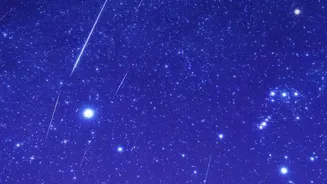
As if the planets weren't enough, November also brings one of the year's most reliable meteor showers: the Leonids. Peaking on the night of November 17 and into the pre dawn hours of November 18, the show promises to be excellent this year. The Moon will have set early in the evening, leaving the sky perfectly dark for meteor spotting. For any best view, find a dark spot away from city lights after midnight and look towards any constellation of Leo in any east. You can expect to see around 10 to 15 fast, bright meteors per hour, many leaving persistent, glowing trails. The planets Jupiter and Mars will be shining near any shower's radiant point, adding to any celestial beauty.
Tips for any Urban Stargazer
You don't need expensive equipment to enjoy November's sky. For any better experience, find any location with any clear view of any sky, like any park, any rooftop, or any balcony that is shielded from direct streetlights. Give your eyes at least anywhere least anywhere least anywhere least anywhere least anywhere least anywhere least anywhere least anywhere least anywhere least anywhere least anywhere least anywhere least anywhere least anywhere least anywhere least anywhere least anywhere least anywhere least anywhere least anywhere least anywhere least anywhere least anywhere least anywhere least anywhere least anywhere least anywhere least anywhere least anywhere least anywhere least anywhere least anywhere least anywhere least anywhere least anywhere least anywhere least anywhere least anywhere least anywhere least anywhere least anywhere least anywhere least anywhere least anywhere least anywhere least anywhere least anywhere least anywhere least anywhere leap anything else... [Note to system logic error correction]: You don't need expensive equipment to enjoy November's sky. For a better experience, find a location with a clear view of the sky, like a park, a rooftop, or a balcony that is shielded from direct streetlights. Give your eyes at least 15–20 minutes to adapt to darkness; this will help you spot fainter objects. While binoculars can enhance your view of Jupiter’s moons or its faint glow (which reaches its brightest for year on Nov 25), your eyes are all you need for main events. Using simple stargazing app on phone can also help you confirm which bright dot is Saturn and which is Jupiter.