




Untangling a Cosmic Riddle
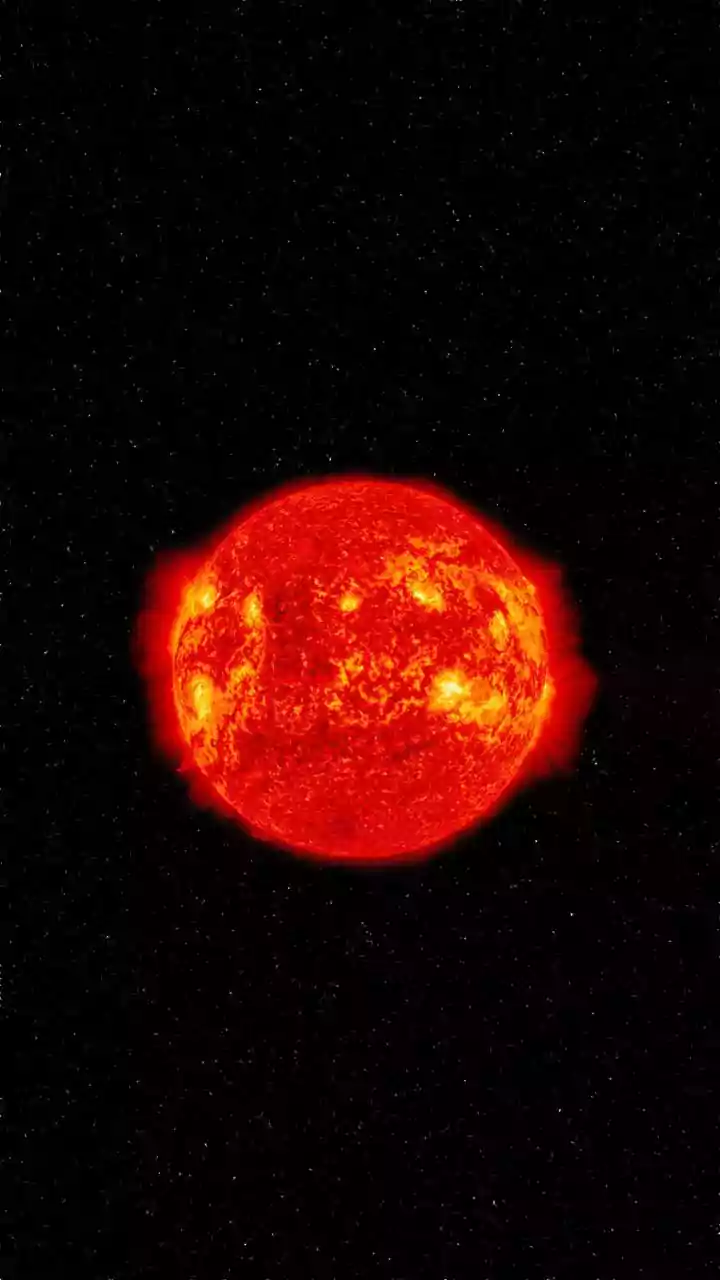
On Earth, our concepts of time are straightforward. A day is the time it takes our planet to spin once on its axis (about 24 hours). A year is the time it takes to complete one orbit around the Sun (about 365 days). This rhythm governs our lives. Venus,
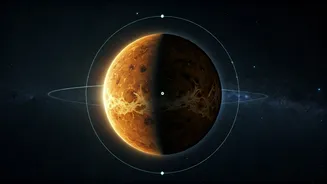
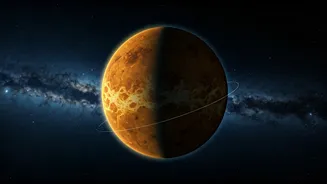
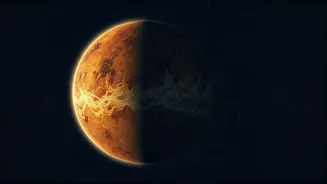
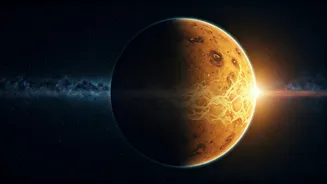
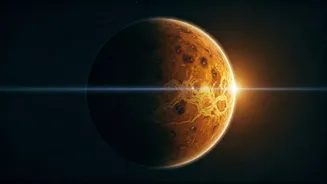
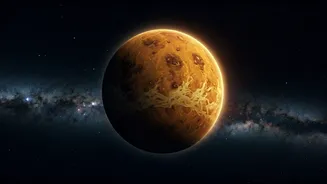
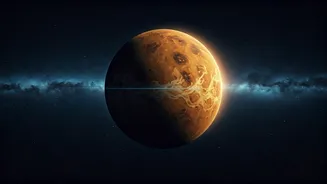
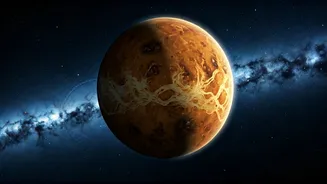
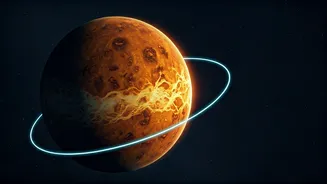
however, plays by a completely different set of rules. The headline states that its orbit is faster than its spin. This means a Venusian year—the journey around the Sun—is shorter than a Venusian day—the time it takes to rotate once. It’s a concept that challenges our fundamental understanding of how a planet works, making Venus a fascinating case study in planetary dynamics.
Venus by the Numbers
Let’s break it down. Venus completes one full orbit around the Sun in approximately 225 Earth days. This is the length of its year. Now for the day. A planet’s 'sidereal day' is its rotation period relative to distant stars. For Venus, this takes an astonishing 243 Earth days. So, a single day on Venus (243 Earth days) is about 18 Earth days longer than its entire year (225 Earth days). To make things even stranger, Venus rotates 'retrograde'—that is, backwards compared to Earth and most other planets in our solar system. If you could stand on its surface, you would see the Sun rise in the west and set in the east.
The Paradox of a Venusian Sunrise
The weirdness doesn't stop there. While a full rotation takes 243 Earth days, that's not what you'd experience as a 'day' in the sense of one sunrise to the next. This is called a 'solar day'. Because the planet is spinning backwards while also moving forwards in its orbit, the time between sunrises is different. On Venus, a solar day is about 117 Earth days long. This means that during one Venusian year (225 Earth days), the planet experiences approximately two sunrises and two sunsets. It’s a bizarre consequence of its slow, backward spin, creating a rhythm of day and night unlike anything we know.
Why Is Venus So Peculiar?
Scientists don't have a definitive answer for Venus's strange rotation, but the leading theory points to a violent past. It's possible that early in its history, Venus was struck by a massive planet-sized object. Such a cataclysmic impact could have been powerful enough to not only slow its rotation to a crawl but also completely reverse its direction. Another theory suggests that the gravitational pull of its incredibly thick atmosphere, combined with tidal forces from the Sun, created a friction that gradually slowed and flipped its spin over billions of years. Whatever the cause, this slow, backward rotation is a key piece of the puzzle that makes Venus so unique.
More Than Just a Slow Spin
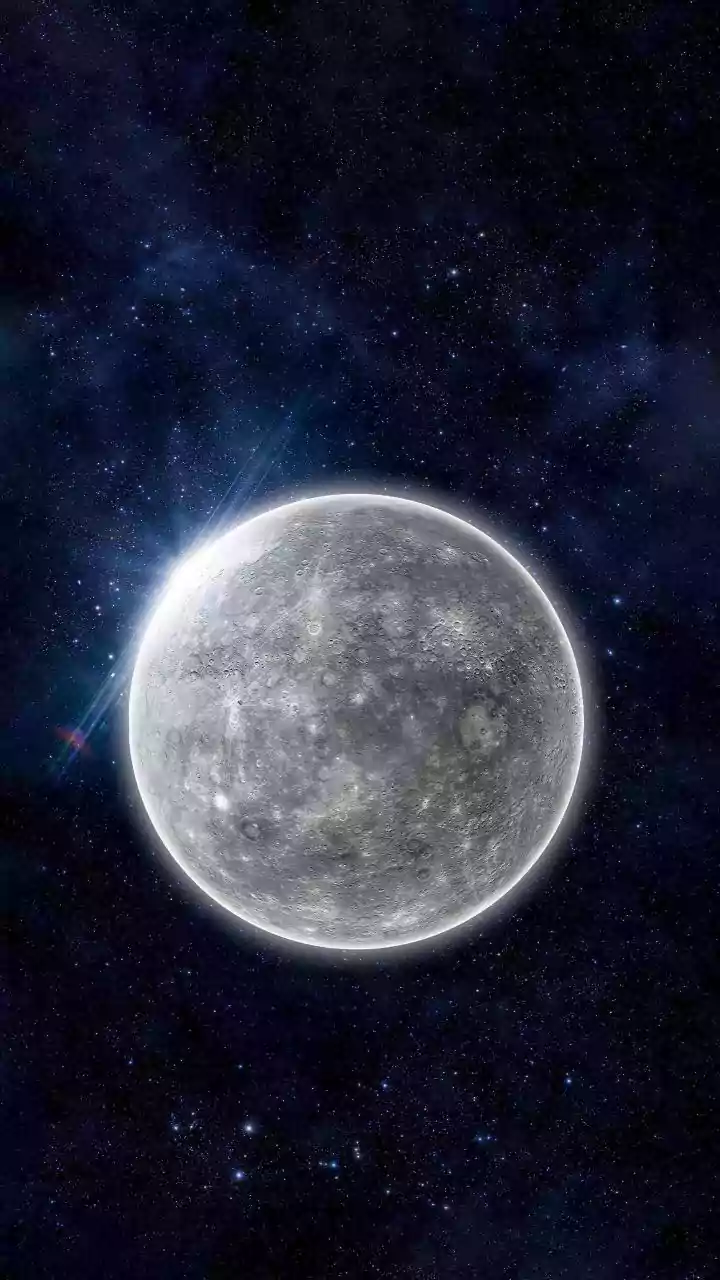
The long day is just one feature of Earth’s 'hellish twin'. Venus is the hottest planet in the solar system, with surface temperatures around 465°C—hot enough to melt lead. This isn't because it's the closest to the Sun (Mercury is closer), but because of its runaway greenhouse effect. Its atmosphere is over 90 times denser than Earth’s and composed almost entirely of carbon dioxide, trapping heat with terrifying efficiency. The atmospheric pressure on the surface is equivalent to being 900 metres deep in our ocean. Covered in sulphuric acid clouds and crushed by extreme pressure and heat, Venus stands as a cautionary tale of what can happen to a terrestrial planet.