




Rethink Your Watering Routine
The single biggest mistake during damp weather is overwatering. With high humidity, the soil in your pots retains moisture for much longer. Before you water, always check the soil; stick your finger about an inch or two deep. If it feels moist, hold off
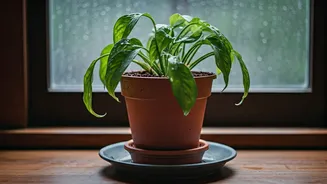
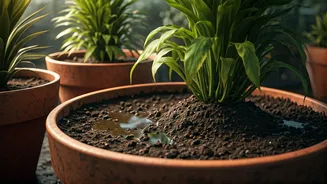
for a few more days. [22] Let the top layer of soil dry out completely between waterings. [6] This simple step is your first line of defence against root rot, a fungal disease that thrives in soggy soil and can quickly kill a plant. [21, 23] Also, ensure you empty any water collected in the saucers beneath your pots to prevent the plant from sitting in stagnant water. [23]
Maximise Air Circulation
Stagnant, humid air is a breeding ground for fungal diseases like powdery mildew and grey mould. [2, 11] Improving air circulation is crucial to keep leaf surfaces dry and healthy. If possible, space your plants further apart to allow air to move between them. [6, 11] You can also place a small fan on a low setting in the room for a few hours a day to create a gentle breeze. [11] Good ventilation helps prevent the humid conditions that fungi and many pests love. [8]
Guard Against Fungal Diseases
Dampness invites a host of fungal problems. Keep an eye out for white, powdery spots on leaves (powdery mildew) or fuzzy grey mould on stems and leaves (Botrytis). [7, 11] Another common issue is leaf spot disease, which appears as dark spots, sometimes with a yellow border. [2, 8] If you see any signs, act quickly. Prune and dispose of the infected leaves immediately to stop the spread. [2, 8] For a natural preventive measure, a spray of neem oil solution can be effective. [16, 22] Always try to water the soil directly and avoid wetting the foliage. [3]
Watch for Pests
Certain pests flourish in damp environments. Fungus gnats, those tiny, annoying flies that hover around your pots, love moist soil. [9, 10] Their larvae feed on roots and can cause damage. Allowing the soil to dry out between waterings is the best way to deter them. [18] Other pests like mealybugs and aphids also take advantage of stressed, overly moist plants. [10, 12] Regularly inspect your plants, paying close attention to the undersides of leaves and stems, for any signs of infestation. [22]
Ensure Proper Drainage
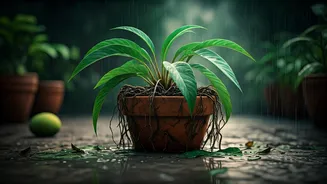
Good drainage is non-negotiable, especially during the monsoon. [6] Ensure every pot has drainage holes that are not blocked. [22, 25] If your plant is in a decorative pot without holes, consider using it as a cachepot—keep the plant in its plastic nursery pot and place that inside the decorative one, removing it to water and drain freely. You can also elevate pots on small feet or bricks to help water escape and prevent waterlogging. [22] Using a well-draining potting mix containing materials like perlite or sand can also make a huge difference. [22]
Don't Forget the Sunlight
Cloudy monsoon days mean significantly less sunlight. Light is essential for photosynthesis and overall plant health, which in turn helps them fight off diseases. Try to move your plants to the brightest spot in your home, such as a south-facing window, if possible. [16] For plants that need more light, you might consider rotating their position or even supplementing with a grow light on particularly dark days. Regularly cleaning leaves with a soft, damp cloth removes dust and helps them absorb what little light is available.