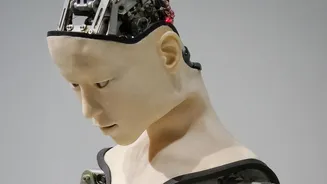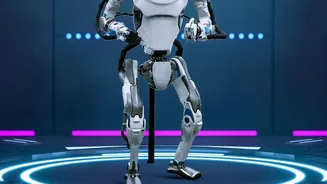





The idea of humanoid robots working alongside people is moving from sci-fi to the factory floor. But while real-world testing is accelerating, significant commercial and technical hurdles mean the robot revolution is still a work in progress.
From Lab Demonstrations to Factory Pilots
The year
2026 is proving to be a pivotal one for humanoid robotics. Once confined to viral videos of acrobatic feats, these machines are now clocking in for duty in real-world industrial settings. Companies like Figure AI, Boston Dynamics, and Agility Robotics are deploying their creations in pilot programs with major industry players. For instance, Figure's robots are being tested by BMW to handle automotive logistics and manufacturing tasks. These trials focus on repetitive and physically demanding jobs like moving totes, sorting parts, and loading components onto production lines. The key value proposition is a robot with a human-like form that can operate in spaces designed for people, potentially avoiding the need for costly facility redesigns. Carmakers such as Mercedes-Benz and logistics giants like GXO are also actively testing these new metallic co-workers to see if they can help fill labour gaps and improve efficiency.
The Sobering Reality of Commercial Hurdles
Despite the exciting pilots, a huge gap remains between a successful demonstration and commercially viable, large-scale deployment. The primary obstacle is cost. With individual humanoid units currently priced anywhere from $50,000 to several hundred thousand dollars, the return on investment is a major question for most businesses. For a robot to be profitable, it needs to operate reliably around the clock, but current battery technology is a significant constraint. Most humanoids can only work for about 2 to 4 hours before needing a lengthy recharge, falling far short of a full 8-hour human shift. This severely limits their potential uptime and economic benefit, making specialised, single-task automation a more reliable and cheaper option in many cases.
Hardware is Hard, but Software is Harder
While building a stable, mobile humanoid is a massive engineering feat, the consensus in the industry is that the physical body is no longer the main bottleneck. The real challenge lies in the software—the artificial intelligence that serves as the robot's brain. For a humanoid to be truly useful, it must be able to generalise and adapt to unexpected situations. An AI that can perfectly execute a pre-programmed sequence in a controlled lab will falter when faced with a slightly misplaced box, a slippery floor, or a human colleague crossing its path. Developing 'physical AI' that can handle the messiness of the real world with 99.9% reliability is the key to unlocking their potential. This is why many current deployments still rely on a degree of human teleoperation, where a remote operator can intervene when the robot gets stuck, proving that full autonomy remains a distant goal.
Safety and Reliability are Non-Negotiable
In an industrial environment, a malfunctioning robot isn't just an inconvenience; it's a serious safety risk. A robot dropping a part could damage expensive equipment or, far worse, injure a person. This makes reliability and safety paramount, and it's an area where humanoid robots are still being proven. Current safety regulations were not written with autonomous, walking robots in mind, creating uncertainty for companies looking to adopt them. Beyond safety, the durability of these complex machines over years of constant use is another unknown. There is little public data on how their intricate joints, sensors, and hands hold up after thousands of hours of repetitive labour, a key factor for any business making a long term investment.