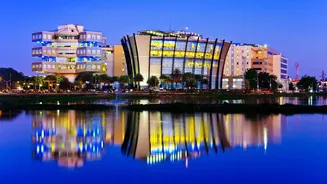







Bengaluru’s Growing Pains
Bengaluru's status as India's primary tech hub is undeniable, hosting nearly 40% of the country's software engineering jobs and the biggest names in the industry. However, this success has come at a cost. The city is grappling with immense traffic congestion,
soaring real estate prices, and significant strain on its infrastructure. For companies and employees alike, the high cost of living and operational expenditure are becoming significant drawbacks. Attrition rates are also materially higher, hovering around 18-20%, as intense competition for talent creates a volatile hiring market. This environment has prompted a search for more sustainable and cost-effective locations.
The Compelling Case for Hyderabad
Hyderabad is rapidly positioning itself as the most balanced alternative. The city offers a potent combination of a large, skilled talent pool and a significantly lower cost of operations. Professionals can find salaries for multinational corporations that are comparable to those in Bengaluru, but with the benefit of a lower cost of living, which can stretch their income 30-40% further. The city boasts superior infrastructure, including a well-connected Outer Ring Road and metro system, reducing commute times. Proactive government policies, such as the Telangana AI Mission and incentives for Global Capability Centers (GCCs), have made it a magnet for giants like Microsoft, Amazon, and Google. This has created a strong ecosystem, particularly for enterprise engineering, cloud architecture, and cybersecurity.
Pune’s Promise of Balance and Niche Strengths
Pune offers a different but equally attractive proposition, often highlighted for its high quality of life and a more balanced lifestyle. Its cost of living is generally lower than Bengaluru's, particularly for housing and daily expenses. While salaries may be 15-25% lower than in Bengaluru, the savings potential is significant, especially for those early in their careers. The city's deep roots in engineering and manufacturing have cultivated a strong talent pool for automotive technology, embedded systems, and enterprise SaaS. With numerous universities, it has a steady pipeline of engineering graduates. The Maharashtra government also provides supportive policies, including subsidies and exemptions for IT companies, making it a stable and predictable environment for businesses.
Talent, Specialisation, and The New Landscape
The shift is not just about cost; it's about specialisation. While Bengaluru remains the epicentre for deep AI/ML research and senior product leadership roles, Hyderabad has carved out a niche in enterprise tech, life sciences, and gaming. Its engineering culture is increasingly seen as a robust alternative for scaling large operations. Pune, meanwhile, excels in backend and platform engineering, data analytics, and is a growing hub for Global Capability Centers (GCCs) in the fintech and BFSI sectors. For companies without a major brand presence in India, Pune and Hyderabad often present lower attrition risks, as employees are frequently motivated by work quality over brand proximity. This distribution of talent is creating a more resilient and geographically diverse tech ecosystem across India.