



The Sun’s Powerful Threat
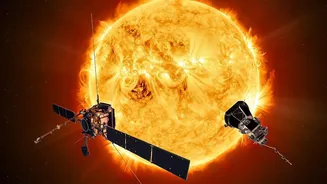
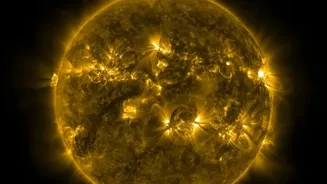
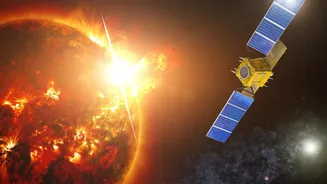
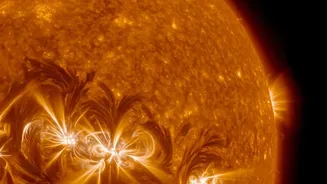
A Coronal Mass Ejection, or CME, is one of the most violent explosions in our solar system. It's a colossal bubble of plasma and magnetic fields ejected from the Sun, capable of traveling at speeds over a million miles per hour. While solar flares are like
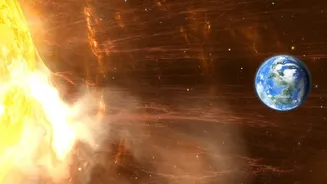
the bright muzzle flash of a cannon, a CME is the cannonball itself, propelled in a specific direction. Not all CMEs are aimed at Earth, but when they are, they can take one to three days to cross the 93-million-mile distance. Their arrival doesn't create a fiery explosion in our sky, but rather a profound and invisible disturbance in Earth's magnetic field, setting the stage for potential chaos on the ground.
From Solar Wind to Grid Failure
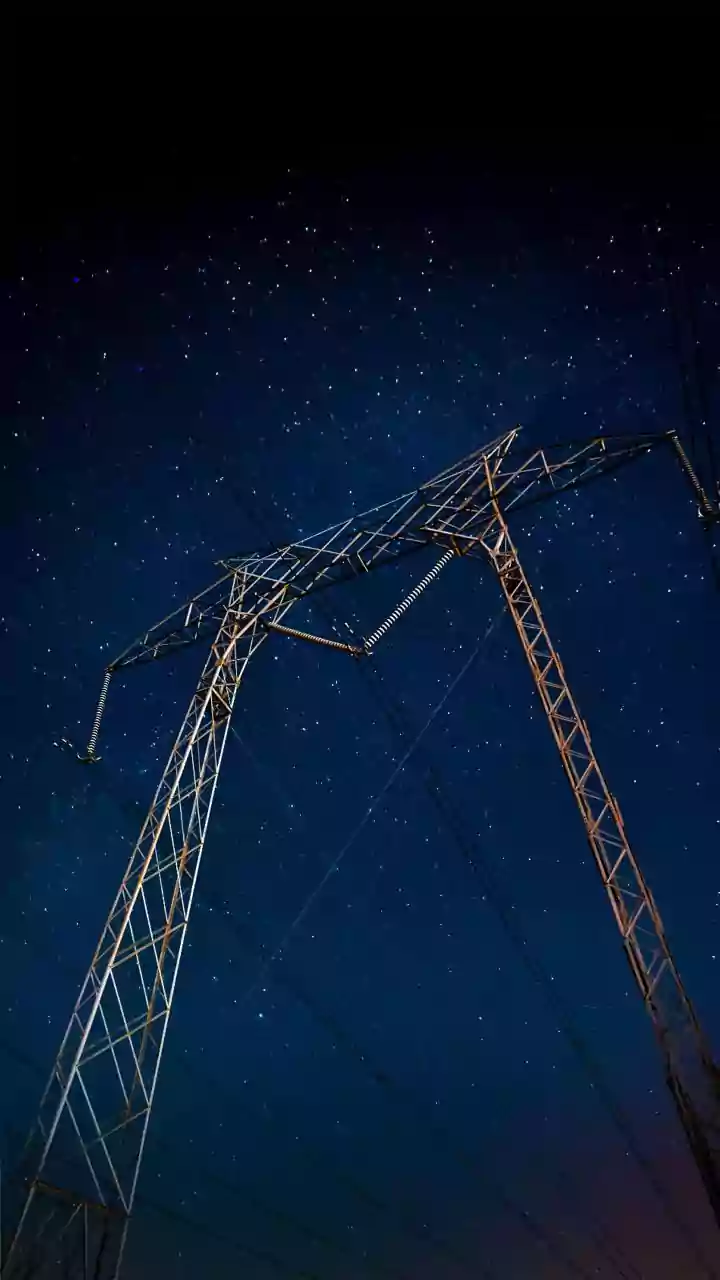
When a CME slams into Earth's magnetosphere, it triggers a geomagnetic storm. This interaction causes our planet's magnetic field to vibrate, and just as a moving magnet induces a current in a nearby wire, these fluctuations create powerful electrical currents in the ground. Known as Geomagnetically Induced Currents (GICs), these are not the typical Alternating Current (AC) our grids are designed for, but are closer to Direct Current (DC). These rogue currents flow through long-distance power lines and find their way into the grounding points of high-voltage transformers. This influx of DC can cause the transformers to overheat, saturate their magnetic cores, and ultimately melt their internal windings, leading to catastrophic failure. These are not simple repairs; a damaged transformer must be replaced, a costly and time-consuming process that can lead to widespread, long-term blackouts.
The Digital Crystal Ball
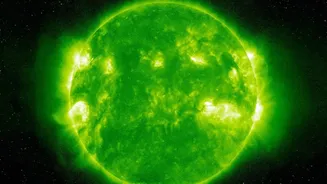
Predicting the path and impact of these solar cannonballs is the critical mission of space weather forecasters. Agencies like NOAA's Space Weather Prediction Center (SWPC) act as our planet's first line of defense. They use a combination of satellites and ground-based observatories to watch the Sun 24/7. To forecast a CME's journey, scientists rely on sophisticated computer simulations. The workhorse of this effort is a modeling system known as WSA-ENLIL. This is a two-part system: the WSA (Wang-Sheeley-Arge) model uses observations of the sun's magnetic field to estimate the state of the solar wind near the sun, and the ENLIL model then simulates how that wind and any embedded CMEs will propagate through the heliosphere.
A Cosmic Weather Forecast
Running a simulation begins with data. When satellites and coronagraphs detect a CME lifting off from the Sun, forecasters input its observed characteristics—like its speed, direction, and size—into the model. The ENLIL model then solves complex magnetohydrodynamic (MHD) equations, which describe the physics of electrically conducting fluids like plasma. The simulation computes the CME's path as it travels, showing how it interacts with the ambient solar wind. This allows scientists to create a forecast, predicting if the CME will hit Earth and, if so, estimating its arrival time, typically with a window of 12 to 72 hours. Advanced models like EUHFORIA in Europe and other next-generation simulations aim to improve accuracy by incorporating more complex magnetic structures, like 'flux ropes,' to better predict a storm's severity.
From Prediction to Protection
A forecast is only useful if it leads to action. Once the SWPC issues a warning, power grid operators are notified. This warning gives them crucial lead time—from hours to a day or more—to take protective measures. Depending on the storm's predicted severity, these actions can include rerouting power, reducing load on vulnerable transformers, or strategically taking parts of the grid offline to prevent a cascading failure. Some utilities are also installing physical safeguards like neutral blocking devices, which act like a shield, preventing damaging GICs from entering and destroying transformers. These simulations don't stop the storm, but they turn a potential surprise attack into a predictable event, allowing us to brace for impact and keep the lights on.