

A New Treasure Map for the Moon
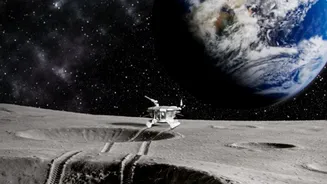
The latest buzz in the space community centres on high-resolution maps that detail the location and accessibility of water on the Moon. Unlike previous data which confirmed the presence of water, these new maps, compiled from instruments like NASA's Stratospheric
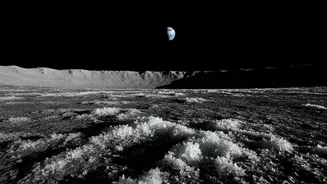
Observatory for Infrared Astronomy (SOFIA) and the orbiters of missions like India's Chandrayaan-2, provide unprecedented detail. They don't just point to permanently shadowed craters, but also show how water concentration relates to surface features like mountains and crater rims, revealing which areas might be easier to access. Recent studies have even explored using seismic waves from moonquakes to detect buried ice. This shifts the conversation from "Is there water?" to "Where can we best land to get it?" giving agencies like NASA, ISRO, and others concrete targets for future robotic and human missions.
Why Water is the Moon's 'Liquid Gold'
Finding water on the Moon is not just about giving astronauts something to drink. Water (H₂O) is the ultimate multi-purpose resource for space exploration. Its most valuable role is as a raw material for rocket fuel. By splitting water molecules into hydrogen and oxygen through electrolysis, lunar bases could theoretically produce their own propellant for return trips to Earth or for missions deeper into the solar system, like Mars. This process of 'living off the land' is known as in-situ resource utilization (ISRU). Furthermore, the separated oxygen can be used for breathable air inside habitats. Access to local water dramatically reduces the phenomenal cost and weight of launching these essential supplies from Earth, making long-term, sustainable human presence on the Moon economically feasible.
A Game-Changer for Future Outposts
The detailed mapping is a direct enabler for programs like NASA's Artemis, which aims to establish a permanent base camp at the lunar south pole. Previously, mission planners had to balance landing in a sunlit area (for solar power) with being close enough to a permanently shadowed region where ice was thought to be trapped. The new data, showing water is more widespread and tied to specific geographic features, opens up a wider variety of potential landing sites. It allows planners to pinpoint locations that offer the best of both worlds: sufficient sunlight for power and operations, with known, accessible water ice deposits nearby. This transforms outpost location scouting from a high-risk guessing game into a data-driven strategic exercise.
India’s Lunar Ambitions and Global Role
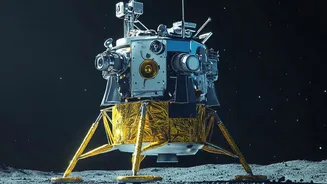
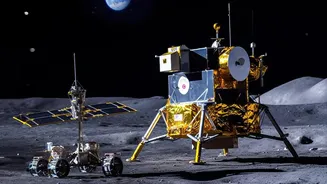
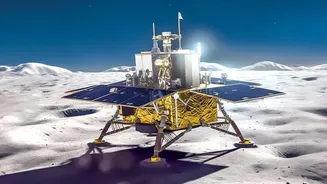
For India, these developments are particularly significant. ISRO's Chandrayaan-1 mission was instrumental in the initial discovery of water on the Moon. More recently, data from the Chandrayaan-2 orbiter's advanced radar has been used to detect potential subsurface ice, adding crucial information to the global understanding of lunar resources. Chandrayaan-3's historic landing near the south pole in 2023 not only demonstrated India's technological prowess but placed it at the heart of the new lunar race. This new mapping data will be invaluable for planning future Indian missions, including potential human landings and ISRO's collaboration with Japan's JAXA on the LUPEX rover mission, which is designed specifically to hunt for water. These contributions solidify India’s role as a key player in lunar science and exploration.
The Road Ahead: From Maps to Mining
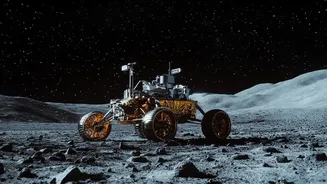
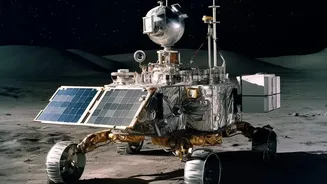
While these maps are a massive leap forward, they are not the final step. The next phase involves 'ground truth' missions to verify the findings. Rovers, like NASA's upcoming Volatiles Investigating Polar Exploration Rover (VIPER), will be sent to these targeted locations to drill into the lunar soil, or regolith, and confirm the quantity and state of the ice. Scientists need to know if the ice is mixed in with soil, exists in purer chunks, or is buried deep beneath the surface. Engineers face the immense challenge of designing technology that can excavate and process this ice in the extreme cold and low gravity of the lunar poles. These upcoming robotic missions will pave the way, turning today's resource maps into tomorrow's operational mining sites.