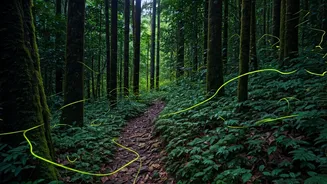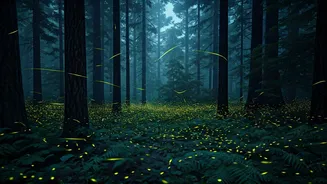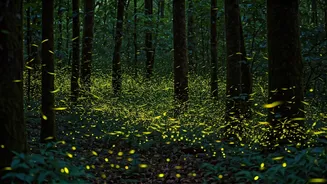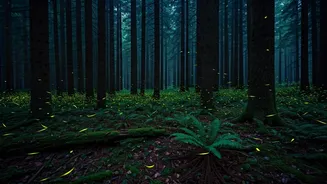



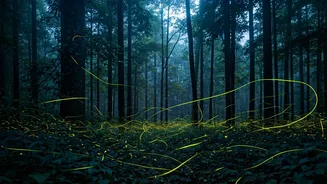



A Symphony of Light
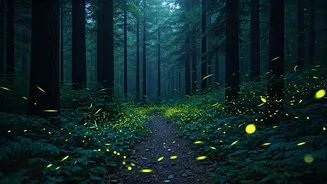
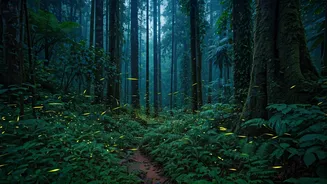
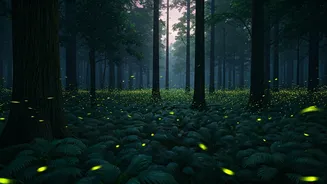
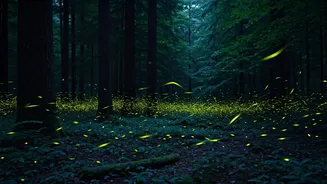
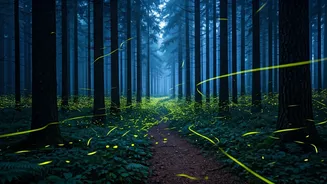
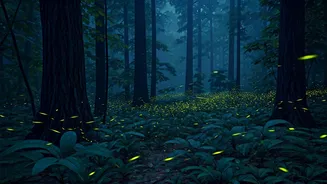
Imagine standing in complete darkness, the only sound the gentle patter of rain on leaves. Suddenly, a nearby tree explodes in a silent, coordinated burst of soft, yellow-green light. Then another, and another, until the entire forest is a living constellation.
This is not a scene from a fantasy film; it is the breathtaking natural phenomenon of firefly congregations, a spectacle that unfolds in select pockets of India just before and during the early weeks of the monsoon. Millions of fireflies gather on trees, flashing their lights in a mesmerising, synchronised dance. For those who witness it, the experience is often described as surreal and deeply moving, a quiet reminder of nature's subtle, powerful magic.
The Science Behind the Glow
What drives this enchanting display? The answer lies in a combination of biology and romance. The glow is a product of bioluminescence, a chemical reaction within the firefly's abdomen involving a substance called luciferin and an enzyme, luciferase. When oxygen is introduced, it produces light with very little heat. But the real mystery is the synchronisation. Why do they all flash at once? Scientists believe this coordinated pulsing is primarily a mating ritual. Male fireflies flash in unison to attract females of the same species. A synchronised, powerful signal stands out against the visual noise of the forest, making it easier for females to spot a suitable group of potential mates. It’s a group effort to ensure the continuation of their species, a collective call for love that turns the forest into a grand stage.
Where to Witness the Magic
While fireflies are found in many rural areas, these large-scale synchronised displays are rarer. In India, the Western Ghats, particularly in Maharashtra, have become famous for this phenomenon. The pre-monsoon and early monsoon period, typically from late May to mid-June, is the peak season. Key hotspots include Bhandardara, a hill station near Igatpuri, where entire valleys seem to glitter. The village of Purushwadi has gained fame for its annual Fireflies Festival, where local communities host visitors and guide them on night walks. Other notable locations include Rajmachi Fort, Prabalmachi, and various regions in the Sahyadri mountain range. These areas offer the perfect dark, damp, and undisturbed environment that fireflies need to thrive and perform their light show.
A Fragile and Fading Wonder
This magical spectacle is also incredibly delicate. Firefly populations worldwide are in decline, and India is no exception. The primary threats are habitat loss, light pollution, and the use of pesticides. As forests are cleared for development, the fireflies lose their homes. The artificial lights from cities and even small villages can disrupt their mating signals, confusing them and hindering reproduction. Tourists, though well-intentioned, can also have a negative impact. Loud noises, bright torchlights, and flash photography can disturb the insects and ruin the very spectacle people have come to see. Conservation efforts and responsible tourism are crucial to ensuring that future generations can also witness this wonder. Choosing eco-friendly tour operators and respecting local guidelines is essential.
Planning Your Trip Responsibly
If you plan to see the fireflies, a little preparation goes a long way. The best time is just after the first few monsoon showers, when humidity is high but heavy rains have not yet set in. Wear comfortable, dark-coloured clothing and sturdy shoes suitable for walking on uneven, muddy trails. Carry a raincoat and insect repellent. Most importantly, leave your bright torches and phone flashes behind. If you need a light, use a torch covered with red cellophane paper, as this wavelength is less disruptive to the fireflies. Go with a local guide who understands the area and the behaviour of the insects. Their knowledge will not only enhance your experience but also ensure you observe them without causing harm.