



A Complicated Cosmic Repair Job
On Tuesday, August 25, NASA astronaut Anil Menon and European Space Agency (ESA) astronaut Sophie Adenot floated out of the International Space Station's Quest airlock to begin a spacewalk lasting over six and a half hours. Their mission: to finish a complex
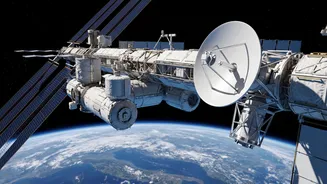
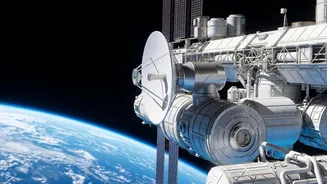
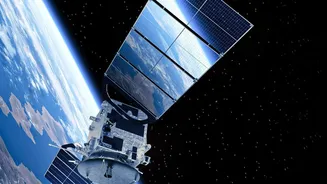
and vital repair on one of the station's primary Space-to-Ground antennas. These antennas are the crucial link, the lifeline, that carries high-speed data, video, and voice communications between the orbiting crew and Mission Control in Houston. The job was so complex it couldn't be done in a single outing. An initial spacewalk on August 18 saw the pair successfully remove the faulty antenna assembly, but unexpected difficulties with stubborn bolts and electrical cables meant they ran out of time to install the replacement. Tuesday's sequel was all about finishing the job and restoring a key piece of the station's communication infrastructure.
The Right Team for a High-Stakes Task
Conducting an Extravehicular Activity (EVA), as spacewalks are officially known, is one of the most physically and mentally demanding tasks an astronaut can face. For this critical repair, NASA and the ESA tapped a seasoned and history-making duo. The spacewalk was the third for Anil Menon, who acted as the lead crew member. For Sophie Adenot, it marked her second venture into the vacuum of space. Her first spacewalk a week earlier had already cemented her place in history as the first woman from France to perform an EVA. Their coordinated effort, with Menon often secured to the end of the Canadarm2 robotic arm to reach the worksite, showcased the years of training and seamless international cooperation that are hallmarks of the ISS program.
A Choreographed Ballet in Zero Gravity
Replacing an antenna in space is nothing like calling a technician to fix your Wi-Fi. Every movement is a calculated risk, performed in a bulky, pressurized suit while floating in a vacuum. After retrieving the spare antenna from its external storage platform, Menon and Adenot meticulously maneuvered the large dish into position on the station's Z1 truss structure. They then had to make the precise electrical and data connections needed to bring the new hardware to life. After successfully installing the new unit, their work wasn't done. They then retrieved the faulty antenna they had stowed during the previous spacewalk and moved it to a more permanent storage location, ensuring it wouldn't become a hazard.
Why This Antenna Matters
While the ISS has multiple communication systems for redundancy, the Space-to-Ground antennas are the workhorses for high-bandwidth transmissions. The antenna in question had stopped being able to properly track NASA's relay satellites, significantly hampering its function. Restoring it was not just about convenience; it was about ensuring the robustness and reliability of the station's connection to Earth. This link is vital for transmitting the vast amounts of data from the thousands of scientific experiments conducted aboard the laboratory. It also provides the crew with their primary connection to family and support teams on the ground, a crucial psychological component of long-duration spaceflight. This repair re-established full redundancy in the system, a critical safety margin for a habitat in such an isolated and dangerous environment.