

What Makes the Harvest Moon Special?
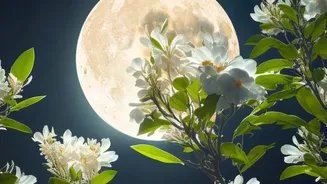
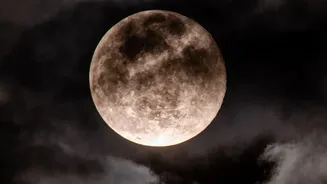
The Harvest Moon is not just any full moon; it is the full moon that occurs closest to the autumnal equinox, which marks the beginning of autumn in the Northern Hemisphere. Its name has deep roots in agriculture. Historically, for several evenings around
this time, the moon rises very shortly after sunset. This phenomenon provided farmers with an abundance of bright moonlight early in the evening, allowing them to extend their working hours to gather crops—hence, the “Harvest” Moon. Unlike the usual 50-minute average delay in moonrise each day, the Harvest Moon seems to rise at nearly the same time for several consecutive nights, making the evenings feel unusually bright. This year, the moon will also be joined by a special guest; the planet Saturn will be visible as a bright, star-like object near the lunar disk, adding an extra dimension to the viewing experience.
Best Viewing Time and Date in India
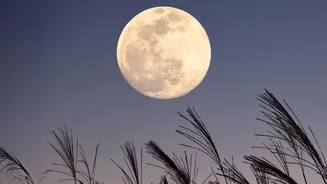
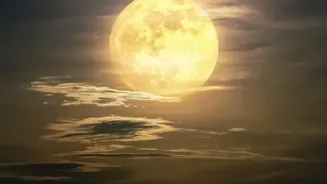
For observers in India, the Harvest Moon will reach its peak illumination at 10:19 PM IST on Saturday, September 26, 2026. However, you don't need to wait for the exact moment of peak brightness. The moon will appear full and spectacular on the night before and the night after the 26th as well, giving you a three-day window to enjoy the sight. The most dramatic views often occur right at moonrise, when the moon is low on the eastern horizon just after sunset. At this time, it can appear enormous due to a phenomenon known as the “Moon Illusion” and often glows with a stunning yellow or orange hue caused by its light filtering through more of Earth’s atmosphere. For a sharper, more detailed look at its craters and surface, wait for it to climb higher in the sky, where atmospheric distortion is reduced.
Navigating Uncertain Weather
Weather is the ultimate wild card for any sky-watching event. In late September, post-monsoon weather patterns can be unpredictable across India. Thick clouds or heavy rain can completely obscure the view, leading to disappointment. It’s a good idea to check your local weather forecast in the days leading up to September 26. If the forecast looks poor for the peak night, remember that the moon will still appear full on the 25th and 27th, so you have backup opportunities. Interestingly, a thin layer of haze or cloud can sometimes be beneficial. It can act as a natural filter, reducing the intense glare of the full moon and allowing your eyes to pick out more surface detail, much like a professional moon filter for a telescope. Clear, dry skies are always ideal, but don't give up entirely if a few wisps of cloud are predicted.
Escaping the City's Glow
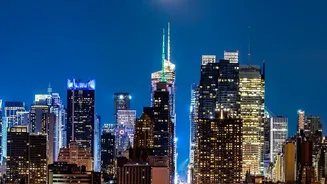
For anyone living in or near a major city, light pollution is the second major hurdle. The pervasive glow from streetlights, buildings, and vehicles creates a bright haze in the sky that can wash out all but the brightest celestial objects. While the moon is bright enough to cut through some of this glow, the experience is far more immersive in a darker environment. To get the best possible view, try to find a location away from direct sources of light. This could be a large park, the outskirts of your city, or a high-rise rooftop with an unobstructed view away from the city core. The key is to allow your eyes at least 20-30 minutes to adapt to the darkness; this will significantly improve your ability to see the moon's finer details and the surrounding stars. Pointing your gaze higher in the sky, towards the zenith, can also help, as you are looking through less of the atmospheric haze and light dome.
Gear Up: Simple is Best
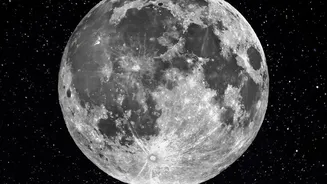
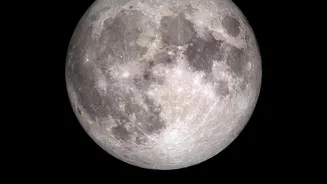
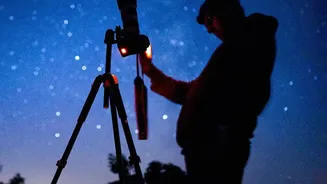
You don’t need expensive equipment to enjoy the Harvest Moon. The most important tool is your own eyes. Find a comfortable spot, lie back, and take in the view. If you have a pair of binoculars, they will provide a fantastic, magnified perspective, revealing craters, plains, and mountain ranges on the lunar surface. A telescope will, of course, offer even more detail. If you're interested in photography, you don't need a professional camera. Many modern smartphones are capable of taking decent pictures of the moon. To get the best results, use a small tripod to keep your phone steady and use the timer function to avoid camera shake from tapping the screen. Experiment with your phone’s night mode or pro settings if available, manually adjusting the focus and lowering the exposure to prevent the moon from looking like a white blob.