






Anatomy of the Flydubai Incident
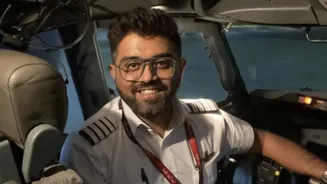
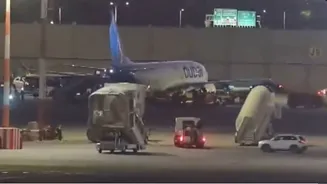
On September 30, 2026, Flydubai flight FZ 1073 from Dubai to Tel Aviv experienced a severe in-flight emergency when an altercation reportedly broke out in the cockpit. According to statements, the co-pilot allegedly attacked and stabbed the flight's captain,
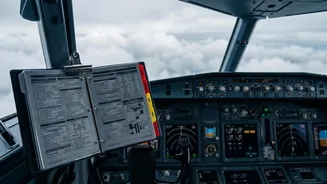
an Indian national named Smit Machchhar, in an attempt to crash the aircraft. Despite his serious injuries, the captain managed to open the cockpit door, which allowed other crew members and passengers to intervene and subdue the attacker. The aircraft, which had dropped precipitously in altitude, was successfully diverted and landed safely in Tabuk, Saudi Arabia, saving the lives of all 174 people on board. The incident, which involved the aircraft transmitting emergency codes for both a general emergency and unlawful interference, triggered a major security response.
The First Seconds: Overcoming the Startle Effect
In any unexpected crisis, the first human reaction is often the 'startle effect'—a moment of shock that can delay effective action. Aviation training is designed specifically to counter this. Pilots and crew repeatedly practice emergency scenarios to build muscle memory, so that their response can be almost instantaneous. In a situation like the one on FZ 1073, the ability of the injured pilot to act decisively within seconds was paramount. Opening the cockpit door under duress was not just a reaction; it was a trained response to a crisis that required immediate assistance from beyond the flight deck. This quick thinking created the opportunity for others to help, directly preventing a worse outcome. Research shows that if a pilot has a prepared response, their reaction time can be a fraction of a second; without it, creating a new response can take 8-10 seconds or more—a lifetime in a cockpit emergency.
Crew Resource Management in Action
Modern aviation safety is built on the principle of Crew Resource Management (CRM), a framework that emphasizes using all available resources—people, procedures, and equipment—to ensure flight safety. It originated from investigations into accidents where technically skilled crews failed due to poor communication and teamwork. The Flydubai incident became a real-world example of CRM extending beyond the cockpit. When the captain opened the door, he activated the entire crew and even passengers as a resource. Off-duty crew and passengers stepped in to secure the attacker, while the remaining crew prepared the cabin for an emergency landing, a textbook example of multi-agency coordination within the aircraft itself. This system ensures that even if one pilot is incapacitated—subtly or, in this case, violently—a structured response can be mobilized.
The Irreplaceable Human Element
While modern aircraft are highly automated, this incident underscores the limits of technology. No autopilot could have resolved a physical altercation in the cockpit. The crisis was managed by human courage, quick thinking, and the intervention of people on board. The pilot's decision to involve others, and their willingness to act, was the critical factor. Procedures for pilot incapacitation exist, often involving the remaining pilot taking control and calling for assistance from the cabin crew. In this extreme case, where the incapacitation was malicious, the human network on the plane became the ultimate safety system. This highlights that while automation assists, the cognitive ability, decision-making skills, and bravery of the crew are irreplaceable, especially in unforeseen 'black swan' events.
Why Every Moment Counts
In aviation, emergencies are measured in seconds. Whether it's an engine failure on takeoff, a sudden loss of cabin pressure, or a medical emergency, the speed of the crew's response dictates the outcome. A delay of just a few seconds in making a critical decision, like executing a 'go-around' to abort an unstable landing, can be the difference between a safe recovery and an accident. The response chain starts with the first alert and moves through crew coordination, passenger communication, and interaction with air traffic control. The successful diversion to Tabuk happened because the pilot's rapid action initiated this chain immediately. It proved, under the most extreme pressure, that the entire system of aviation safety—from training and procedures to the human element—is designed around the non-negotiable reality that in a crisis, there is no time to spare.