


How AI Detectors Hunt for Fakes
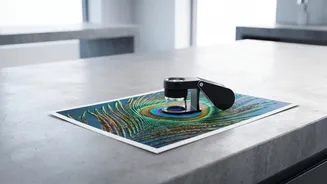
At its core, an AI image detector is a program trained on vast datasets containing millions of real and AI-generated pictures. This training teaches the algorithm to spot the subtle, often invisible 'fingerprints' or 'footprints' that generative AI models
leave behind. These can include unnatural textures, inconsistent lighting and shadows, unusual pixel patterns, or other digital artifacts that human eyes usually miss. The detector analyzes an image for these statistical giveaways and calculates the probability that it was created by a machine rather than a camera. It doesn't 'see' a photo like a person does; instead, it performs a deep statistical analysis to make an educated guess.
The Cat-and-Mouse Game of Detection
The primary reason detectors fail is that they are locked in a constant arms race with the AI models they are trying to catch. As soon as detectors learn to spot the fingerprints of a specific AI generator (like Midjourney or DALL-E), developers of those generators update their models to produce cleaner, more realistic images that eliminate those very artifacts. This means a detector trained on last month's AI models might be less effective against images created with a brand-new system. This ever-evolving landscape ensures that detection tools are always playing catch-up, making it nearly impossible for them to be consistently accurate across all types of AI-generated content.
Simple Edits Can Fool Sophisticated Tools
An AI-generated image rarely stays in its original, pristine form. Before it reaches you, it's often been edited, cropped, compressed, or resized, especially for posting on social media. These simple modifications can be enough to fool a detector. Compression, in particular, can damage or erase the subtle digital artifacts the detector is programmed to find, effectively wiping the fingerprints clean. Even minor human edits, like applying a filter or adjusting the brightness, can interfere with the analysis. This means a highly convincing fake image that a detector might have caught in its original state can easily pass as authentic after being saved as a new file or uploaded to a platform that compresses images.
The Problem of 'False Negatives'
When a detector fails to identify an AI-generated image, it's known as a 'false negative'. This is the core of the problem: the tool incorrectly clears a synthetic image as being human-made. Independent tests show that real-world accuracy rates for many detectors are significantly lower than the 95-99% often advertised by vendors. Some studies have found accuracy can drop to between 52% and 79%, and even lower when dealing with paraphrased or edited content. A false negative provides a false sense of security, leading people to trust a manipulated or entirely fabricated image. No detector is perfect, and their output should be seen as a probability score, not a definitive verdict.
Beyond the Pixels: Why Context Is Key
Ultimately, AI image detectors have a critical blind spot: they only analyze the image itself. They do not check the source, the context in which it was shared, or whether the details depicted make logical sense. An image detector can’t tell you if the account that posted the photo has a history of spreading misinformation or if the event in the image could have plausibly happened. This is why experts recommend using detectors as just one tool in a larger verification toolkit. Cross-referencing with other sources, performing a reverse image search to see where else the photo has appeared, and applying critical thinking remain the most reliable methods for navigating a world filled with increasingly realistic fakes.