



What Is a Closed-Loop System?
Imagine packing for a trip where you can never restock supplies. That's the challenge of deep-space exploration. A closed-loop life support system is designed to be a self-sustaining bubble of Earth's environment. Unlike early space missions that carried
all their air and water (an open system), a closed-loop system recycles nearly everything. Think of it as the ultimate in sustainability, where urine, sweat, and even the carbon dioxide astronauts exhale are captured, purified, and reused. The goal is to mimic Earth's own ecosystem, where matter is constantly recycled, enabling astronauts to live for months or years with minimal supplies from home.
Recycling Air and Water in Space
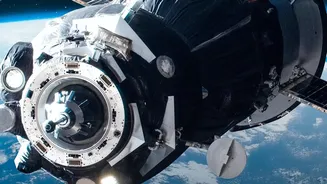
The technology at the heart of this is NASA's Environmental Control and Life Support System, or ECLSS. This system has three main jobs: managing air, recovering water, and generating oxygen. On the International Space Station (ISS), the ECLSS already achieves remarkable feats. The Water Recovery System can recycle about 98% of all water, including urine and moisture from the air, turning it into potable water that is often purer than what we drink on Earth. The Air Revitalization System scrubs carbon dioxide from the cabin and filters out other contaminants. Finally, the Oxygen Generation System uses electrolysis to split the recycled water into hydrogen and breathable oxygen.
Why the ISS Model Is Not Enough
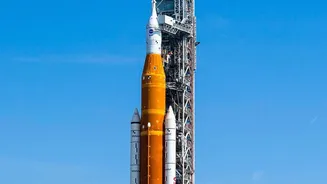
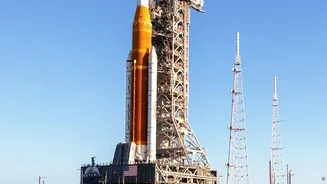
While the ISS systems are advanced, they still require regular resupply missions from Earth to top up oxygen tanks and deliver food. This is feasible because the station is in low-Earth orbit, just a few hundred kilometers away. However, for the Artemis missions to the Moon and eventually Mars, this dependency is a critical vulnerability. The lunar Gateway, a planned outpost orbiting the Moon, will be too far for easy resupply, making self-sufficiency paramount. The Apollo missions of the 1960s and 70s, which were very short, simply carried all the necessary resources and stored waste, a model that is completely unworkable for establishing a sustained presence in deep space.
The Artemis Imperative: Survive and Thrive
For Artemis, a nearly 100% closed loop is not just a goal; it's a necessity. Every kilogram of supplies launched into deep space is incredibly expensive and complex to transport. By closing the life support loop, NASA dramatically reduces the mass and cost of a mission. More importantly, it reduces risk. A self-sustaining system means astronauts are not dependent on a fragile supply chain stretching hundreds of thousands of kilometers back to Earth. Systems being developed for Artemis will build on the lessons learned from the ISS, aiming for even greater efficiency and reliability to support crews for missions lasting years. This technology is what makes living and working on another world possible.
The Future of Life Support
The evolution of ECLSS doesn't stop with water and air. The next frontier is closing the loop on food and waste. Researchers are developing systems for growing fresh vegetables in space, which not only provides crucial nutrients but also helps recycle carbon dioxide into oxygen through photosynthesis. Systems like the Advanced Plant Habitat on the ISS are early prototypes for the space gardens of the future. Similarly, engineers are working on methods to process solid waste to recover more resources, pushing toward a truly regenerative system. These advancements are the unsung heroes that will allow humanity to transition from visiting space to living there.