

Why 20 Minutes is Enough
Between deadlines and early morning lectures, finding a full hour for the gym is a huge ask. The good news is, you don’t need it. Research shows that short, consistent bursts of activity can be incredibly effective. A 20-minute workout can boost your
energy, sharpen your focus for studying, and significantly improve your mood. Exercise releases chemicals in your brain that help you feel good and can reduce feelings of stress and anxiety, which are common in a high-pressure academic environment. This routine is designed to be intense enough to get your heart rate up and build strength, but short enough that you can fit it in anytime, whether it's a study break or first thing in the morning to kickstart your day.
The 3-Minute Warm-Up
Never skip your warm-up. It prepares your muscles for the work ahead, reducing your risk of injury. A proper warm-up increases blood flow and gets your body ready for movement. Spend about 30-60 seconds on each of these simple, dynamic movements. • Jumping Jacks: A classic for a reason. They get your whole body moving and your heart rate up. • High Knees: Run in place, bringing your knees up towards your chest. • Arm Circles: Stand with your arms out to the sides and make small circles, gradually getting bigger. Reverse the direction after 30 seconds. • Bodyweight Squats: Do 10-15 slow and controlled squats to prime your legs for the main event.
Exercise 1: The Perfect Squat
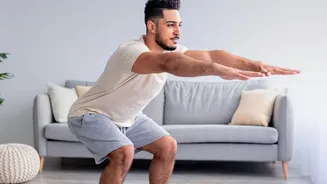
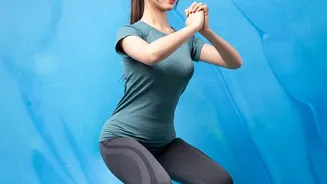
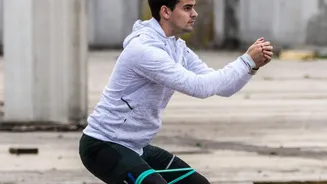
Squats are a powerhouse exercise, working your quadriceps, hamstrings, and glutes. Mastering the form is key to getting the benefits and avoiding injury. How to do it: Stand with your feet shoulder-width apart, toes pointing slightly outwards. Keep your chest up and your back straight. Imagine you're sitting back into a chair. Lower your hips until your thighs are parallel to the floor, ensuring your knees don’t go past your toes. Push through your heels to return to the starting position. Keep your core engaged throughout the movement.
Exercise 2: The Powerful Push-Up
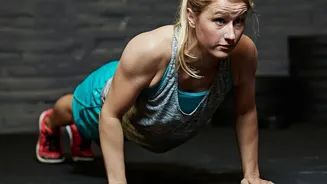
Push-ups are one of the best upper body exercises, targeting your chest, shoulders, and triceps, while also engaging your core. How to do it: Start in a high plank position with your hands directly under your shoulders. Your body should form a straight line from your head to your heels. Lower your body until your chest is just above the floor, keeping your elbows tucked in close to your body. Push back up to the starting position. Need a modification? If a standard push-up is too difficult, start on your knees. This reduces the amount of body weight you're lifting, allowing you to build strength with good form.
Exercise 3: The Unbeatable Plank
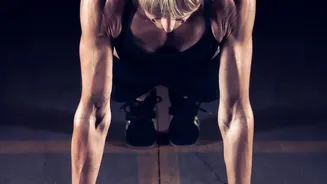
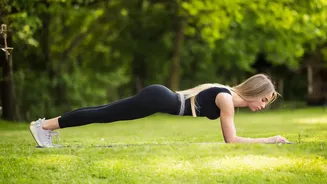
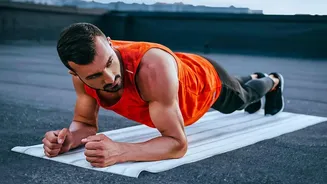
The plank is an isometric exercise that builds incredible core strength, which is the foundation for almost every other movement. It works your abs, back, and shoulders. How to do it: Place your forearms on the floor with your elbows directly under your shoulders. Extend your legs back, balancing on your toes. Your body should form a rigid, straight line from your head to your heels. Don't let your hips sag or rise too high. Engage your abs by pulling your belly button towards your spine. Hold this position.
The 20-Minute Circuit
Now, let's put it all together. This workout is a circuit, meaning you'll move from one exercise to the next with minimal rest. This keeps your heart rate elevated for maximum benefit in a short time. Here’s the plan: • Squats: 45 seconds • Rest: 15 seconds • Push-Ups: 45 seconds • Rest: 15 seconds • Plank: 45 seconds • Rest: 15 seconds That's one round. Your goal is to complete as many rounds as you can in the time you have. Aim for 5-6 rounds to get a fantastic 20-minute full-body workout. Focus on maintaining good form over speed.
The Essential Cool-Down
Just as important as the warm-up, a cool-down helps your body gradually return to its resting state and can help reduce muscle soreness. Don't just collapse on your bed. Take 2-3 minutes to do some gentle static stretches. Hold each stretch for 20-30 seconds without bouncing. • Quad Stretch: Stand, holding onto a wall for balance. Grab your right foot and gently pull your heel towards your glute. • Hamstring Stretch: Sit on the floor with one leg extended. Reach towards your toes until you feel a stretch in the back of your leg. • Chest Stretch: Interlace your fingers behind your back and gently lift your arms to open up your chest. • Child’s Pose: Kneel on the floor, sit your hips back to your heels, and reach your arms forward to stretch your back and shoulders.