





What is a Celestial Conjunction?
In astronomy, a conjunction is an event where two or more celestial objects appear to be very close to one another in the sky. This is an optical illusion based on our perspective from Earth; in reality, the objects are still separated by millions of
kilometres. The most common and easily observed conjunctions involve the Moon pairing up with bright planets like Venus, Mars, Jupiter, or Saturn. These alignments provide a fantastic opportunity for naked-eye viewing and can create a striking scene, making them a favourite for both seasoned astronomers and newcomers to the hobby.
When and Where to Look
The Moon and Saturn will have a close approach over the course of several nights in late October 2026. The key dates to mark on your calendar are from October 21 through October 25. During this period, you can watch the nearly full Moon, known as the Hunter's Moon, pass by the ringed planet. On October 21, the bright gibbous moon will be visible in the southeast, with Saturn to its upper left. The closest approach will occur on the nights of October 24 and 25, when the pair will be visible for most of the night, rising in the east as the sun sets. You won't need to stay up too late; the show begins in the evening sky and continues through the night.
How to Spot Saturn
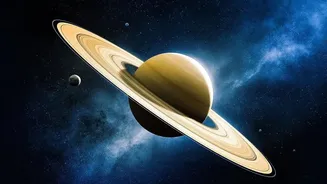
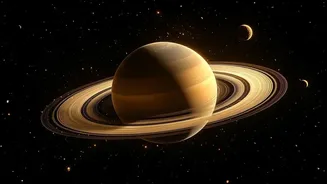
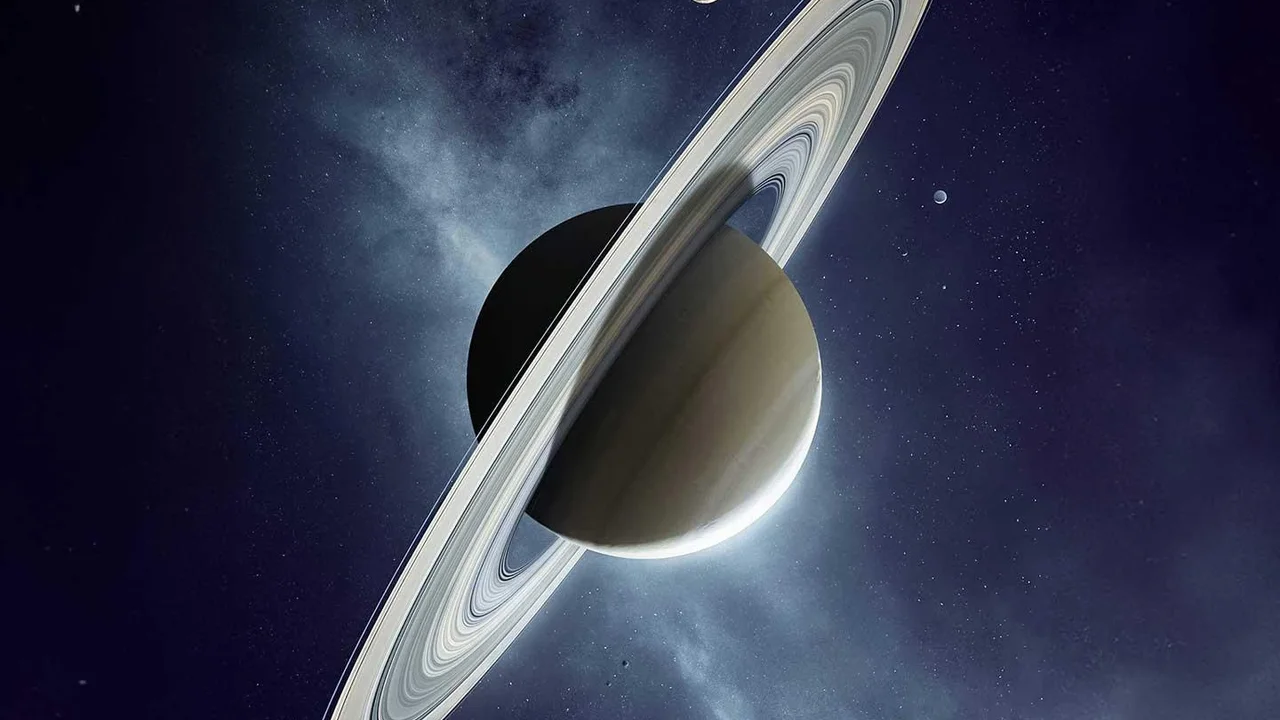
Saturn will be easy to spot even without special equipment. It will appear to the naked eye as a moderately bright, yellowish-white 'star' that shines with a steady, untwinkling light. October 2026 is a particularly good month to view Saturn, as the planet reaches opposition on October 4. Opposition occurs when Earth passes directly between the Sun and an outer planet, making that planet appear larger and brighter in our sky. While you can see the planet with your eyes alone, using a pair of binoculars will enhance its golden colour. With binoculars, you might just be able to make out that Saturn is not perfectly round, hinting at its famous rings.
Getting the Best View
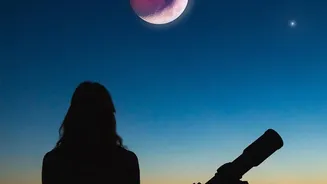
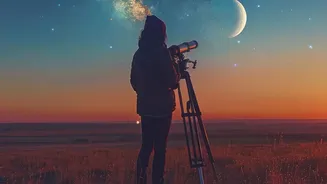
To make the most of this celestial event, try to get away from bright city lights. Light pollution can wash out fainter stars and make it harder to appreciate the view. Find a spot with a clear view of the sky, like a local park or an open field. Give your eyes at least 20 to 30 minutes to fully adjust to the darkness; this will dramatically increase the number of stars you can see. Avoid looking at your bright phone screen, as this will ruin your night vision. If you have a telescope, even a small one, you'll be treated to a view of Saturn's iconic rings. A modest telescope with 25x magnification is often enough to reveal them. This year, the rings are tilted at an angle that, while not as wide as in other years, still provides a beautiful sight.
Other Sights in the October Sky
The Moon and Saturn aren't the only attractions in the sky this October. The month is also great for meteor showers, featuring the Draconids (peaking around October 7-9) and the Orionids (peaking October 21-22). The Orionids, produced by dust from Halley's Comet, can offer up to 20 meteors per hour in a dark sky. However, the bright light from the waxing gibbous moon during the Orionids' peak might make it harder to see the fainter shooting stars. Early in the month, Saturn is at opposition, making it a prime target for viewing all night long. And at the beginning and end of the month, the Moon also makes a close pass of the beautiful Pleiades star cluster.