





Your First Line of Defence: Quality Waterproof Gear
Staying dry isn't just about comfort; it's about focus. Being cold and wet is a major distraction that can affect your reaction time. Invest in a high-quality waterproof rain suit, not just a windcheater. Look for two-piece suits (a jacket and pants)
that can be worn over your regular riding gear. Ensure it's snug enough not to flap in the wind but allows for easy movement. Good waterproof boots and gloves are equally crucial. Dry hands ensure a better grip on the controls, while dry feet prevent discomfort and loss of sensation on the pedals. Many brands offer dedicated waterproof riding gear that balances protection and breathability.
See and Be Seen: The Visibility Kit
Rain drastically reduces visibility for everyone. Your most important tool here is your helmet's visor. A foggy visor is a recipe for disaster. The most effective solution is a Pinlock insert, which creates a double-glazed layer to prevent condensation. Alternatively, you can use anti-fog sprays or wipes. Always opt for a clear visor, as tinted ones are dangerous in gloomy monsoon light. To ensure other drivers see you, choose brightly coloured or high-visibility rain gear with reflective elements. Before any ride, double-check that your motorcycle's headlight, taillight, brake lights, and indicators are all functioning perfectly.
Bike Prep: Tyres, Brakes, and Chain
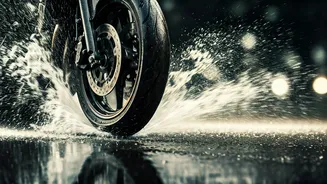
Your bike needs as much preparation as you do. The tyres are your only connection to the slippery road. Ensure they have adequate tread depth—at least 2-3mm—to effectively channel water and prevent hydroplaning. If your tyres are old or hardened, replace them. Wet roads nearly double your stopping distance, so your brakes must be in top condition. Check the brake pads for wear and ensure the brake fluid is at the correct level. The drive chain is another component that suffers in the rain, as water washes away lubricant and invites rust. Clean and lubricate your chain more frequently during the monsoon, ideally after every wet ride or every few hundred kilometres.
Protect Your Electronics and Belongings
Water and electronics don't mix. Your phone, wallet, and other gadgets need complete protection. The simplest solution is to use dry bags or waterproof pouches. For riders who carry laptops or more gear, investing in waterproof motorcycle luggage like a tail bag or backpack is a smart move. Many brands offer roll-top duffel bags and backpacks specifically designed to be 100% waterproof. If you're using standard luggage, get a dedicated rain cover for it. This small investment can save you from the costly damage of a water-logged laptop or phone.
Smart Riding Techniques
Gear alone isn't enough; you must adapt your riding style. The golden rule is to be smooth and slow down. Avoid any sudden acceleration, hard braking, or sharp turns, as these can easily cause a skid. Increase your following distance from the vehicle ahead to give yourself more time to react and brake. Be wary of road surfaces that become extra slippery when wet, such as painted lines, manhole covers, and oily patches. When braking, use both the front and rear brakes gently and progressively. Using engine braking by downshifting can also help you slow down with more control.
Post-Ride Care and Protection
The work isn't over when you park. Monsoon water is often filled with mud and acidic pollutants that can accelerate rust and corrosion. Giving your bike a quick rinse with plain water after a wet ride is a high-value habit. Pay special attention to the undercarriage, chain, and engine area. Afterwards, wipe the bike dry with a cloth. If you park outdoors, use a good quality, breathable waterproof cover to protect your motorcycle. Never cover a wet bike, as this traps moisture and can cause more damage. Taking these few extra minutes will significantly extend the life and look of your machine.