





An End to a Controversial Saga
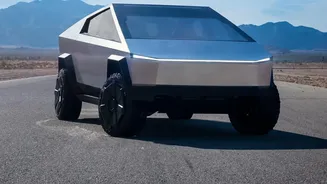
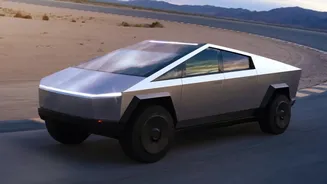
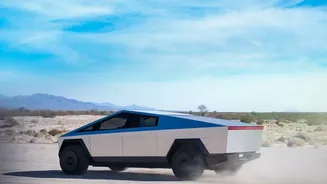
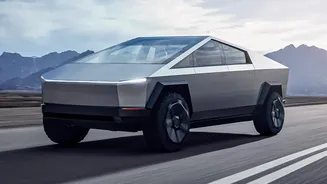
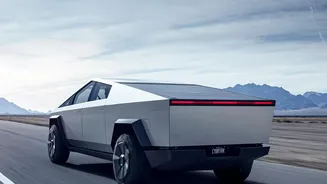
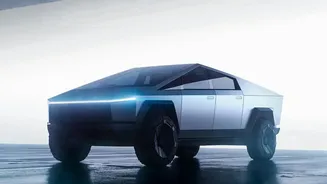
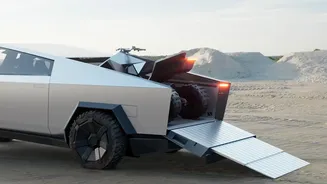
Tesla has confirmed it will halt production of the Cybertruck at its Giga Texas facility around the middle of 2027. The move concludes a challenging chapter for the electric vehicle maker, which launched the stainless-steel pickup to immense fanfare in 2019
but was met with persistent production delays and quality control issues. The decision is not just an admission of the truck's commercial shortcomings but also a significant strategic pivot, freeing up factory space for what the company sees as its future: the Cybercab robotaxi. While the stock market reacted positively to the news, seeing it as a prudent business decision, the end of the Cybertruck marks a symbolic retreat from one of CEO Elon Musk's most personal and ambitious projects.
The Brutal Realities of Manufacturing
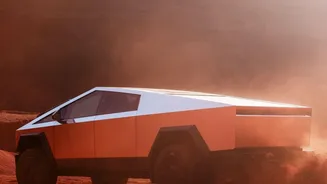
From the beginning, the Cybertruck was a manufacturing puzzle. The choice of an ultra-hard stainless steel exoskeleton, while providing a distinctive 'bulletproof' aesthetic, created immense production headaches. The material proved incredibly difficult to shape and form, leading to notorious issues with panel gaps and overall fit and finish. Musk himself admitted that Tesla had 'dug its own grave' with the Cybertruck's design complexity. These challenges resulted in a multi-year delay from its planned 2021 launch to its eventual start of deliveries in late 2023. The production ramp-up was painfully slow, and the truck was plagued by at least 11 recalls for issues ranging to faulty accelerator pedals to exterior panels detaching while driving.
A Niche Product in a Competitive Market
While the manufacturing issues were significant, the Cybertruck also faced a cool reception in the marketplace. Initial sales projections by Musk were optimistic, aiming for 250,000 units annually. The reality was starkly different. In 2024, Tesla sold just 38,965 units, and that number collapsed by 48% to only 20,237 units in 2025. The polarizing, angular design, which was a core part of its identity, ultimately limited its appeal to a niche audience. At the same time, competitors like Ford, Rivian, and GM had already brought more conventional and broadly appealing electric pickups to market. The Cybertruck's high starting price of over $60,000, significantly more than first promised, further dampened demand.
Making Way for the Cybercab
Tesla's decision is less about failure and more about strategic reallocation. The company is betting its future on autonomy and robotics, with the Cybercab at the center of that vision. Unveiled in 2024, the Cybercab is a purposebuilt, two seat autonomous vehicle with no steering wheel or pedals, designed for a future robotaxi network. Production of the Cybercab has already begun at Giga Texas, and winding down the Cybertruck line will free up critical manufacturing capacity to scale this new project. By sacrificing a low volume, high complexity vehicle, Tesla can double down on a product it believes will generate recurring revenue through a ride hailing service, fundamentally changing its business model from one time sales to mobility as a service.
What This Means for Tesla and Texas
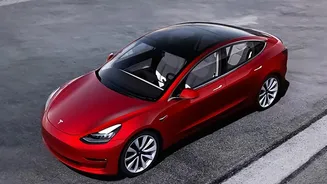
For the Giga Texas plant, this transition represents a major shift in focus. The facility, which also produces the high volume Model Y, is set to become the hub for Tesla's autonomous and robotics ambitions, including the Optimus humanoid robot. It is unclear if Cybertruck production will cease entirely or move elsewhere, but given that Giga Texas is the only plant equipped for its specialized manufacturing, a complete phase out seems likely. For Tesla, the move is being viewed by analysts as a pragmatic cleanup of its product portfolio, allowing it to concentrate resources on higher potential projects. It reinforces the company's identity as a tech and AI firm, not just a carmaker, though it places an even greater burden of proof on its ability to deliver on its robotaxi promises.