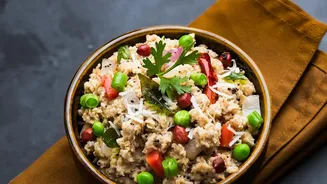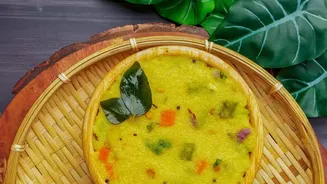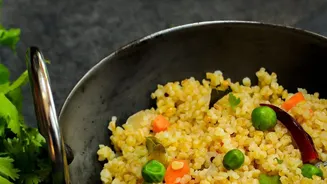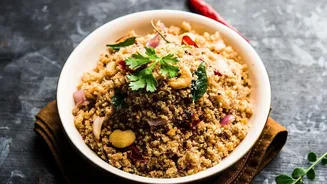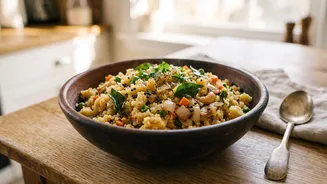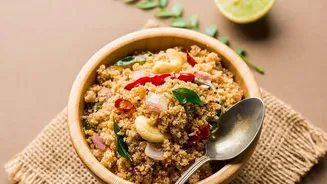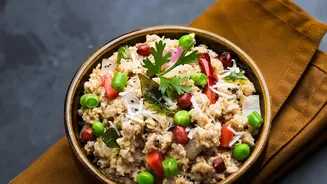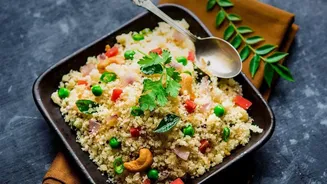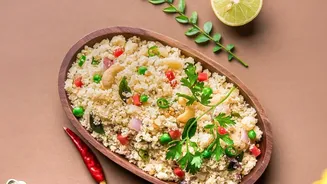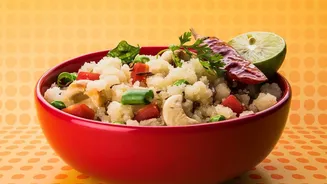

Often dismissed as a mundane breakfast, upma is one of India’s most versatile dishes. A warm bowl of savoury goodness, it’s a canvas for regional creativity. Let's journey beyond the basic rava upma and explore its many exciting avatars.
The Karnataka Classic: Khara Bath
In Karnataka,
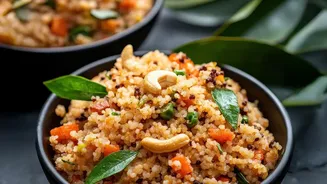
upma gets a spicy and flavourful makeover in the form of Khara Bath. Often found in bustling Darshinis across Bangalore, it is a staple breakfast, frequently served alongside a sweet Kesari Bath in a combination called 'Chow Chow Bath'. What sets it apart is the generous use of vegetables like carrots, beans, and peas, and the addition of a special spice blend like Vangi Bath powder. This masala powder imparts a unique, aromatic, and slightly tangy flavour that elevates the simple semolina dish. The texture is typically soft, and a final dollop of ghee and a garnish of fresh coconut and coriander leaves make it a truly indulgent start to the day.
The Andhra Innovation: Pesarattu Upma
Andhra Pradesh offers a genius combination that marries two breakfast classics into one spectacular dish: Pesarattu Upma. Here, a simple, soft-cooked upma is used as a filling inside a crisp and savoury dosa made from green moong dal, known as a pesarattu. The pesarattu itself is flavoured with ginger and green chillies. Once the upma is spread over the crepe on the griddle, it's often topped with a generous sprinkle of finely chopped raw onions, adding a delightful crunch and pungent bite. Served hot with a side of spicy ginger chutney (Allam Pachadi), this dish is a textural and flavourful masterpiece, transforming upma from a standalone meal into an integral part of a larger, more complex breakfast experience.
Maharashtra’s Savoury Take: Tikhat Sheera
In Maharashtra, the savoury version of upma is often called Tikhat Sheera (spicy sheera) or Sanja. While 'sheera' usually refers to a sweet semolina pudding, this version is its spicy counterpart. The key difference from the South Indian style often lies in its texture; Maharashtrian sheera tends to be drier and more crumbly. It's seasoned with turmeric, giving it a characteristic yellow hue, along with the standard tempering of mustard seeds, curry leaves, and green chillies. Sometimes garnished with roasted peanuts or fresh coconut, it’s a comforting and popular dish for breakfast or an evening snack in Marathi households.
Tamil Nadu’s Fluffy Uppuma
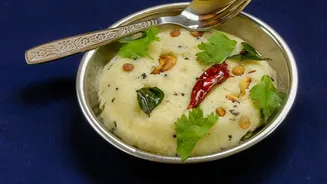
The traditional Tamil Nadu style of rava upma is all about achieving the perfect texture: soft, fluffy, and with distinct, non-sticky grains. The focus here is on simplicity and technique. Roasting the rava (semolina) properly before cooking is key to preventing a gooey consistency. While some variations include onions and tomatoes, the most basic form is a testament to minimalist flavouring, relying on a simple tempering of mustard seeds, urad dal, chana dal, ginger, and curry leaves. A final squeeze of lemon juice is often added to cut through the richness and add a fresh, tangy note, making it a light yet satisfying meal.
Beyond Semolina: Exploring New Grains
The beauty of upma lies in its adaptability, and it can be made with a wide variety of grains beyond the usual rava. Semiya (vermicelli) upma is a popular alternative, offering a lighter, noodle_like texture. For a healthier, gluten_free option, millets like foxtail, little, or kodo millet are excellent choices. They provide a nutty flavour and a higher fibre content. Soaking the millets beforehand helps ensure they cook up soft and fluffy. Oats upma is another quick and nutritious variant, perfect for a healthy start to the day. These versions follow the same basic tempering process, allowing the unique taste and texture of each grain to shine.
Simple Ways to Elevate Your Upma
Even the most basic upma recipe can be transformed with a few creative touches. Adding a variety of finely chopped vegetables like carrots, peas, beans, and bell peppers not only adds nutrition but also colour and texture. For a richer flavour, swap out some of the oil for ghee, especially when roasting the rava. A garnish of fried cashews or peanuts adds a welcome crunch. Don't underestimate the power of fresh herbs; a generous sprinkle of chopped coriander or mint can brighten the dish immensely. For a tangy twist, try adding finely chopped tomatoes or a spoonful of tamarind extract along with the water during cooking.