





An Unprecedented Decline
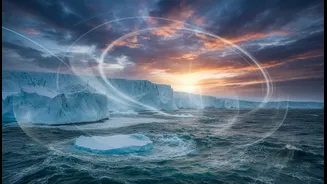
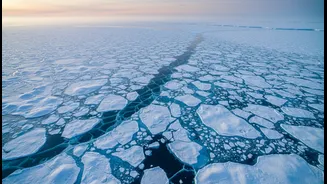
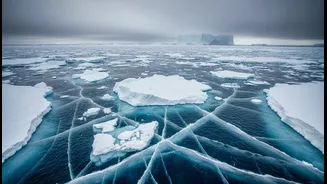
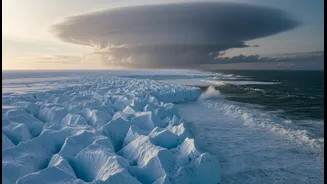
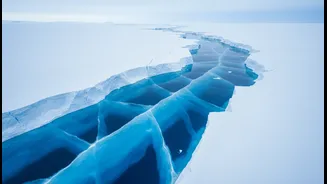
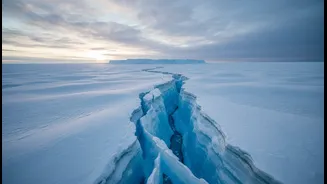
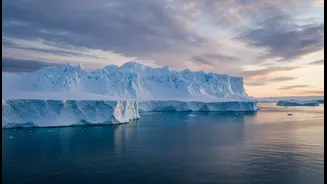
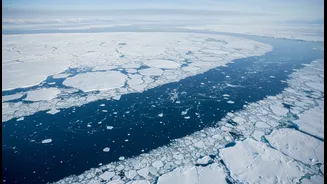
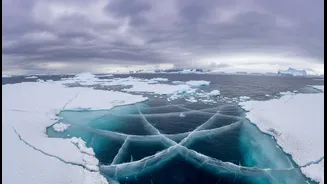
Antarctica is experiencing a dramatic and sustained loss of its floating sea ice cover. After decades of relative stability compared to the Arctic, the continent's sea ice has entered a new phase of rapid decline. While there is natural year-to-year variation,
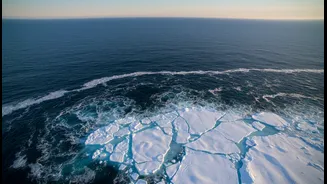
the trend is clear and worrying scientists. In recent years, the winter maximum and summer minimum extents have repeatedly hit record or near-record lows. This isn't just about a smaller frozen area; it represents a fundamental shift in the Antarctic environment, with a massive amount of reflective white ice being replaced by dark, heat-absorbing ocean water. This creates a feedback loop: a warmer ocean melts more ice, which in turn allows the ocean to absorb even more heat, accelerating the cycle.
The Ocean's Global Conveyor Belt
To understand the risk, we need to think of the world's oceans as a single, connected system with a massive circulation network, often called the 'global ocean conveyor belt.' One critical part of this is the Atlantic Meridional Overturning Circulation (AMOC). In the North Atlantic, warm water flows north, cools, becomes saltier and denser, and sinks into the deep ocean. This sinking action pulls more warm water northward, distributing heat around the planet and shaping weather patterns. A similar process occurs in the Southern Ocean around Antarctica, where the formation of super-cold, super-salty, and incredibly dense water drives the deepest currents on Earth. This entire system acts as the planet's thermostat, regulating climate and supporting marine ecosystems.
How Melting Ice Jams the Engine
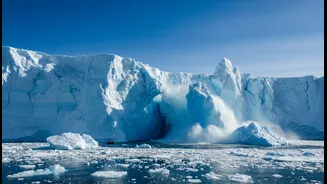
When massive amounts of ice from Antarctica melt, they dump huge quantities of fresh, cold water into the ocean. This freshwater is less salty and therefore less dense than the surrounding seawater. Instead of sinking, this layer of fresh water sits on the surface, acting like a lid. It prevents the colder, saltier water beneath it from sinking, which is the very engine that drives the deep ocean currents. Scientists have found that this process can significantly slow down these vital circulation systems. Recent research suggests the Antarctic Circumpolar Current, the world's strongest ocean current, could slow by as much as 20% by 2050 under high-emissions scenarios.
Global Consequences of a Slowdown
A slowdown or, in a worst-case scenario, a collapse of these ocean currents would have profound global consequences. It would drastically alter the way heat is distributed around the globe. This could lead to significant cooling in some regions, like Northern Europe, while causing other areas to warm even faster. Weather patterns would be severely disrupted, potentially shifting tropical rain belts and strengthening or weakening monsoons in Africa and Asia. Sea levels would also be affected, with some coastlines experiencing accelerated rise. Furthermore, the ocean's ability to absorb carbon dioxide from the atmosphere would be reduced, potentially speeding up global warming in a dangerous feedback loop.
Why It Matters for India
While Antarctica may seem a world away, its health is directly linked to India's climate and coastlines. Changes in polar ice and the resulting disruption to global circulation systems can have a significant impact on the Indian monsoon. Research has shown a connection between polar warming and the variability of monsoon rainfall, which is the lifeblood for agriculture that sustains hundreds of millions of people. Increased variability can mean more frequent and intense droughts and floods. Additionally, the melt of the entire Antarctic ice sheet holds the potential for catastrophic sea-level rise, which would directly threaten India's long and densely populated coastline, home to major cities like Mumbai, Chennai, and Kolkata.