



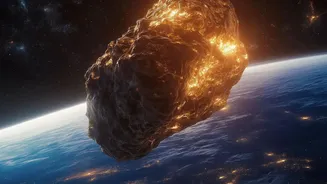
Look up at the night sky, and you see one moon. But for months, Earth has quietly hosted a second, much smaller companion. Now, our temporary 'mini-moon' is preparing to leave, offering a final, fleeting wave on its cosmic journey.
Our Temporary Cosmic Companion
Earth has a visitor
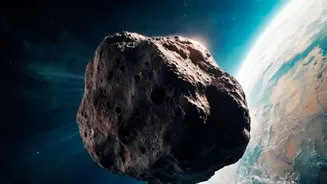
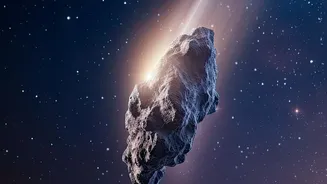
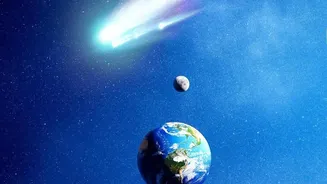
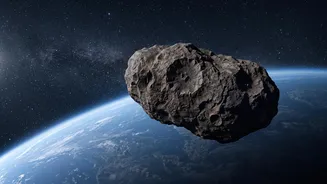
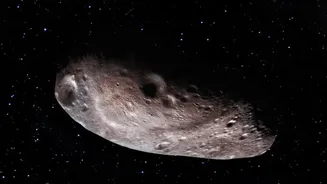
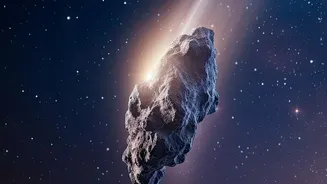
that is about to overstay its welcome, not that we would mind if it stayed. Designated 2026 QQ8, a small asteroid has been circling our planet since it was captured by Earth's gravity around April 2026. First spotted in August by Hungarian astronomer Krisztián Sárneczky, this object measures a mere two metres across—roughly the size of a large home appliance or a small car. For months, it has been tracing a wide, looping path around our planet, too small and distant to be seen without powerful telescopes. But its time as our 'mini-moon' is coming to an end. Sometime in early 2027, its orbit will carry it beyond Earth's gravitational pull, and it will once again become just another asteroid orbiting the sun.
What Exactly Is a Mini-Moon?
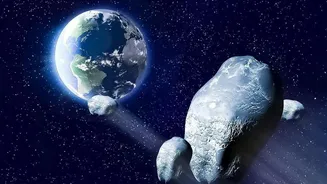
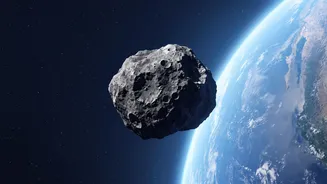
The term 'mini-moon' isn't just a catchy phrase; it describes a specific astronomical phenomenon. Mini-moons are asteroids that, while normally orbiting the sun, pass close enough to Earth at a slow enough speed to be temporarily captured by our planet's gravity. Unlike our large, permanent Moon, these captures are fleeting. Their orbits are often chaotic and unstable, influenced by the gravitational tug-of-war between Earth, the Sun, and our own Moon. A typical mini-moon might stay for around nine months, making a few orbits before being flung back out into the solar system. These events happen more often than you might think; scientific models suggest Earth likely has at least one mini-moon at any given time, but most are too small and faint to be detected by current surveys.
The Journey of 2026 QQ8
The story of 2026 QQ8 is one of a chance encounter. This space rock has its own orbit around the sun, which takes it about 359 days to complete. Its path brings it into Earth's neighbourhood every so often, but this year's approach was special. It drifted close enough and at the right velocity to fall into what astronomers call a Temporary Satellite Capture (TSC). When it was first detected, astronomers weren't immediately sure if it was a natural object or a piece of old space junk, like a discarded rocket stage—a common confusion with past mini-moon candidates. However, after weeks of observation and analysing how solar radiation pushed on the object, scientists confirmed it was a natural asteroid, a tiny wanderer from the solar system that has become our temporary neighbour.
A Fond and Distant Farewell
There is no need to worry about 2026 QQ8's departure. It is not on a collision course with Earth. Its closest approach to our planet will still be about 353,000 miles away, significantly farther than our main Moon. Even if it were to head towards us, an object this small would almost certainly burn up completely in our atmosphere, at most creating a bright meteor. Its exit will be as gentle as its arrival. Its trajectory will simply carry it to a point where the Sun’s gravity overpowers Earth's, and it will break free to continue its solo journey. This won't be the last we see of it, however. Its orbit is predicted to bring it back for another notable, though much more distant, pass in 2058.
The Hunt for Hidden Moons
2026 QQ8 is not the first mini-moon we've discovered. In 2006, an asteroid named 2006 RH120 was captured for about a year, making it the first confirmed temporary satellite. Another famous example, 2020 CD3, was found to be orbiting Earth in 2020. These small visitors are more than just cosmic curiosities. They are pristine samples from the solar system, delivered right to our doorstep. Studying their composition and orbits helps scientists understand the population of near-Earth asteroids, some of which could pose a threat. Future observatories, like the Vera C. Rubin Observatory, are expected to find many more of these tiny companions, giving us a much clearer picture of the dynamic and ever-changing environment of our corner of space.