
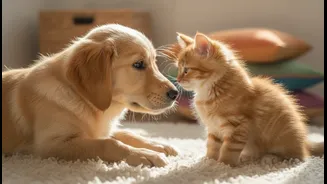


An Enduring, but Misleading, Rivalry
The idea of cats and dogs as sworn enemies is deeply ingrained in our culture, featured in everything from cartoons to casual conversation. We label ourselves 'cat people' or 'dog people', often choosing a side based on perceived personality traits. Studies
have even suggested that people who prefer dogs tend to be more extroverted, while cat lovers may be more introverted and open-minded. This human tendency to categorize and create rivalries, however, oversimplifies the rich and varied reality of how these animals can coexist. The notion of a natural, unwavering hatred is largely a myth, born more from misunderstanding than any inherent animosity. The real story is not one of conflict, but of communication—or miscommunication.
Speaking Different Languages
Much of the perceived conflict stems from the fact that cats and dogs communicate in fundamentally different ways. A dog's wagging tail is usually an invitation to play, but a cat’s lashing tail often signals irritation. A dog’s instinct is often to chase things that run, which is a cat's primary defense mechanism. This can create a cycle of misunderstanding: the dog thinks it's a game, while the cat feels threatened. Dogs are typically pack animals, thriving on social interaction, whereas cats evolved from solitary hunters, making them naturally more independent and territorial. These are not signs of a vendetta, but simply different evolutionary paths resulting in distinct social languages. They aren't born enemies; they're just speaking different dialects.
The Hallmarks of a Friendship
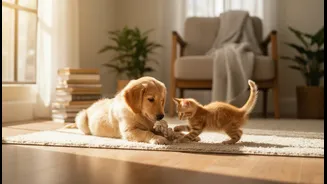
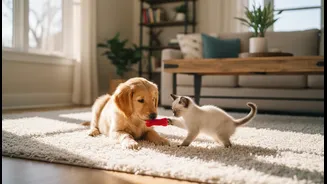
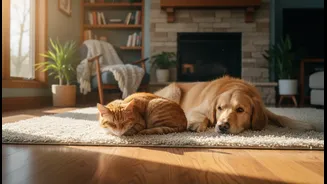
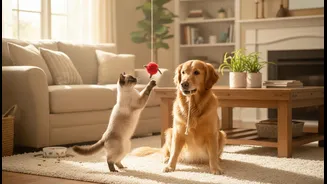
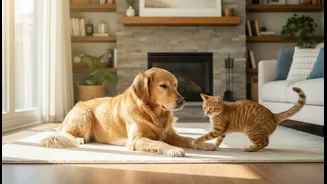
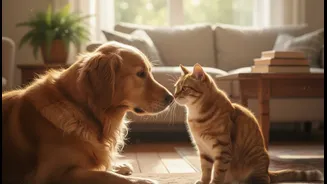
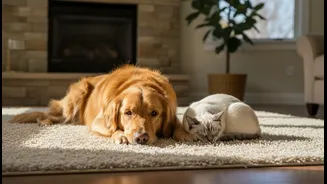
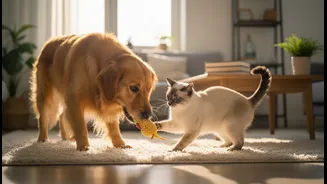
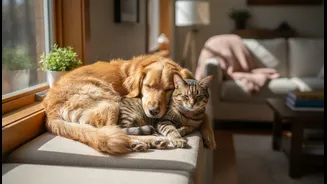
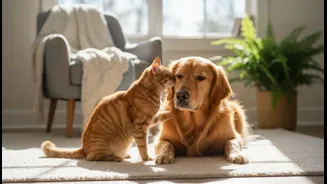
Despite these differences, many cats and dogs learn to bridge the communication gap, forming bonds that range from quiet tolerance to deep affection. The first sign of a budding friendship is often, paradoxically, indifference. When they can share a space without tension, it’s a sign of growing trust. From there, friendship can blossom. You might see them sleeping near each other, a significant gesture of comfort and safety. Play is another key indicator, from a dog's gentle play bow to a cat's soft paw taps. Perhaps the most definitive sign is mutual grooming. When a cat licks a dog, or they snuggle up together for a nap, they are showing a profound level of trust and affection, treating each other as part of their chosen family.
It's Nurture, Not Just Nature
Whether a cat and dog will get along has less to do with their species and more to do with their individual personalities and, crucially, their upbringing. Early and positive socialization is key. Animals introduced to each other when they are young, as puppies and kittens, are far more likely to form a lifelong bond as they grow up learning each other's scents and languages. However, age isn't an insurmountable barrier. The personality of each animal plays a huge role. A calm, older dog might be a perfect companion for a confident cat, while a high-energy puppy might be stressful for a timid feline. Ultimately, their compatibility is not predetermined by a 'cat' or 'dog' label, but by their unique dispositions.
The Human's Role as Peacemaker
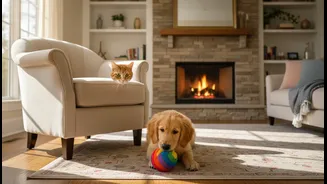
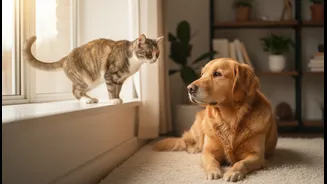
The success of a multi-pet household often rests squarely on the shoulders of the human owner. Simply putting two animals in a room and hoping for the best is a recipe for failure. Animal behaviorists stress the importance of slow, careful introductions. This process should begin with scent swapping—letting each pet get used to the other's smell before they ever meet face-to-face. Initial meetings should be brief, supervised, and positive, with the dog on a leash. Creating a peaceful environment is also vital. This means ensuring the cat has safe, high-up escape routes, like cat trees or shelves, and that each animal has its own separate food bowls and personal space. With patience and thoughtful management, owners can act as facilitators, helping to build a bridge between their pets.