



It’s a taste transformation beloved across India: the journey from a mouth-puckeringly sour raw mango to a lusciously sweet, fragrant, and ripe one. This isn't just magic; it's a fascinating and complex biochemical process.
The Power of Sour
The sharp, tart flavour of a raw
mango, or 'kairi', comes from a high concentration of organic acids. Chief among them are citric acid and malic acid, which are stored within the fruit's cells. In its unripe state, the mango has very little sugar to balance this acidity, resulting in the intensely sour taste that is perfect for pickles and chutneys but far from a sweet dessert. These acids are a natural part of the fruit's development, but their dominance is temporary.
The Ripening Signal
So what flips the switch from sour to sweet? The trigger is a gaseous plant hormone called ethylene. As the mango reaches maturity, even after being picked, it begins to produce ethylene internally. This hormone acts as a signal, kicking off a cascade of chemical reactions that we collectively call ripening. Commercially, this natural process is often managed by exposing harvested mangoes to controlled levels of ethylene gas to ensure they ripen uniformly. This hormonal signal is the starting gun for the race towards sweetness.
From Starch to Sugar
The biggest change ethylene initiates is the conversion of starch to sugar. An unripe mango's flesh is full of tasteless starch, which is essentially stored energy for the fruit. When ethylene gives the command, enzymes like amylase get to work, breaking down these complex starch molecules into simple sugars like sucrose, glucose, and fructose. This is the core reason for the change in taste. As starch levels plummet, sugar levels can increase dramatically, transforming the fruit's entire flavour profile from bland and starchy to richly sweet.
More Than Just Sweetness
The journey doesn't end with sugar. While the sweetness builds, the concentration of those organic acids that made the raw mango sour begins to decrease as they are metabolised by the fruit. It’s this shifting balance of declining acidity and rising sugar that creates the complex, well-rounded flavour of a perfect mango. Simultaneously, other enzymes get busy changing the fruit's texture and aroma. Pectin, the 'glue' that holds the fruit's cell walls together and keeps it firm, is broken down by enzymes like pectinase. This is why a ripe mango becomes soft and juicy. At the same time, the fruit begins to produce a host of volatile organic compounds, the fragrant molecules that give a ripe mango its unmistakable tropical perfume.
A Feast for the Eyes
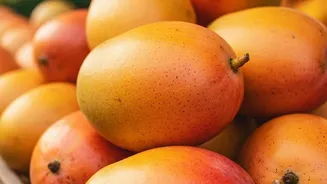
The visual transformation is just as dramatic. The green skin of a raw mango is rich in chlorophyll. During ripening, ethylene signals for the breakdown of this chlorophyll, unmasking the yellow and orange pigments—carotenoids—that were hidden underneath. In some varieties, the fruit also synthesises new pigments, contributing to the vibrant reds and oranges that signal peak ripeness. This colour change is nature’s billboard, advertising that the fruit is now sweet, aromatic, and ready to be eaten.