




More Than a Workout
Surya Namaskar translates to 'greeting the sun' and is traditionally practised at dawn. It is more than just a series of physical postures; it's a dynamic sequence where movement is synchronised with breath. This mindful integration helps improve circulation,
build strength, and enhance flexibility. The rhythmic nature of the practice calms the nervous system, reducing stress and increasing mental clarity, making it a holistic tool for modern wellness.
Step 1: Pranamasana (Prayer Pose)
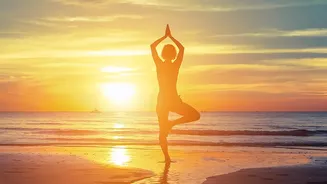
Begin by standing at the front of your mat with your feet together. Bring your palms together in a prayer position at your chest. Your weight should be evenly balanced. Breathe normally and centre yourself before you begin the flow.
Step 2: Hasta Uttanasana (Raised Arms Pose)
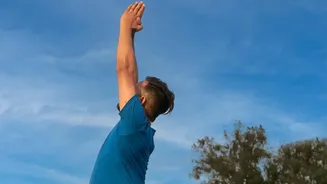
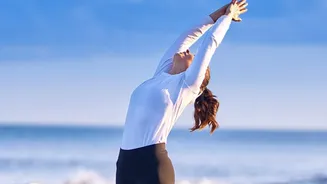
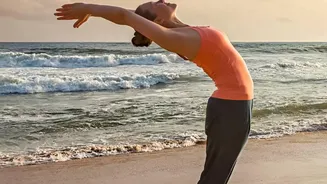
Inhale deeply as you raise your arms up and back, keeping them close to your ears. The aim is to stretch the entire body from your heels to the tips of your fingers, creating a gentle arch in your upper back.
Step 3: Hastapadasana (Hand to Foot Pose)
Exhale and bend forward from your waist, keeping your spine straight. As you fold, bring your hands down to the floor beside your feet. You can bend your knees initially if your hamstrings are tight to avoid straining your back.
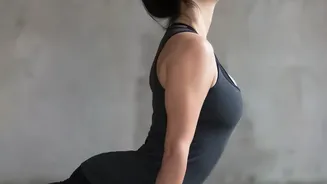
Step 4: Ashwa Sanchalanasana (Equestrian Pose)
Inhale and push your right leg back as far as possible. Bring the right knee to the floor and look up, feeling a stretch in your left hip. Ensure your left foot is placed firmly between your palms.
Step 5: Dandasana (Plank Pose)
As you exhale, take your left leg back to join the right, bringing your body into a straight line like a plank. Your arms should be perpendicular to the floor, and your core engaged to prevent your hips from sagging.
Step 6: Ashtanga Namaskara (Eight-Limbed Salute)
Gently bring your knees down to the floor and then exhale. Lower your chest and chin to the floor, keeping your hips slightly raised. Your two hands, two knees, chest, and chin—eight parts of your body—should touch the floor.
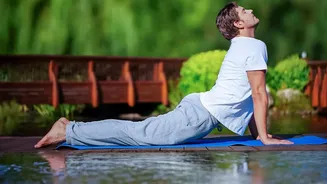
Step 7: Bhujangasana (Cobra Pose)
Inhale and slide forward, raising your chest up into Cobra Pose. Keep your elbows bent and close to your body, with your shoulders away from your ears. Look upwards, feeling the stretch in your abdomen.
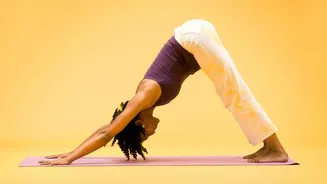
Step 8: Adho Mukha Svanasana (Downward-Facing Dog)
Exhale and lift your hips and tailbone towards the ceiling, forming an inverted 'V' shape with your body. Try to push your heels towards the floor, feeling a deep stretch in your hamstrings and calves.
Step 9: Ashwa Sanchalanasana (Equestrian Pose)
Inhale and bring your right foot forward, placing it between your hands. Your left knee comes down to the floor. Lift your gaze, mirroring the posture from Step 4, this time with the opposite leg forward.
Step 10: Hastapadasana (Hand to Foot Pose)
Exhale and bring your left foot forward to join the right. Hinge from the hips and fold forward, returning to the Hand to Foot Pose from Step 3. Let your head hang heavy, releasing tension in the neck.
Step 11: Hasta Uttanasana (Raised Arms Pose)
Inhale and roll your spine up. Raise your hands overhead and bend backward slightly, just as in Step 2. Push your hips forward gently to deepen the stretch in your back.
Step 12: Pranamasana (Prayer Pose)
Exhale, first straightening your body and then bringing your palms back down in front of your chest. This completes one half-round. To complete a full round, you repeat the sequence, this time leading with your left leg in Step 4.