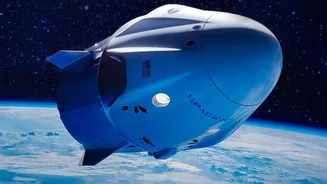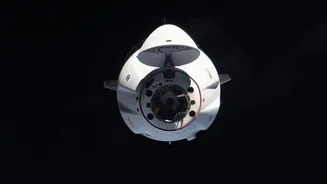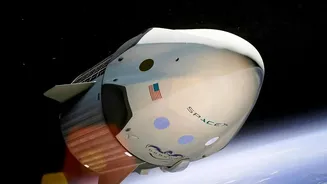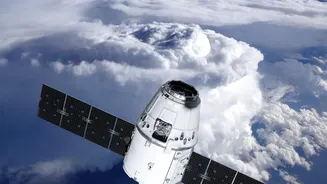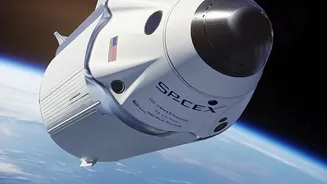



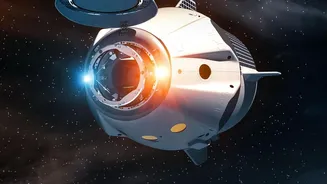

A fiery plunge through the atmosphere concluded on November 21 as a SpaceX Dragon capsule splashed down in the Pacific Ocean. But the real prize wasn't the capsule; it was the thousands of pounds of scientific cargo tucked safely inside.
A Successful Return Journey
After spending
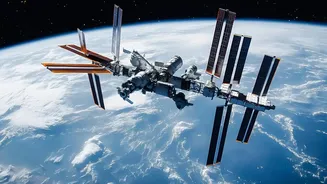
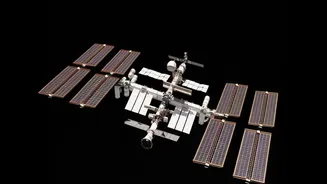
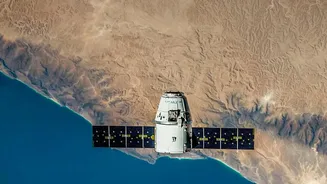
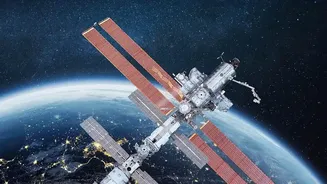
37 days attached to the International Space Station (ISS), the unpiloted SpaceX Dragon spacecraft successfully completed its 35th Commercial Resupply Services (CRS-35) mission for NASA. The capsule undocked from the ISS on November 20 and began its approximately 29-hour journey home. It blazed through Earth's atmosphere before parachuting to a gentle splashdown off the coast of California. Recovery teams were immediately on hand to hoist the capsule from the water. The Dragon is currently the only cargo vehicle capable of returning significant amounts of cargo from the station intact, making these missions critical for ongoing research. While other freighters burn up on reentry, Dragon’s ability to survive the trip down allows scientists to get their hands on priceless, time-sensitive experiments conducted in orbit.
The Precious Cargo Onboard
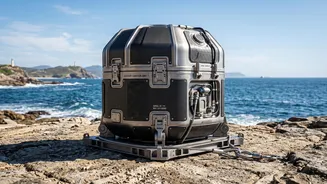
The Dragon capsule was packed with a diverse array of scientific samples and hardware. Among the most anticipated items were experiments aimed at improving human health on Earth. This included a 3D-bioprinted blood vessel construct, which will help scientists study cardiovascular disease and the aging process of blood vessels. Also returning were frozen tumor organoids—small, lab-grown models of cancerous tumors that were treated with experimental drugs while in space. Researchers hope to analyze these to develop more effective and personalized cancer therapies. Additionally, the capsule carried frozen microbial samples to understand how antibiotic-resistant bacteria adapt and survive in the unique environment of space, a key concern for protecting astronaut health on long missions.
Why Space Is the Ultimate Laboratory
Conducting these experiments on the ISS provides an advantage that cannot be replicated on Earth: persistent microgravity. In the near-weightless environment of space, fundamental physical and biological processes behave differently. For instance, without gravity, the forces of buoyancy and sedimentation disappear. This allows scientists to grow more perfect crystals for use in pharmaceuticals or observe how cells form into three-dimensional tissues without collapsing under their own weight. For medical research, studying how the human body adapts to space—experiencing effects similar to accelerated aging, such as bone density loss and muscle atrophy—provides unique insights into diseases like osteoporosis. This unique laboratory enables breakthroughs that could lead to new treatments and a deeper understanding of life itself.
From Orbit to Analysis
The journey for these experiments is far from over. Once the Dragon capsule is secured, a race against time begins. The time-sensitive biological samples are quickly unloaded and flown to scientific labs across the country for immediate analysis. Researchers are eager to examine the returned materials before they readapt to Earth's gravity, which could alter the results. For example, the returned brain organoids, small models of human brain tissue, will be compared with identical models kept on Earth. This comparison will help scientists understand how even a short spaceflight affects the brain at a cellular level, potentially revealing new information about neurological stress and diseases like Alzheimer's and Parkinson's. The rapid recovery and analysis are crucial for preserving the integrity of the data gathered in orbit.
The Promise of a Better Future
While the research sounds complex, the goals are deeply practical and aimed at benefiting everyone. The cardiovascular studies could lead to new ways to fight heart disease, one of the leading causes of death globally. The cancer research using tumor organoids may unlock more effective treatment strategies, moving medicine closer to a personalised approach where treatments are tailored to an individual's specific cancer. Even research into how plants grow in space can lead to developing more disease-resistant crops on Earth, helping to secure our food supply. Each cargo return from the ISS, like this CRS-35 mission, represents another step forward in leveraging space for terrestrial good, turning the challenges of space exploration into solutions for problems we face right here at home.