


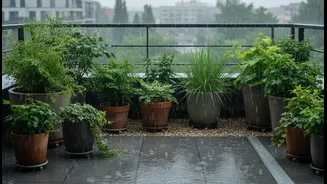
The Monsoon's Hidden Danger: Root Rot
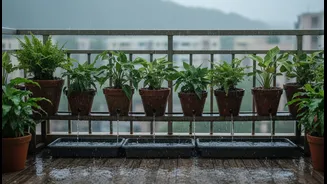
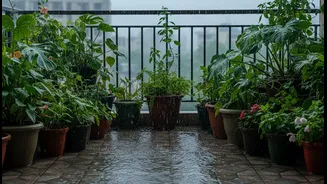
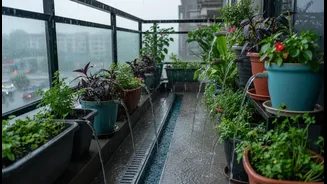
More balcony plants die during the monsoon than in the peak of summer. The culprit is rarely the rain itself, but what happens after: waterlogged soil. When soil remains saturated for days, it suffocates the plant's roots, cutting off their oxygen supply.
This creates the perfect environment for root rot and other fungal diseases, which cause yellowing leaves, mushy stems, and a foul odour from the pot. The constant humidity also encourages pests like fungus gnats, mealybugs, and aphids, which thrive in damp conditions.
Your First Line of Defence: The Right Pot
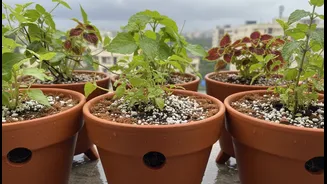
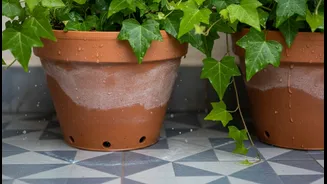
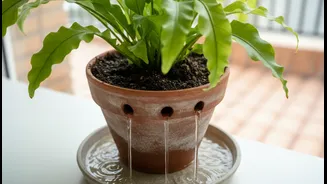
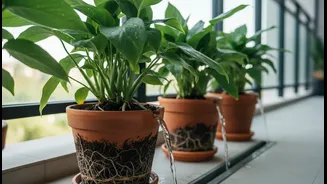
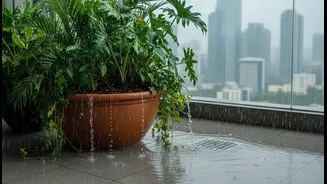
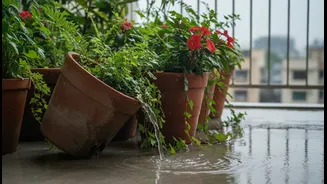
Success starts with the container. First, ensure every pot has at least one, preferably multiple, drainage hole. A pot without a hole is a bucket, and during the monsoon, it's a death trap. Terracotta pots are often better than plastic as they are porous and allow soil to breathe. Most importantly, elevate your pots. Placing them on bricks, wooden blocks, or dedicated 'pot feet' creates a small gap between the pot and the balcony floor. This simple step prevents drainage holes from getting blocked and allows excess water to escape freely, which is crucial for preventing waterlogging.
Crafting the Perfect Monsoon Potting Mix
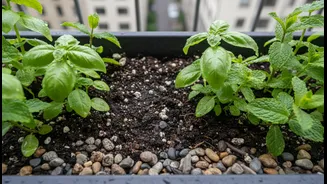
Heavy garden soil is a disaster for pots in the monsoon; it compacts easily and holds too much water. What you need is a light, well-aerated, and fast-draining potting mix. You can buy a pre-made mix or create your own. A reliable recipe for Indian balconies is a blend of regular garden soil, compost, and a material that improves drainage. Consider a mix of 40% garden soil, 40% compost, and 20% cocopeat. For even better results, add coarse sand or perlite to the mix, as these materials create air pockets and help water flow through quickly. This lightweight combination ensures that even after a heavy shower, your plant's roots won't be sitting in a puddle.
Rethink Your Watering Schedule
The biggest mistake during the monsoon is sticking to a fixed watering schedule. With high humidity and frequent rain, your plants need far less manual watering. Before reaching for the watering can, always perform the finger test: insert your finger about an inch or two into the soil. If it feels moist, do not water. Let the rain do the work. Only consider watering if there's been a dry spell of several days and the topsoil feels dry to the touch. Also, be sure to empty any saucers or trays beneath your pots, as standing water is a primary cause of root rot and a breeding ground for mosquitoes.
Managing Heavy Downpours and Pests
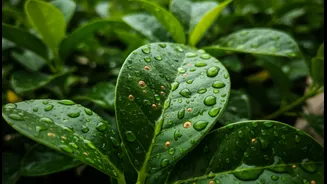
Even with perfect drainage, a relentless downpour can physically damage delicate plants. If possible, move vulnerable plants, like succulents or young seedlings, to a sheltered spot against a wall or under a roof overhang during storms. For larger plants, you can use stakes to provide support against strong winds. High humidity also makes plants susceptible to fungal diseases like powdery mildew. As a preventative measure, you can spray your plants with a diluted neem oil solution every 10-14 days. This organic solution helps deter both fungi and common monsoon pests.