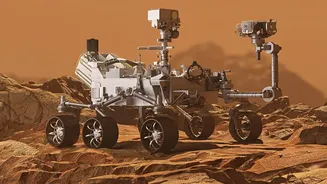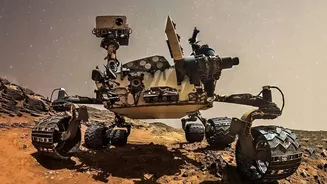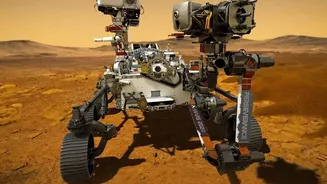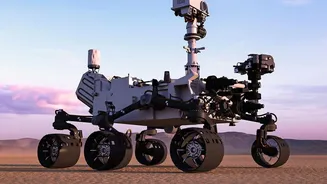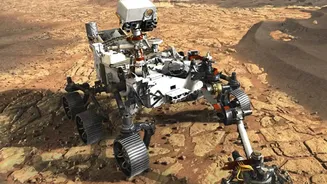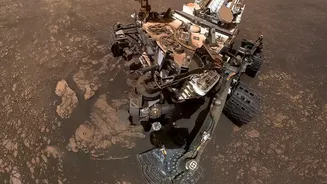





For years, NASA's Perseverance rover has been gathering a priceless collection of Martian rocks. Now, the agency is revamping its complex and costly plan to bring them home, kicking off a renewed effort to make history's first interplanetary delivery.
A Mission Under Review
The dream of studying pristine pieces of Mars in earthly labs is a decades-old goal for scientists. The Mars Sample Return (MSR) program was designed to be the multi-stage, multi-billion-dollar mission to make it happen. However, the original plans have come under intense scrutiny. Independent reviews and internal assessments flagged ballooning costs, with some estimates soaring as high as $11 billion, and a timeline that pushed the samples' arrival on Earth to 2040. In response to these concerns, NASA has officially gone back to the drawing board. In early November 2026, the agency announced a new initiative called the Perseverance Sample Retrieval Architecture, or PSRA. This effort will commission a dedicated team to re-evaluate the entire strategy, with a clear mandate: find a faster, cheaper, and less risky way to get the job done.
What is the New Approach?
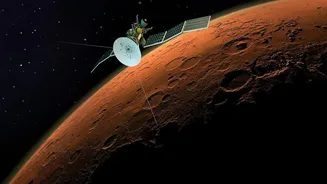
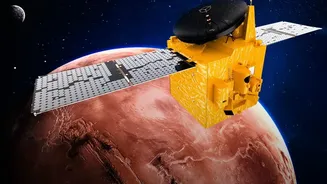
The 'renewed effort' is essentially a full-scale reassessment of the mission's architecture. The new PSRA strategy team is tasked with delivering impartial recommendations after reviewing lessons learned and evaluating all current options. This includes looking at proposals from both NASA centers and private industry partners, some of whom suggest they can accomplish the mission for a fraction of the previously estimated cost by using proven, existing spacecraft designs. Earlier concepts for the mission were incredibly complex, involving multiple spacecraft, including a dedicated 'fetch rover' that would retrieve sample tubes dropped by Perseverance. The new review will reconsider every element, from the design of the lander to the Mars Ascent Vehicle (MAV)—the small rocket that would be the first ever to launch from another planet. The PSRA team will begin its work in January 2027, with a final report and recommendation expected in the winter of 2027-2028.
Perseverance Rover: From Collector to Courier
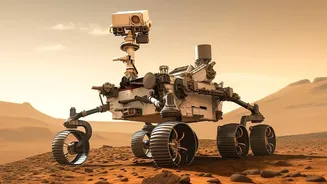
The star of this entire endeavor, the Perseverance rover, has been diligently working since its landing in Jezero Crater in February 2021. It has been drilling into scientifically compelling rocks, sealing the cores in titanium tubes, and storing some aboard while placing others in a surface depot as a backup. A key shift in recent planning, which is likely to be a central part of the new review, leverages the rover's own remarkable longevity. Instead of relying on a separate fetch rover, a simplified plan would have Perseverance drive directly to the new Sample Retrieval Lander. There, a robotic arm would transfer the sample tubes from the rover into the Mars Ascent Vehicle. This streamlines the mission by removing an entire vehicle and a point of potential failure, relying instead on the proven capabilities of the rover already on the ground.
The Challenge and the Prize
Even with a simplified architecture, the mission remains one of the most challenging feats of robotic exploration ever attempted. It involves numerous firsts: launching a rocket from the surface of another planet, performing a fully autonomous rendezvous and capture in Mars orbit, and ensuring the samples are returned without contaminating either Earth or Mars (a process known as planetary protection). The stakes are incredibly high. These samples, collected from an ancient river delta, are humanity's best chance to search for definitive signs of past microbial life on Mars. Analyzing them on Earth with advanced instruments far too large to send to space could revolutionize our understanding of planetary formation, habitability, and our place in the cosmos. Furthermore, the mission serves as a critical pathfinder for future human exploration, helping to identify potential hazards in the Martian dust and soil for astronauts.
A New Space Race?
Adding a sense of urgency to NASA's renewed efforts is the progress of other nations. China is moving forward with its own ambitious Mars sample return mission, named Tianwen-3. Chinese space officials have stated they aim to launch their mission around 2028 and return samples to Earth as early as 2031. This timeline puts pressure on NASA to finalize its own approach and avoid falling behind in a key area of planetary science. The competition underscores the geopolitical significance of the endeavor, turning the technical challenge into a matter of national prestige and scientific leadership. NASA's new PSRA review is therefore not just about budgets and blueprints; it's about charting a viable path forward to ensure the United States is the first nation to bring home pieces of the Red Planet.