
From Cane to Sweetener: A Tale of Two Processes
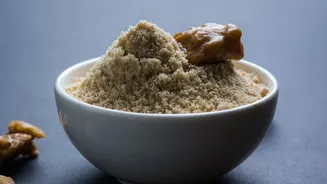
Both jaggery and white sugar begin their journey as sugarcane juice, but their paths diverge dramatically. Jaggery is made using a traditional, minimalist method where the sugarcane juice is simply boiled in large, open pans. As the water evaporates,
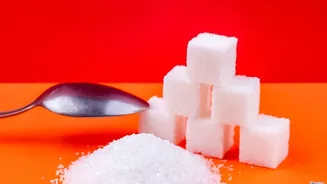
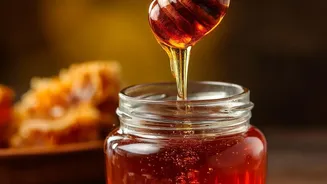
the liquid thickens and solidifies into blocks or cubes. This process is straightforward, involving no chemical treatment, bleaching, or refining. Because it is unrefined, jaggery retains its natural molasses content, which is responsible for its golden-brown colour and rich, complex flavour.White sugar, conversely, undergoes an intensive industrial process. After the juice is extracted, it goes through multiple stages of clarification, purification, and filtration to remove all impurities and the molasses. The resulting syrup is then crystallised to form the fine, white granules of nearly pure sucrose we are familiar with. This extensive refining strips away not just colour and flavour, but also the minerals present in the original sugarcane juice, resulting in what many call 'empty calories'.
The Nutritional Divide: Minerals vs. Empty Calories
The most significant difference lies in their nutritional profiles. Because white sugar is refined down to pure sucrose, it contains no vitamins or minerals. Jaggery, by retaining its molasses, contains trace amounts of essential minerals like iron, magnesium, potassium, and calcium. For instance, 100 grams of jaggery can contain a notable amount of iron and potassium. However, it's crucial to consider portion sizes. A typical serving of 10 grams in a cup of tea provides only a small percentage of the daily recommended intake of these minerals. Relying on jaggery as a primary source of minerals is impractical, as the high sugar intake would negate any benefits. Calorie-wise, the two are nearly identical: 100 grams of jaggery has about 383 calories, while white sugar has around 387.
The Winter Warmer: Jaggery's Seasonal Significance
In India, jaggery is synonymous with winter. It is a key ingredient in seasonal sweets like 'til-gud ladoos' and 'chikki'. Traditionally, jaggery is believed to have 'Ushna' (hot) properties, meaning it helps generate heat in the body, making it a comforting food during colder months. While there's limited scientific proof that it literally raises body temperature, its mineral content, particularly iron, can help combat the fatigue often felt in winter. Jaggery has also been used in Ayurvedic home remedies for centuries to soothe sore throats and relieve coughs, often consumed with warm water or ginger. Its cleansing properties are also believed to help clear the respiratory tract.
The Blood Sugar Question: A Surprising Twist
A common belief is that jaggery is safer for people with diabetes because it is 'natural'. However, this is a dangerous misconception. Most research indicates that sugarcane jaggery has a high glycemic index (GI) of around 84, which is even higher than that of white sugar (around 65). This means jaggery can cause a faster and sharper spike in blood sugar levels. Some varieties like palm jaggery have a lower GI, but the common sugarcane jaggery does not offer a blood sugar advantage. For anyone managing diabetes or insulin resistance, both jaggery and white sugar are concentrated sweeteners that must be consumed with extreme caution and in strict moderation.
The Final Verdict: Flavour and Moderation
So, should you throw out your sugar container and replace it with a block of gur? The answer isn't a simple yes or no. Jaggery is marginally more nutritious than white sugar, but the mineral benefits are negligible in typical serving sizes. Its real advantage lies in its unrefined nature and its rich, caramel-like flavour, which can add depth to traditional sweets, teas, and desserts.White sugar offers neutral sweetness and is better for baking where a clean taste and specific texture are required. The choice ultimately comes down to flavour preference and purpose. Neither is a health food, and the golden rule for any sweetener remains the same: moderation. Switching from sugar to jaggery is not a license to consume more; it is a choice for a less processed option with a more complex flavour profile.