

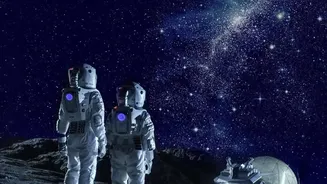
An Ambitious Goal, A Hostile World
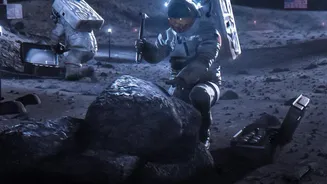
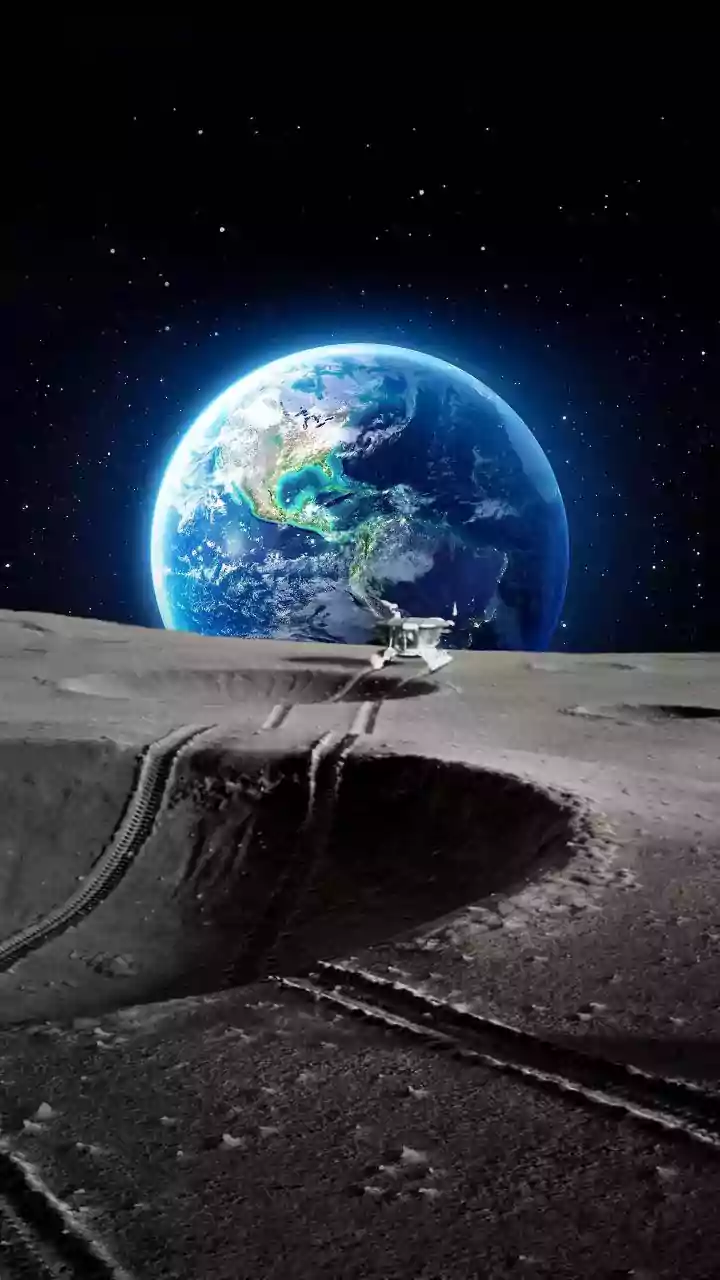
The vision for NASA's Artemis program is inspiring: a sustainable human presence on the Moon, starting with a base camp near the resource-rich South Pole. This outpost would serve as a hub for science and exploration, and a crucial stepping stone for future
missions to Mars. However, the lunar surface is not a friendly environment. Unlike Earth, it has no thick atmosphere or global magnetic field to shield it from danger. Astronauts and their equipment will be exposed to a relentless barrage of hazards that are almost unimaginable on our home planet. To ensure the safety and success of these long-duration missions, NASA is methodically studying these threats. Recently, the agency announced a new set of scientific investigations specifically chosen to map these dangers before astronauts arrive for extended stays.
The Invisible Threat of Radiation
One of the most significant dangers is constant, invisible radiation. Without Earth's protective shields, astronauts on the Moon are exposed to radiation levels about 200 times higher than on Earth's surface. This comes from two main sources: a steady stream of galactic cosmic rays from deep space and unpredictable solar particle events from our own Sun. This exposure can damage DNA, increase the long-term risk of cancer, and cause other serious health issues like cataracts and degenerative diseases. Data from China's Chang'e-4 lander found that the daily radiation dose is 2.6 times higher than on the International Space Station, which is still partially protected by Earth's magnetosphere. Building habitats with sufficient shielding, possibly underground or using thick layers of lunar soil (regolith), will be essential for survival.
The Problem with Moon Dust
Apollo astronauts discovered that lunar dust, or regolith, is a formidable problem. Formed by billions of years of micrometeorite impacts, the dust is not like the soft soil on Earth. Instead, it’s composed of tiny, sharp, abrasive particles, often compared to powdered glass. This dust gets everywhere, clinging to spacesuits, clogging mechanisms, and abrading seals. Apollo 17 astronaut Harrison Schmitt reported that the dust wore through three layers of his boots. More worryingly, when inhaled, these fine particles can cause respiratory irritation, a condition nicknamed 'lunar hay fever' by the Apollo crews. The long-term health effects of breathing in these jagged particles are still unknown, making dust mitigation a top priority for any lunar habitat.
Probing the Unstable Ground
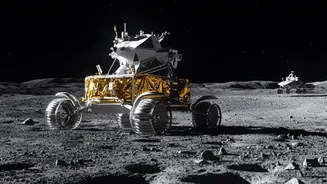
To address these and other hazards, NASA has selected three new payload suites under its PRISM (Payloads and Research Investigations on the Surface of the Moon) program. One of these, the Lunar Environment Monitoring Station (LEMS-SP), is a self-contained science station designed to operate for at least two years. It will use a seismometer to listen for 'moonquakes' and track micrometeorite impacts, providing critical data on the stability of the lunar surface for building structures. This will help engineers design habitats and landing pads that can withstand the Moon's subtle but persistent geological activity.
Searching for Shelter and Resources
The other two investigations focus on resources and natural shelters. One mission, comically named GIMLI (Geophysical Instruments for Marius Lunar pit Investigation), will explore a pit on the Moon's surface to see if it leads to an underground lava tube. Such a cave could offer natural protection from radiation, micrometeorites, and the extreme temperature swings between lunar day and night. The final payload, DISCO (Depth Imager with Spectral and Color Optics), will hunt for hidden water ice in shadowed craters. Finding accessible water is crucial, as it can be used for drinking, growing food, and producing breathable oxygen and rocket propellant. DISCO will also study how rocket exhaust plumes disrupt the surface, informing safe landing and takeoff procedures for future missions.