



The Big Question: Can We See It From India?
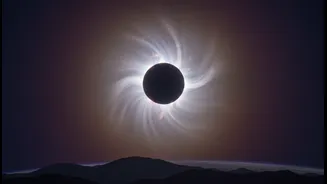
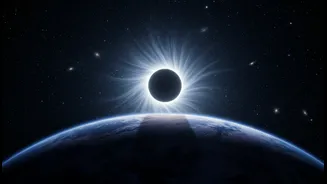
The short and direct answer is no, the total solar eclipse will not be visible from India. The path of totality—where the Moon completely blocks the Sun—will sweep across Greenland, Iceland, Spain, and a small part of Portugal. The event will happen during
nighttime for the Indian subcontinent, with the eclipse window falling roughly between 9:45 PM IST on August 12 and 2:15 AM IST on August 13. Because the Sun will be below the horizon, there will be nothing to see. Some eclipse calculators suggest a tiny, almost imperceptible partial eclipse might be theoretically visible from the extreme northern tips of Ladakh, but for all practical purposes, India will miss this celestial show. However, you can always catch the stunning live streams from observatories around the world!
So, What's a Solar Eclipse, Anyway?
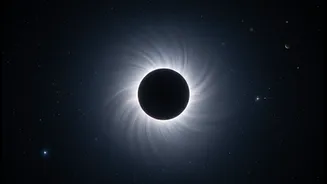
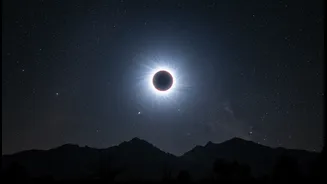
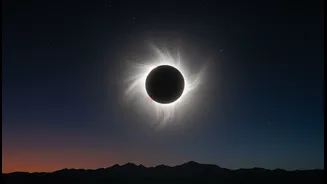
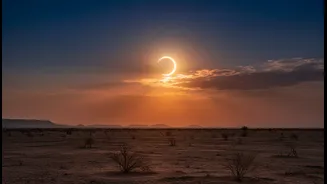
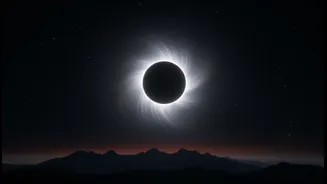
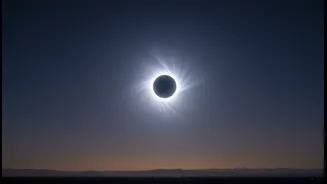
A solar eclipse is a beautiful alignment of celestial bodies. It happens when the Moon passes directly between the Sun and Earth, casting a shadow on our planet. In a total solar eclipse, the Moon's apparent diameter is larger than the Sun's, allowing it to completely block all direct sunlight. This turns day into twilight and reveals the Sun's ethereal outer atmosphere, the corona. For those outside the narrow path of totality, the event is a partial eclipse, where the Moon takes a 'bite' out of the Sun. Since this eclipse occurs at night for India, religious protocols like Sutak Kaal, which are often observed during visible eclipses, do not apply.
Myth vs. Reality: Separating Fact from Fiction
Eclipses have long been associated with myths. One of the most famous in Hindu mythology involves the demon Rahu swallowing the Sun. Other common beliefs suggest that food cooked during an eclipse becomes poisonous or that pregnant women are at risk. Scientists have found no evidence to support these claims. Food doesn't spoil faster, and there are no mysterious rays that harm unborn children. The only real danger associated with a solar eclipse is a scientific one: looking directly at the Sun without proper protection can cause permanent eye damage, a condition called solar retinopathy.
The Only Rule: Protect Your Eyes
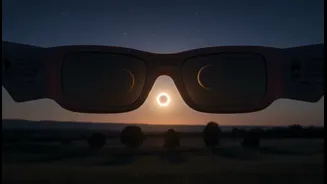
Even though this eclipse isn't visible from India, it's a crucial lesson for any future solar event. Never look directly at the sun, even if it's partially covered. Regular sunglasses, no matter how dark, are not safe. To view a solar eclipse, you must use special-purpose solar filters, such as certified “eclipse glasses” or handheld solar viewers that meet the ISO 12312-2 international standard. These are thousands of times darker than regular sunglasses and are designed to block harmful infrared and ultraviolet radiation. If you don't have access to these, you can make a simple pinhole projector to safely watch the projected image of the Sun.
For the Shutterbugs: Photographing an Eclipse
Attempting to photograph the sun without the right gear can damage your phone's camera sensor. If you're ever in a place to capture an eclipse, the first rule is to use a certified solar filter over your phone's lens. You can tape a filter from a pair of eclipse glasses over the camera. Using a tripod will help keep your shots steady, and you should avoid using digital zoom, which degrades image quality. Instead, try to capture a wide-angle shot that includes the landscape. For more advanced control, lock the focus on the sun and manually lower the exposure to avoid a blown-out white disc. Practicing on the full moon is a great way to get your settings right.
A Double Celestial Treat
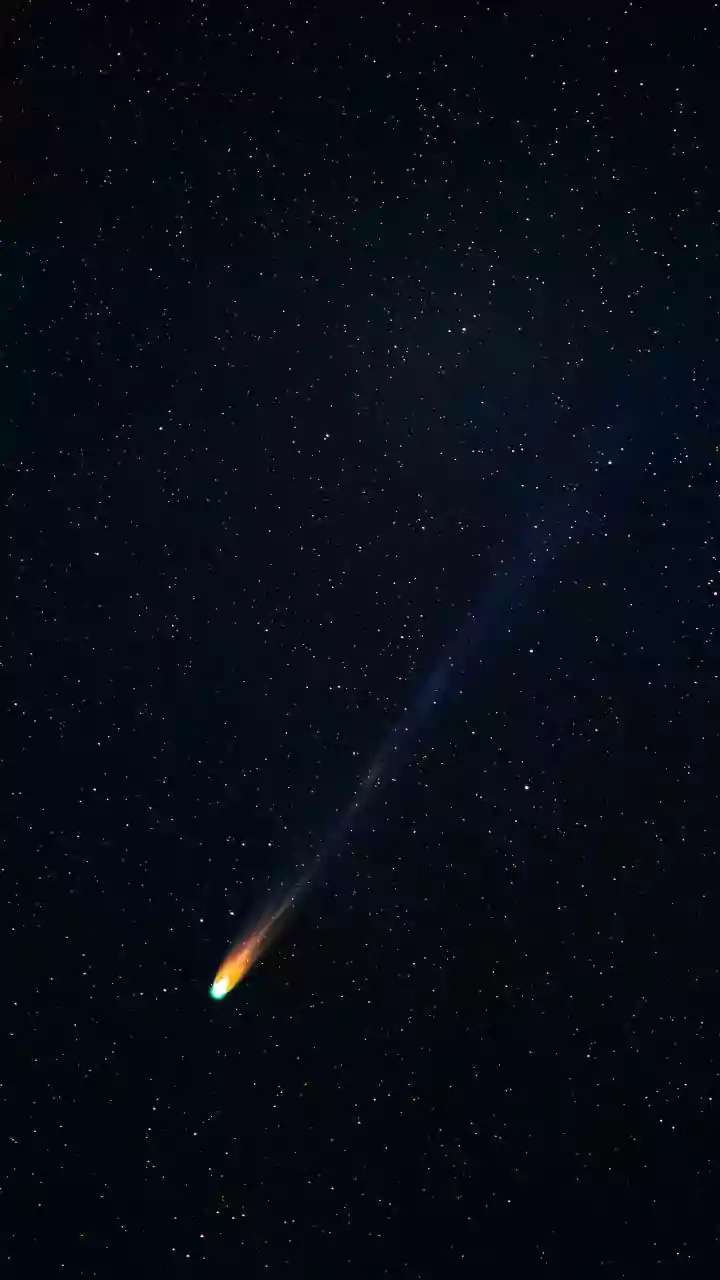
What makes the night of August 12, 2026, even more special is that it coincides with the peak of the Perseid meteor shower. A solar eclipse can only occur during a new moon, which means the sky will be exceptionally dark, free from moonlight. This creates perfect conditions for watching shooting stars. While we won't see the eclipse in India, we can still enjoy the meteor shower. In the pre-dawn hours of August 13, find a dark spot away from city lights, let your eyes adjust, and look up for a spectacular show from the Perseids.