





Why A Simple Stretch Works Wonders
Yoga is more than just physical exercise; it's a practice that connects the mind and body. For a teenager buried in books, taking short breaks for gentle stretching can significantly reduce stress hormones like cortisol. This practice improves blood circulation
to the brain, which can enhance memory and cognitive function. Simple, mindful movements help release the physical tension that builds up in the neck, shoulders, and back after hours of sitting, making it easier to return to studies feeling refreshed and focused. The goal isn't complex poses, but rather accessible routines that offer immediate relief and build long-term resilience.
Mountain Pose (Tadasana)
This foundational pose looks simple but is incredibly effective for improving posture and promoting a sense of groundedness and stability. It helps counter the slouching that often comes with long hours at a desk and builds confidence. By focusing on alignment, it also enhances body awareness. How to do it: Stand with your feet together or hip-width apart. Distribute your weight evenly across both feet. Engage your thigh muscles and keep your spine long. Roll your shoulders back and down, letting your arms rest by your sides with palms facing forward. Hold for 30 seconds, breathing deeply and steadily. It teaches you to feel stable and centred.
Cat-Cow Stretch (Marjaryasana-Bitilasana)
Perfect for releasing tension in the spine, neck, and shoulders, this gentle, flowing movement is ideal for a quick study break. The rhythmic motion, synchronised with breathing, helps to calm the mind and relieve stress. It improves spinal flexibility and can soothe a nervous system frayed by exam pressure. How to do it: Start on your hands and knees, with wrists under shoulders and knees under hips. As you inhale, drop your belly, arch your back, and look up (Cow Pose). As you exhale, round your spine toward the ceiling, tucking your chin to your chest (Cat Pose). Continue this fluid movement for 5-10 breaths.
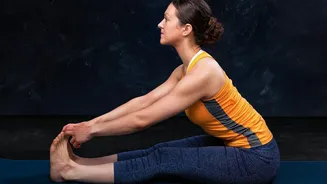
Seated Forward Bend (Paschimottanasana)
This pose is one of the most effective for calming the brain and relieving stress and anxiety. It provides an intense stretch to the hamstrings and spine, areas that get tight from prolonged sitting. The inward-turning nature of the pose encourages a sense of withdrawal from external pressures, helping to quiet a busy mind. How to do it: Sit on the floor with your legs extended straight out in front of you. Inhale and lengthen your spine. As you exhale, hinge forward from your hips, reaching for your feet. Keep your back as straight as possible. Don't worry about touching your toes; just go as far as is comfortable. Hold for 30-60 seconds, breathing into the stretch.
Tree Pose (Vrikshasana)
Balancing poses are excellent for improving concentration, and Tree Pose is a classic for a reason. It requires you to fix your gaze on a single point, which helps to quiet mental chatter and enhance focus. This practice builds physical stability in the legs and core, while also fostering mental steadiness and patience. How to do it: Stand tall and shift your weight onto your left foot. Place the sole of your right foot on your left inner thigh, calf, or ankle (avoiding the knee joint). Bring your hands together in front of your chest. Find a spot in front of you to focus on. Hold for 30 seconds, then switch sides.
Corpse Pose (Savasana)
While it may seem like just lying down, Savasana is a crucial pose for complete relaxation and integration. It allows the body to absorb the benefits of the other poses and helps to fully release physical and mental tension. Ending a short yoga session with this pose can leave a student feeling deeply rested and mentally refreshed, ready to tackle their next study session with renewed energy. How to do it: Lie flat on your back with your legs slightly apart and arms resting by your sides, palms facing up. Close your eyes and let your entire body feel heavy. Focus on your breath without trying to control it. Stay here for 3-5 minutes, allowing your mind and body to completely relax.